4 Best Lens for Fujifilm X-S10/X-S20 in 2026: Focal Length First

The best lens for Fujifilm X-S10 and X-S20 starts with focal length. Budget-friendly X-mount primes for street, portrait, and travel.

Fujifilm X-S10 and X-S20 owners looking for a first prime are spoiled for choice. Third-party X-mount lenses now deliver large apertures and compact bodies at prices that undercut the Fujifilm badge by a wide margin. The catch is that autofocus behavior and firmware compatibility vary from lens to lens, so advertised specs alone won't tell you which one actually locks focus when you need it.

Focal length matters more than any other number. A 9mm ultra-wide solves a different problem than a 56mm portrait lens, and the same camera body can feel completely different depending on what you mount. The trade-off is between an everyday normal view that covers most situations and a wider or tighter lens that excels at one specific style.

Before choosing, decide whether you want one lens that does most things well or a specialist that does one thing beautifully. That decision will narrow the field faster than any pricing comparison.

1

Best Overall

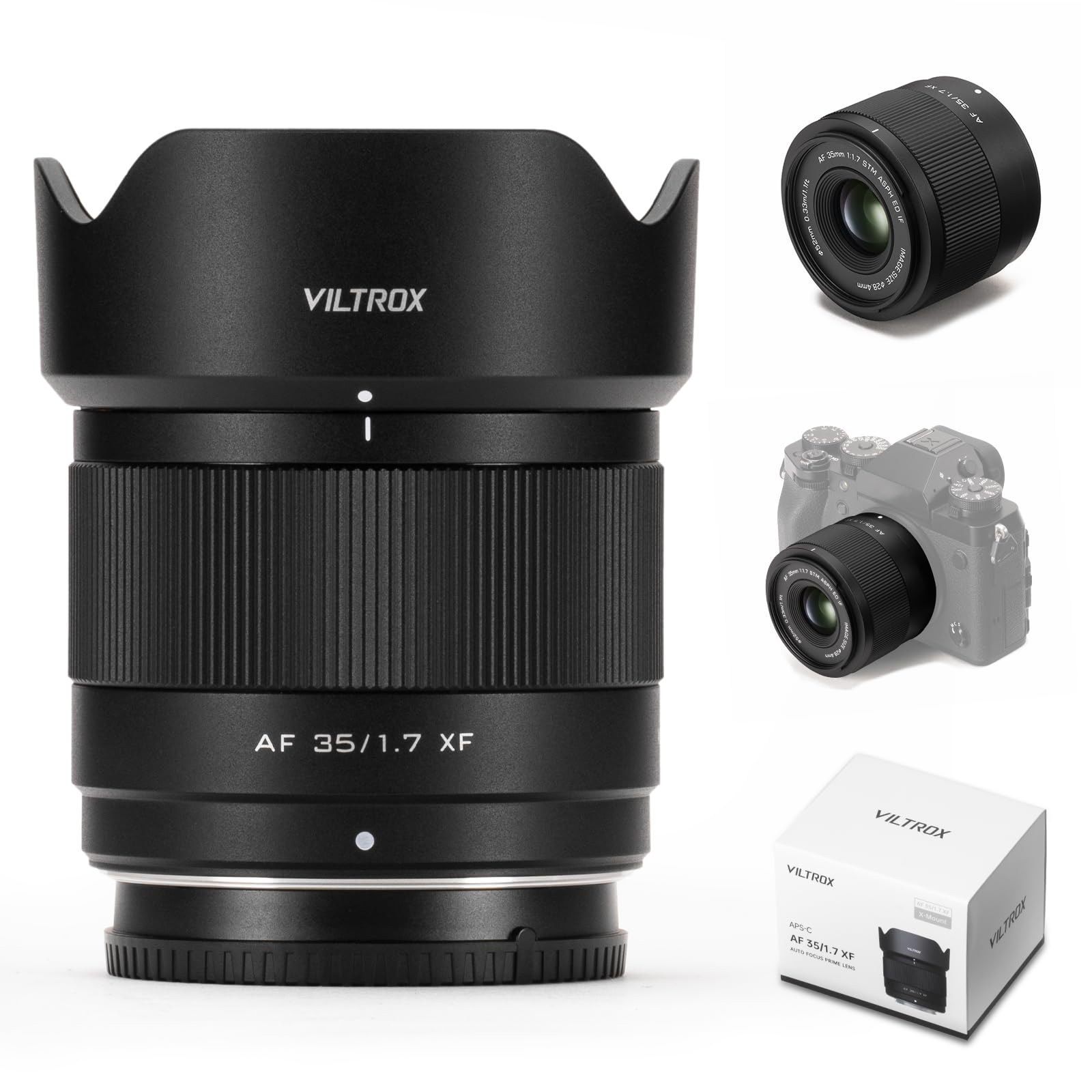
Viltrox 35mm F1.7

84 /100
Studio Score Strong Evidence

Key details

Weight
151g
Autofocus
STM with eye/face AF
Focal Length
35mm (53mm eq.)
Max Aperture
f/1.7
Check Price on Amazon

The Viltrox 35mm f/1.7 pairs a 53mm-equivalent normal view with a 151g body and an f/1.7 aperture, giving X-S10 and X-S20 owners the broadest everyday single-prime option in this set. The focal length matches eye-level perspective for street scenes, travel snaps, and casual portraits, while the aperture handles late-afternoon and indoor light without pushing ISO. Image rendering stays clean and sharp through normal apertures, with color that needs little post-processing. At 151g, it is light enough to disappear on a small camera body, which is exactly what a carry-everywhere prime should feel like.

The STM autofocus responds quickly in well-lit scenes, and the 0.33m minimum focus distance adds close-up reach for food shots or small details. The f/1.7 maximum aperture keeps shutter speeds usable on overcast days, something the f/2.8 pancake in this set cannot match. The light body keeps the camera balanced on the X-S10 and X-S20, so the lens stays comfortable for full-day outings. Wide-open, background blur at close distances has a smooth, natural falloff.

The 35mm f/1.7 sits at a budget-friendly price point, and the normal focal length covers the widest spread of daily subjects in this set. On an X-S10 or X-S20 stepping up from a kit zoom, it behaves like a one-lens kit: light enough to leave on the camera, sharp enough for casual use, and fast enough after sunset. The compromise is a fixed 53mm-equivalent view, so you frame with your feet rather than a zoom ring.

This is the default first prime for X-S10 and X-S20 owners who want one everyday normal lens for travel, street, and casual portraits. It suits buyers who keep body and lens firmware current and are willing to adjust AF focus settings when needed. If you need a wider 38mm-equivalent view, or if you would rather not update firmware or adjust AF settings, the wide-normal in this set is the safer choice. For portrait work with stronger compression, the 85mm-equivalent portrait specialist in this set is the better match.

The barrel feels solid for the price, and the light weight does not translate into a flimsy build. On the X-S10 and X-S20, the small footprint keeps the camera easy to grab from a bag, and 151g means you can leave the lens attached all day without the kit dragging on your shoulder.

๐Ÿ’ก Update the lens firmware before first use and set a spot AF area when contrast is low.

Pros

  • A 53mm-equivalent normal view that frames the widest daily range of subjects.
  • Budget-friendly price that keeps a fast normal prime accessible to first-time buyers.
  • Sharp rendering with smooth background blur for casual portraits and daily details.
  • 151g body that stays comfortable on the camera for all-day carry.

Cons

  • In low-contrast scenes, autofocus can hunt before locking onto the subject.
Our verdict

The Viltrox 35mm f/1.7 is the first prime to try on an X-S10 or X-S20: light, sharp, and affordable, with a normal view that fits most daily shooting.

Check Latest Price
2

Best Portrait Prime

Viltrox 56mm F1.7

88 /100
Studio Score Strong Evidence

Key details

Weight
171g
Autofocus
STM autofocus
Focal Length
56mm (85mm eq.)
Max Aperture
f/1.7
Check Price on Amazon

The 56mm f/1.7 is the portrait specialist in this X-mount lineup: an 85mm-equivalent view that flatters head-and-shoulders framing, a 9-blade aperture for smooth round highlights, and a 171g body that suits an X-S10 or X-S20. The short-telephoto compression avoids the facial distortion of wider lenses, which makes it a dependable choice for people shots. It is not a walkaround lens; the normal prime in this set covers everyday subjects, while this focal length is the one to choose when the frame is a person. On a small Fujifilm body, the balance is easy to hold for a full session.

Wide open, the lens holds facial detail cleanly and renders backgrounds as soft blur, so subjects separate from cluttered settings. Color rendering leans natural rather than clinical, which suits skin tones straight out of camera.

Portrait and wedding shooters on a budget get the 85mm-equivalent look without a full-frame kit. Parents and family shooters get f/1.7 blur around kids, and travel photographers get a short-telephoto that slips easily into a small bag. Autofocus speed is moderate, so fast-moving sports work is outside its comfort zone. Street and wide-angle shooters should pass on the tight framing.

๐Ÿ’ก Use a small single-point AF area and half-press before the decisive moment to improve focus lock.

Pros

  • Wide-open sharpness and strong color rendering, so portraits stay detailed at f/1.7.
  • Budget-friendly pricing for an 85mm-equivalent f/1.7 with a 9-blade aperture.
  • Smooth bokeh and a 9-blade aperture give portraits clear subject separation.
  • Light 171g body that reduces fatigue during extended portrait shoots.

Cons

  • Low-contrast scenes can cause focus hunting before the lens locks.
Our verdict

For portrait and family work on an X-S10 or X-S20, this is the portrait pick to pair with the lineup's normal prime.

Check Latest Price
3

Best Compact Pancake

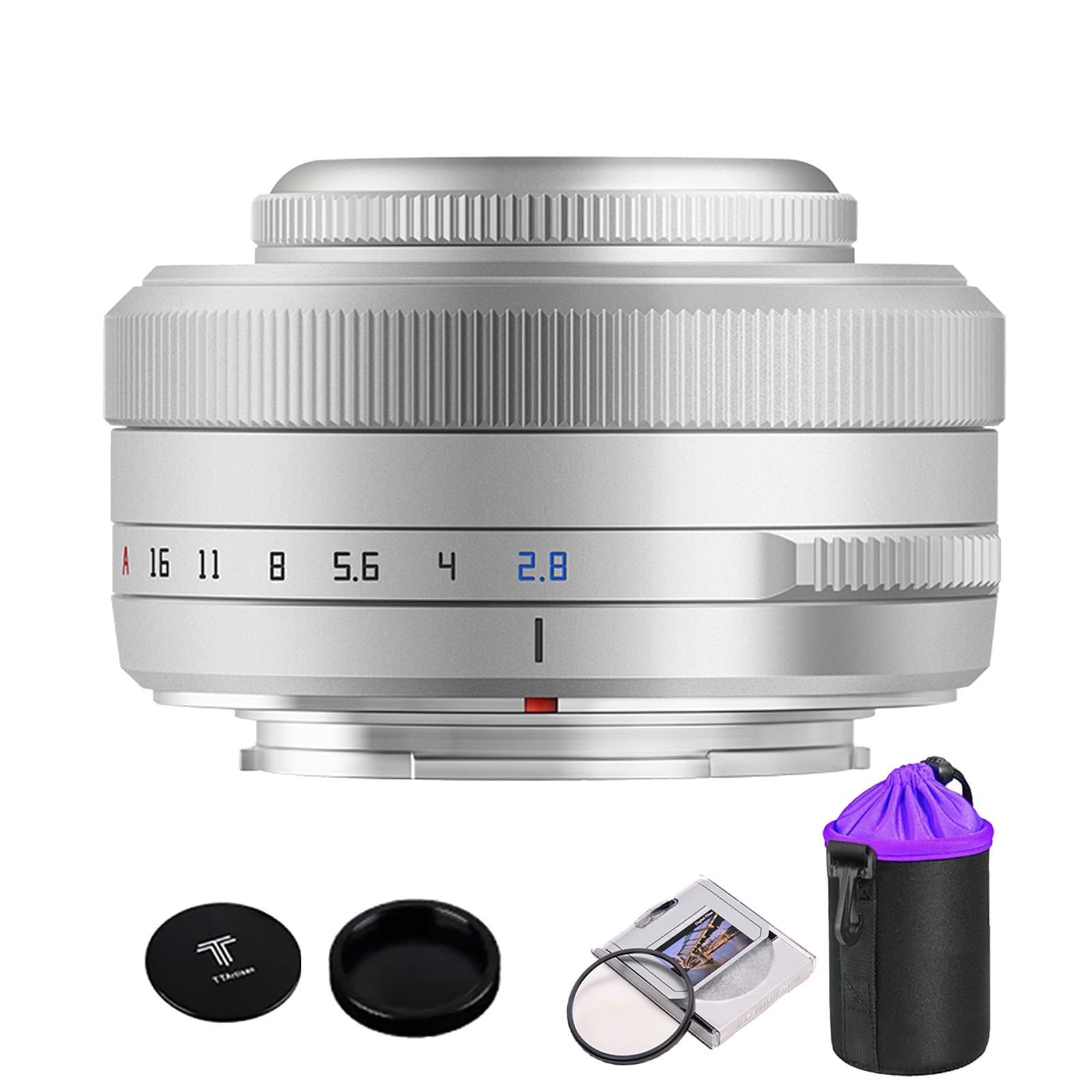
TTArtisan 27mm F2.8

82 /100
Studio Score Strong Evidence

Key details

Weight
200g
Autofocus
STM autofocus
Focal Length
27mm (41mm eq.)
Max Aperture
f/2.8
Check Price on Amazon

At 200g with a metal barrel and a clicked aperture ring, the TTArtisan AF 27mm F2.8 is a true pocket autofocus prime. Its 41mm-equivalent view frames streets and travel details with a slightly wide-normal perspective, while the default 53mm-equivalent f/1.7 prime in this lineup trades some of that compactness for a faster, more general-purpose field of view.

X-S10 and X-S20 owners who want a lens that disappears into a jacket pocket are the right fit. The metal pancake body keeps the camera easy to carry, and the clicked aperture ring gives tactile control. Autofocus may not engage on some Fujifilm bodies until the lens firmware is updated, and f/2.8 keeps this in the daylight-to-early-evening lane rather than dark interiors; for that daylight role, the compact handling is a genuine draw.

STM autofocus handles everyday focus duty, and center sharpness with natural color rendering suits the high-contrast scenes this focal length invites. The result is a walkaround prime that feels lighter than its metal body suggests and asks little from your bag space.

Pros

  • A 200g metal pancake that slips into a jacket pocket and balances comfortably on X-S10 and X-S20 bodies.
  • Sharp center and natural color rendering make a clean match for contrast-heavy street scenes.
  • Budget-friendly entry into an autofocus pancake prime without giving up a clicked aperture ring.

Cons

  • AF may not engage on some Fujifilm bodies until the lens firmware is updated.
  • The f/2.8 aperture leaves less low-light flexibility than the f/1.7 primes in this lineup.
Our verdict

Keep this one in the bag for bright street and travel days when a 41mm-equivalent pancake is all you want on the front of the camera.

Check Latest Price
4

Manual, Creative Portraits

Brightin Star 50mm F0.95

81 /100
Studio Score Strong Evidence

Key details

Weight
โ€”
Autofocus
Manual only
Focal Length
50mm (75mm eq.)
Max Aperture
f/0.95
Check Price on Amazon

The Brightin Star 50mm F0.95 is the fastest aperture in this X-mount lineup, pairing f/0.95 speed with a 13-blade iris and a full-metal body that makes manual work feel deliberate on the X-S10 and X-S20. Wide open, the rendering is soft-edged and dreamy rather than clinically sharp: chromatic aberration appears in high-contrast areas, and stopping down to f/2 or f/2.8 improves clarity substantially. There are no electronic contacts, so the camera records no aperture EXIF and focus is entirely by hand โ€” this suits a shooter who wants character, not a sharp autofocus portrait prime. That niche character also explains why it sits below the autofocus f/1.7 primes in this roundup.

Pros

  • f/0.95 aperture delivers striking low-light potential and heavily blurred backgrounds on X-S10/X-S20 bodies.
  • Full-metal body with a tactile focus ring makes manual shooting comfortable and secure.
  • Budget-friendly way to own an ultra-fast f/0.95 manual prime without paying flagship prices.

Cons

  • Wide-open sharpness softens toward the edges and chromatic aberration appears in high-contrast scenes; stopping down recovers clarity.
  • No electronic contacts means the X-S10/X-S20 records no aperture EXIF and the iris is set by hand.
Our verdict

For X-S10/X-S20 owners who want f/0.95's dreamy wide-open character and don't need edge sharpness or autofocus, this budget manual prime delivers a look no other lens in this set offers.

Check Latest Price

How to Choose

Focal Length and Framing

On an APS-C sensor, focal length is multiplied by 1.5x for the full-frame equivalent. A 35mm lens gives a 53mm view, a 56mm gives 85mm, and a 9mm gives 13.5mm. That number determines how much of the scene fits in the frame and how much background compression you get.

A wider lens forces you closer to your subject and expands perspective; a longer lens lets you stand back and compresses the background. That is why a normal prime feels flexible for daily use while a short telephoto is for portraits.

Maximum Aperture and Low Light

Aperture controls how much light reaches the sensor and how shallow the depth of field can be. An f/1.7 lens lets in roughly one stop more light than f/2.8, which can be the difference between a sharp indoor shot and a blurry one.

Fast apertures also thin the sharp zone, so eye AF has to be precise. On the X-S10 or X-S20, that means locking onto the eye rather than relying on deep depth of field.

Autofocus and Firmware

Third-party X-mount lenses use their own AF motors and communication protocols. Some lenses lock focus on older bodies but stall on newer bodies until the lens firmware is updated, so check the manufacturer's page after unboxing.

Face and eye detection depends on how well the lens communicates with Fujifilm's algorithm. If a lens hunts in low contrast, switch to a small spot focus point or update firmware; that usually fixes it.

Weight and Portability

Weight affects how often you carry the camera and how balanced it feels. A 151g prime makes the X-S10 or X-S20 feel like a compact everyday camera; a heavier lens shifts the center of gravity on a neck strap.

Compact primes slide into a bag or pocket, but the pancake barrel often means a slower aperture. Size and speed are the trade-off.

Wide Open vs Stopped Down

Budget fast primes generally soften wide open, with more chromatic aberration and haze than they show stopped down. A 50mm f/0.95 lens can look dreamy at f/0.95 and noticeably sharper at f/2.8.

Treat the maximum aperture as a character setting, not a sharpness guarantee. Stop down when you need critical clarity.

Frequently Asked Questions