8 Best Lens for Bokeh in 2026: Match Focal Length to Your Camera

Find the best lens for bokeh matched to your camera mount and shooting style, from compact 40mm primes to 85mm portrait compression.

Every fast prime promises creamy bokeh, but two specs actually control how backgrounds render: focal length and aperture-blade design. A 50mm f/1.8 flatters a face from a normal working distance. An 85mm f/1.8 compresses the background harder but needs more room to frame that same portrait.

Autofocus is where budget bokeh lenses compromise most. Budget f/1.8 primes routinely pair sharp glass and soft backgrounds with slow, audible focus motors that hunt in low light. That matters more for video or event work than for posed portraits, where you can lock focus and recompose.

Mount choice is just as decisive. A DSLR-era lens can work on a mirrorless body with an adapter, but native optics stay smaller and keep the full benefit of modern focus systems. Start with the body you own, then choose the focal length that fits how close you can get to your subject.

1

Best Overall

Canon EF 50mm f/1.8 STM

96 /100
Studio Score High Confidence

Key details

Autofocus
STM
Focal Length
50mm
Max Aperture
f/1.8
Mount & Weight
EF, 5.6 oz
Check Price on Amazon

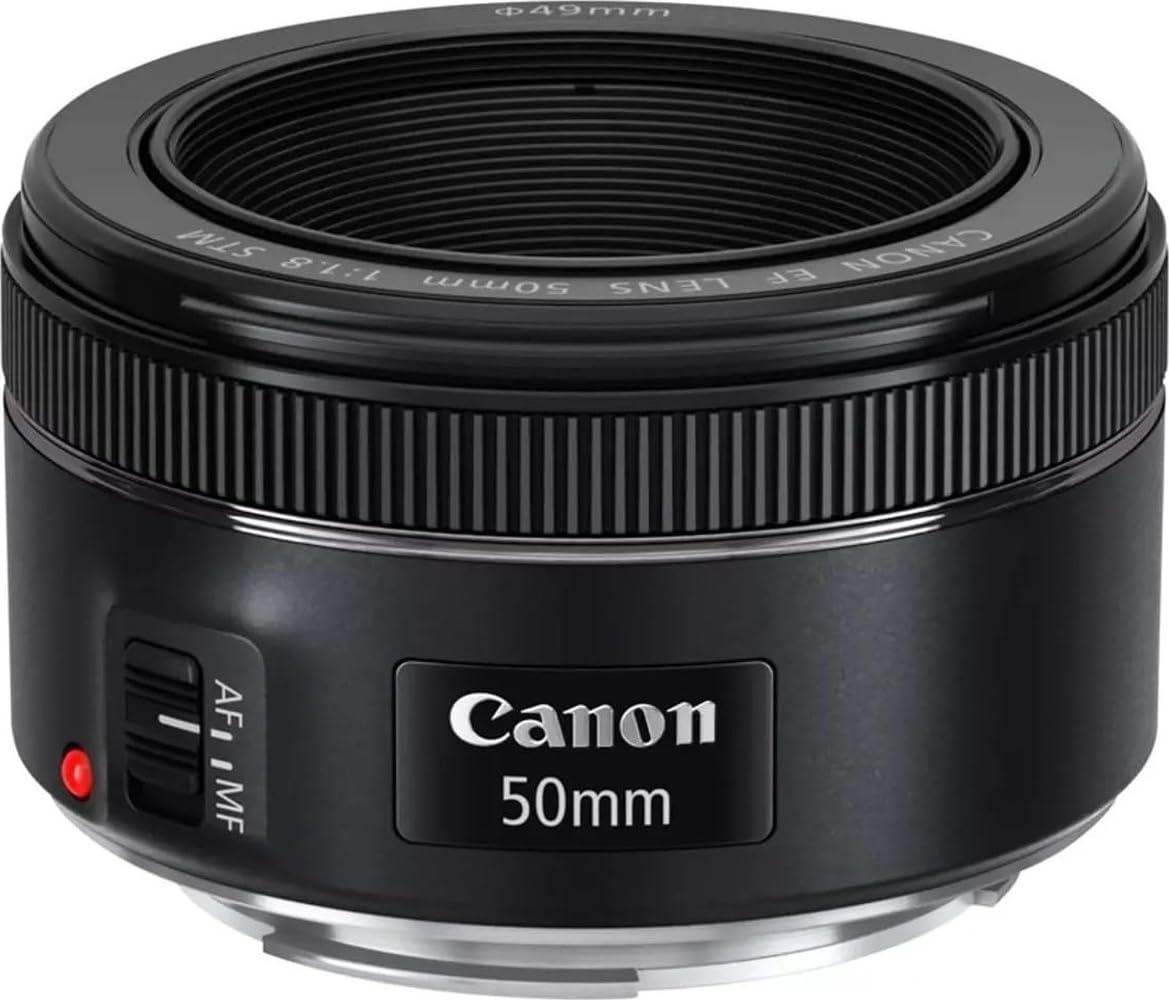
At f/1.8, the Canon EF 50mm f/1.8 STM produces the shallow depth of field and soft background separation that a bokeh-first buyer is after. Center sharpness is strong even wide open, and stopping down to f/2.8 sharpens the edges without losing the blurred backdrop. Color rendering is clean, and the fast aperture keeps indoor shots usable in low light. The 50mm focal length also flattens facial features slightly, which helps portraits.

The seven-blade aperture renders out-of-focus highlights with a smooth, rounded shape in typical portrait settings. On full frame the 50mm field of view gives head-and-shoulders framing with natural proportions; on APS-C, the same lens becomes an 80mm-equivalent portrait length, which is even more flattering for tight crops. The focal length also compresses backgrounds enough to keep attention on the subject.

This lens is for Canon EF DSLR shooters who want a fast prime for portraits and low-light shots without moving to premium glass. Its entry-level price makes it a reasonable first prime, and the f/1.8 aperture provides enough background blur to make snapshots look deliberate. It is also a sensible second lens for shooters who own only a kit zoom and want their first taste of shallow depth of field. The autofocus can be slow and audible in low light, so stills photographers who can work with single-point AF will get the most value. Canon RF mirrorless owners should plan on using an adapter, and videographers who need silent focus should look elsewhere.

This is the lens that defines the Nifty Fifty category: a fast, sharp 50mm prime with creamy backgrounds and an entry-level price that leaves room for the rest of a kit. The price makes the jump from kit zoom to prime a small one, which lowers the barrier to learning how aperture shapes an image. It does not pretend to be a silent video lens or a compact adapter-free RF option; its job is stills portraiture. For a first prime, that focus is more useful than a bag of extra features.

At 5.6 oz, the lens is light enough to stay mounted on a DSLR for long outings. It rewards deliberate shooting: stop down to f/2.8 or f/4 for edge-to-edge sharpness, and use f/1.8 when you need background separation in dim rooms.

๐Ÿ’ก In dim scenes, use single-point AF on a high-contrast edge to help the STM motor lock on faster.

Pros

  • Sharp center detail with clean color and strong low-light capability at f/1.8.
  • Smooth background blur and pleasing bokeh at f/1.8.
  • Strong portrait performance at an entry-level price.
  • Very sharp when stopped down to moderate apertures.

Cons

  • Focusing noise from the STM motor and manual ring can be noticeable in quiet settings.
  • Autofocus can be sluggish in low light and may hunt before locking on.
Our verdict

For Canon EF shooters chasing shallow depth of field, this is the budget bokeh benchmark: f/1.8 speed, sharp rendering, and creamy backgrounds. Portraits and low-light stills are its natural territory.

Check Latest Price
2

Best for Canon Mirrorless

Canon RF 50mm f/1.8 STM

94 /100
Studio Score High Confidence

Key details

Autofocus
STM
Focal Length
50mm
Max Aperture
f/1.8
Mount & Weight
RF, 5.6 oz
Check Price on Amazon

Native RF mount, 5.6-ounce weight, and a fast f/1.8 aperture make this the compact route to classic 50mm bokeh on Canon EOS R bodies. It drops onto R-series cameras without an adapter and adds a control ring for quick settings changes.

At f/1.8, background separation is strong for portraits and close-in subjects; stopping down improves landscape sharpness. The seven-blade aperture keeps out-of-focus areas smooth, and the compact body encourages carrying the lens rather than leaving it at home. Center detail holds up wide open, so the lens pulls double duty for portraits and travel shots.

The STM autofocus is quick enough for typical stills work in normal light, and the smooth bokeh is the main draw for people-focused photography. The lens is at its best when you are shooting at f/1.8 near the subject, letting background tones fall into soft blur.

This is a stills-first nifty-fifty for EOS R / RP / R5 / R6 / R7 owners who want a light, native 50mm for portraits and everyday photography. If video autofocus is a primary need, this RF prime is not the right fit; for photographers, the smooth bokeh and small size outweigh that boundary. Travelers who pack light will appreciate the adapter-free design and 5.6-ounce body.

๐Ÿ’ก For video, point at static subjects or switch to manual focus; the AF system is happiest when not chasing movement.

Pros

  • Sharp images and detailed portraits at f/1.8.
  • Pleasing bokeh with smooth out-of-focus backgrounds.
  • Compact 5.6-ounce body is easy to carry on long outings.
  • Cost-effective RF-native 50mm for Canon mirrorless shooters.

Cons

  • Autofocus can hunt when tracking moving subjects in video, so this lens is best treated as a stills-first prime.
Our verdict

For still-photo EOS R owners who want smooth f/1.8 bokeh and a light native prime, this RF 50mm hits the mark at a mid-range price.

Check Latest Price
3

Best Budget Sony FE

Sony FE 50mm f/1.8

93 /100
Studio Score High Confidence

Key details

Autofocus
DC motor
Focal Length
50mm
Max Aperture
f/1.8
Mount & Weight
Sony E, 186 g
Check Price on Amazon

The Sony FE 50mm f/1.8 gives E-mount shooters the classic full-frame 50mm look at a budget price and an easy-carry 186 g. It pairs a fast f/1.8 aperture with clean sharpness, natural color, and smooth subject separation, which is exactly what most portrait shooters want from a prime. If you need stronger background compression, the 85mm f/1.8 in the same system pulls scenes tighter but costs more and requires more room to frame a head-and-shoulders shot.

At f/1.8 the lens is usable wide open, and stopping down to f/2.8 cleans up the edges further. The seven-blade aperture keeps out-of-focus highlights from turning harsh, so portraits read as soft and dimensional rather than busy. Color rendering stays neutral and pleasant, and the small body makes it natural to leave on the camera for a full day of walking around.

Budget-conscious Sony A7, A6xxx, and ZV-E shooters get a compact prime for portraits, everyday photos, and low-light stills. Autofocus can be slow and audible in quiet, dim settings, so videographers and sports shooters should look elsewhere; manual focus or a higher-tier prime covers those needs. If you are moving from a kit zoom, the shallow depth of field is the biggest visible upgrade.

Pros

  • Affordable f/1.8 prime that brings the classic 50mm look to Sony E-mount without premium pricing.
  • Sharp, clean images with good color and smooth subject separation.
  • Light 186g body makes it easy to carry all day on an A7 or A6xxx.
  • Pleasant bokeh and a portrait-friendly focal length suit everyday photography.

Cons

  • In quiet rooms, the focus motor is audible during normal focusing.
  • In dim light, autofocus can hunt before locking onto the subject.
Our verdict

Sony E-mount shooters on a budget who want classic 50mm bokeh without hauling a heavy lens get a compact prime that delivers on the look.

Check Latest Price
4

Best Portrait Compression

Sony 85mm f/1.8 FE

94 /100
Studio Score High Confidence

Key details

Autofocus
Double linear motor
Focal Length
85mm
Max Aperture
f/1.8
Mount & Weight
Sony E, 10.4 oz
Check Price on Amazon

The Sony 85mm f/1.8 compresses backgrounds more aggressively than the 50mm primes in this lineup, which is exactly the look portrait shooters want when they need a subject to separate from a busy scene. The 9-blade aperture turns highlights into soft, rounded orbs, and the 10.4-ounce body keeps the lens easy to carry through a session without adding noticeable weight to the camera.

Sharpness is strong at f/1.8, so eyes stay crisp without stopping down, and the double linear motor autofocus is quick and quiet enough for natural portrait work. The lens also holds up well on APS-C bodies, where it frames like a 127mm portrait prime with even tighter background separation.

This is the right buy for Sony E users who want classic 85mm compression for portraits without moving up to a G Master prime. The longer working distance means you'll need more room than a 50mm, so tight indoor spaces can be restrictive; if you shoot wide open at f/1.8, high-contrast edges may show chromatic aberration, so plan to stop down or correct in post for those shots. The mid-range price places it above the budget 50mm primes, so it is a deliberate portrait investment rather than an all-purpose first lens.

Pros

  • Sharp wide-open performance with strong build quality at a weight that won't slow you down.
  • Creamy bokeh from the 9-blade aperture gives portraits a smooth, rounded background blur.
  • The 85mm perspective compresses faces and backgrounds for flattering portrait framing.
  • Fast, quiet double-motor autofocus keeps portrait sessions moving without mechanical noise.

Cons

  • The fixed 85mm focal length is a dedicated portrait tool, not a flexible walkaround option.
Our verdict

Sony portrait shooters who want classic 85mm framing without G Master pricing finally have a compact prime that delivers on it.

Check Latest Price
5

Best Compact Nikon Z

Nikon Z 40mm f/2 SE

88 /100
Studio Score Strong Evidence

Key details

Autofocus
AF / MF
Focal Length
40mm
Max Aperture
f/2.0
Mount & Weight
Nikon Z, 5.92 oz
Check Price on Amazon

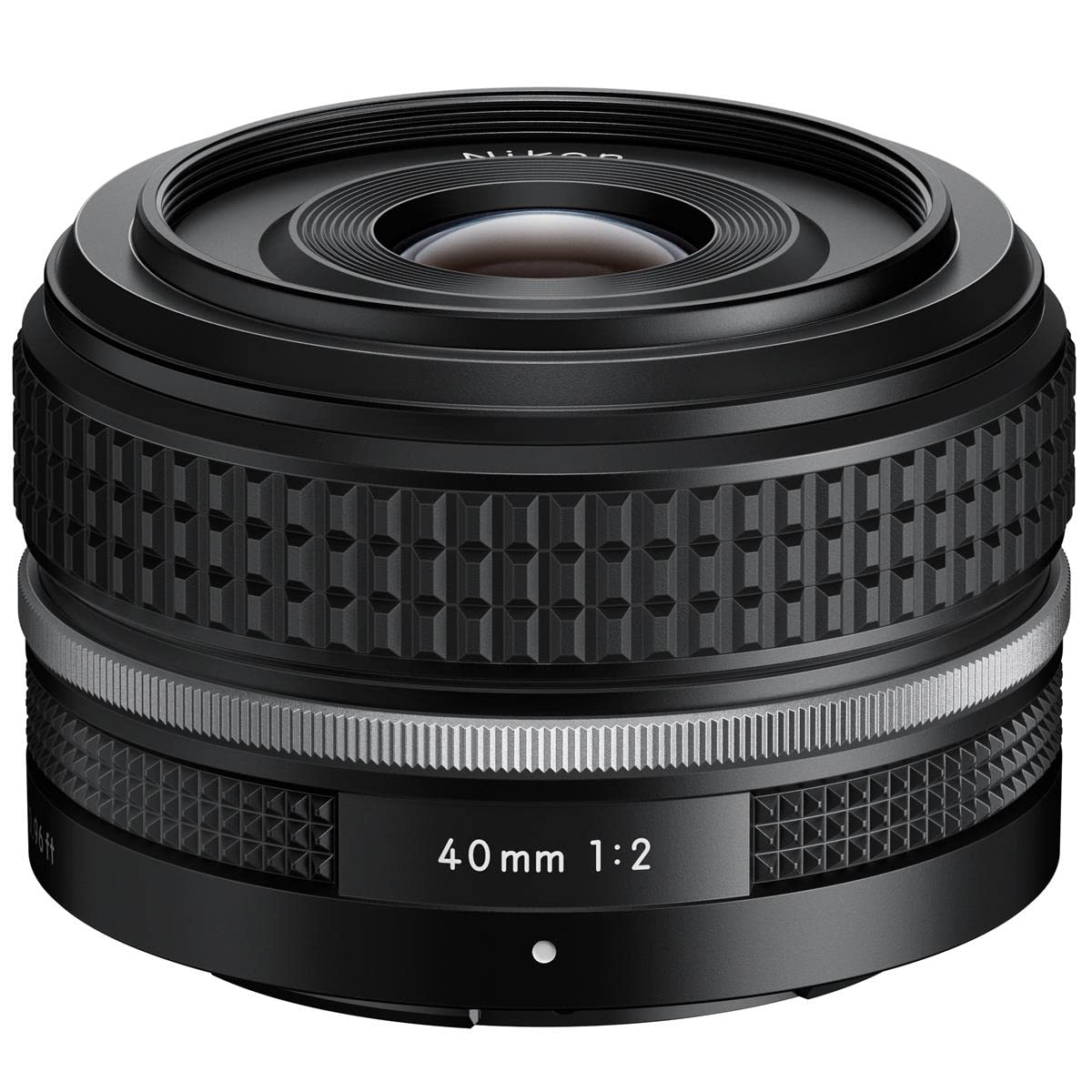
The NIKKOR Z 40mm f/2 SE pairs a fast f/2 aperture with a 5.92-oz native Z body, giving Nikon shooters a compact everyday prime that still produces smooth, rounded bokeh. Nine-blade aperture keeps out-of-focus highlights gentle, and the retro styling is a natural match for Z fc and Zf bodies. On full-frame bodies, the 40mm field of view sits between classic 35mm and 50mm perspectives for flexible street framing; on APS-C, it behaves like a 60mm equivalent, adding portrait-friendly compression. The f/2 aperture keeps low-light shooting practical without turning the lens into a large, heavy optic.

Nikon Z full-frame and APS-C users who want one small prime for street or walkaround use will appreciate the 40mm angle. The plastic barrel construction is a tradeoff: it lowers weight, but the lens does not match the all-metal feel of S-Line glass. Street and travel shooters get a fast f/2 prime that slips into a bag without adding bulk, and the SE styling pairs neatly with retro camera bodies.

At a mid-range price, this lens gives Nikon Z shooters a cost-effective path to fast-aperture rendering without S-Line bulk. The lightweight build keeps a Z fc or Zf balanced, and the f/2 maximum aperture separates subjects from busy backgrounds at close working distances. The compact footprint makes it a practical daily prime for travel and street photography.

Pros

  • Strong optics and a compact retro body deliver smooth f/2 bokeh for daily street carry.
  • Nine-blade aperture preserves circular out-of-focus highlights, adding polish to backlit scenes.
  • Cost-effective native Z prime for Nikon shooters who want fast-aperture rendering without S-Line pricing.

Cons

  • The 40mm focal length compresses backgrounds less than 50mm or 85mm portrait primes.
Our verdict

For Nikon Z shooters who want smooth bokeh in a small daily carry, the 40mm f/2 SE delivers retro character and fast-aperture rendering at a mid-range price.

Check Latest Price
6

Budget Sony Users

Meike 50mm f/1.8 AF

83 /100
Studio Score Strong Evidence

Key details

Autofocus
STM
Focal Length
50mm
Max Aperture
f/1.8
Mount & Weight
Sony E, 300 g
Check Price on Amazon

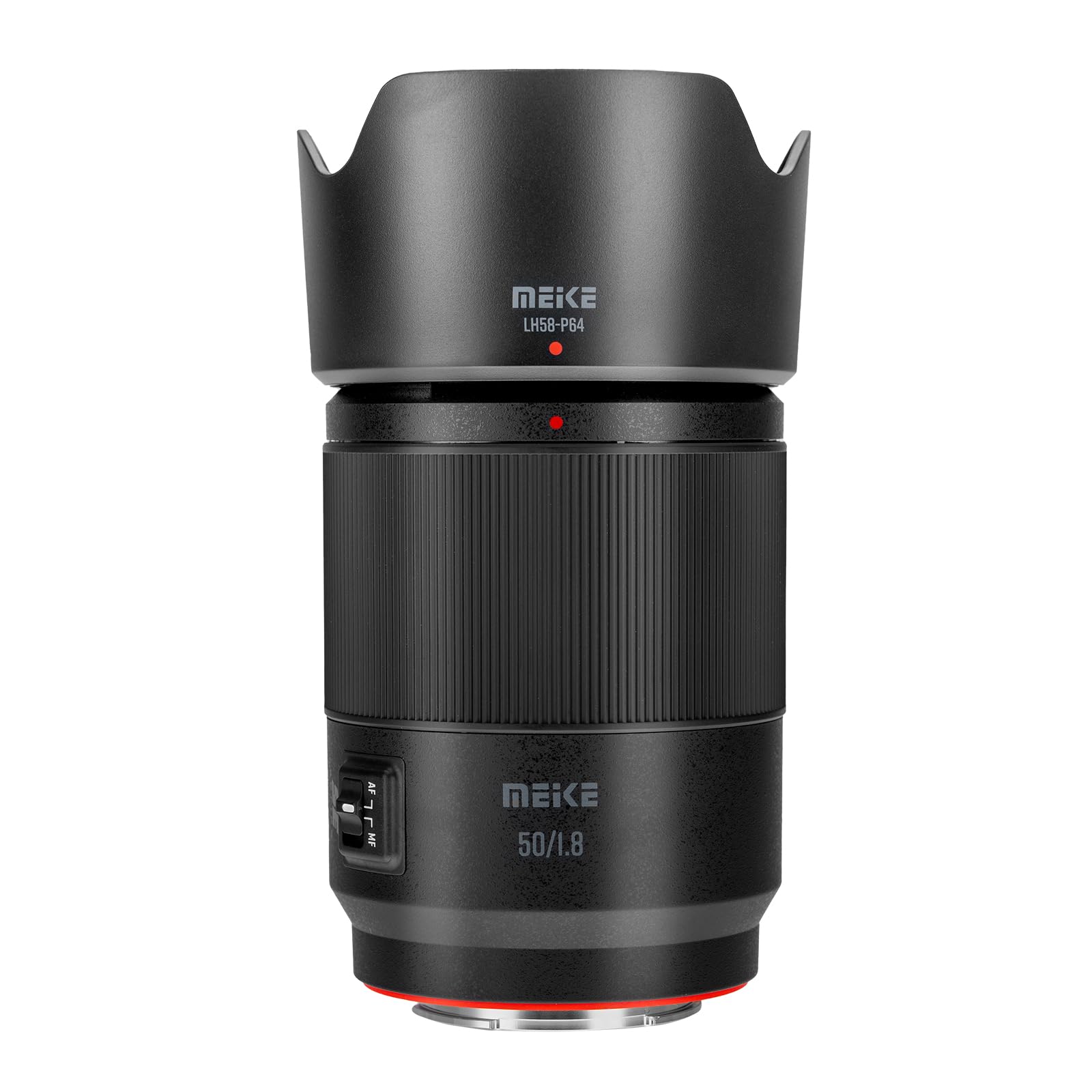
The Meike 50mm f/1.8 AF gives Sony E shooters a budget-friendly route to f/1.8 bokeh, with a 9-blade aperture and solid build quality that balances well on the camera. Autofocus handles portrait work and low-light stills without fuss, which matters more for bokeh-focused stills than for silent video. The lens steps back from the first-party Sony 50mm f/1.8 mainly on the minimum focus distance: if your framing needs to get close to a subject, the lens may not get you there. The AF can also be audible in video work, so keep this as a stills-oriented portrait lens. That narrower sweet spot is why it sits below the first-party Sony in this set.

Pros

  • Budget-friendly autofocus 50mm f/1.8 for Sony E full-frame with a 9-blade aperture.
  • Autofocus holds up for portrait and low-light shooting.
  • Solid build quality with balanced weight on Sony E bodies.

Cons

  • For video work, autofocus can be audible or hesitate when tracking moving subjects.
  • Close-up composition is limited by the minimum focusing distance.
Our verdict

For stills-focused Sony E shooters who want an affordable 50mm f/1.8 bokeh prime without first-party pricing, this lens is the cost-effective pick.

Check Latest Price
7

Budget Canon Shooters

Yongnuo 35mm f/2 EF

79 /100
Studio Score Established

Key details

Autofocus
โ€”
Focal Length
35mm
Max Aperture
f/2.0
Mount & Weight
Canon EF, 155 g
Check Price on Amazon

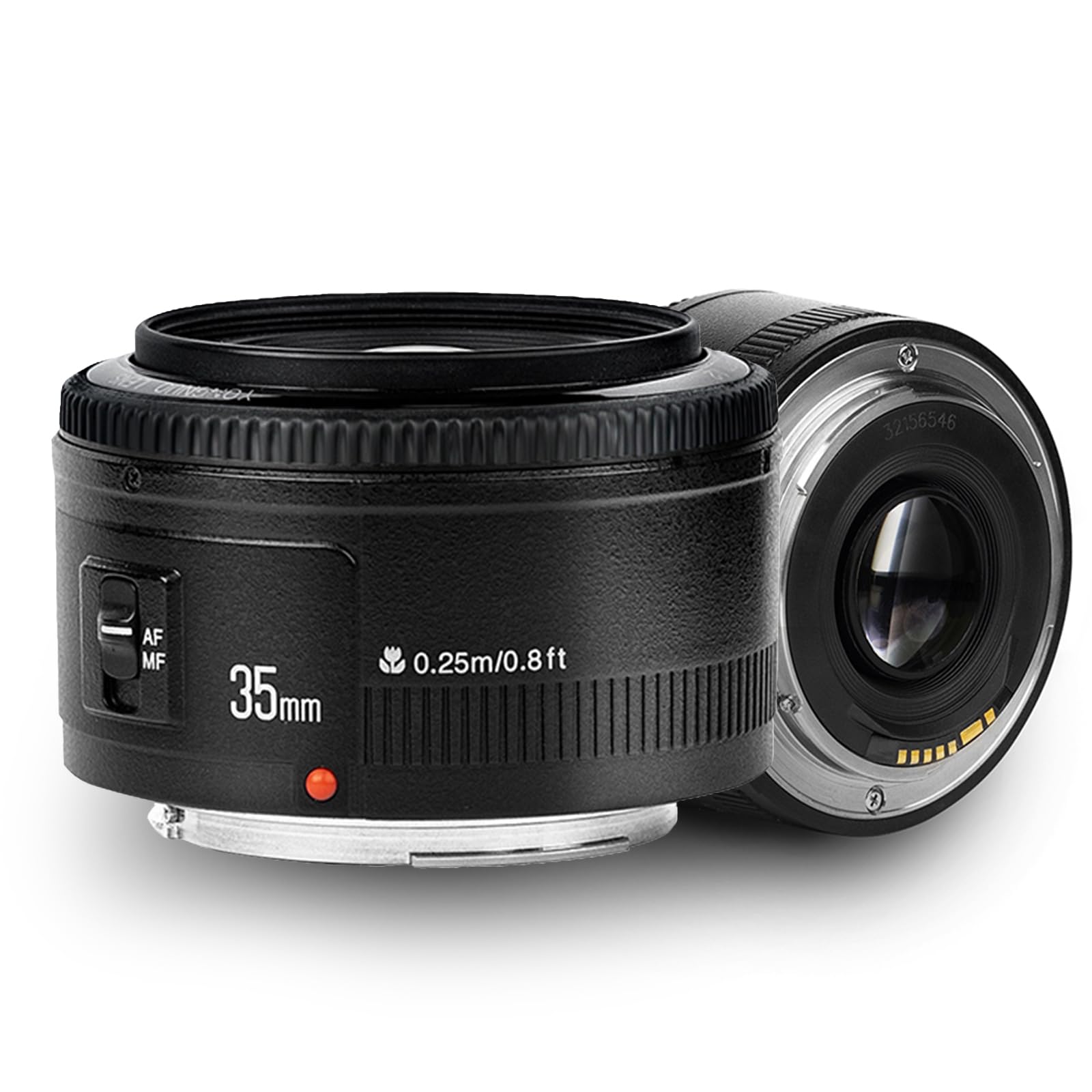
YONGNUO's 35mm f/2 is a compact, budget-friendly prime that delivers solid build and pleasant image quality for Canon EF shooters. The 155 g body makes it a natural street and environmental portrait lens, and the f/2 aperture gives you workable low-light performance and soft subject separation. For buyers chasing strong bokeh, the tradeoff is clear: 35mm focal length cannot match the background compression of a 50mm f/1.8 or 85mm f/1.8. That makes this lens a better fit for context-rich scenes than for isolated headshots.

Pros

  • Very good value for a fast 35mm EF prime.
  • Compact 155 g body is easy to carry on a Canon EF body.
  • Pleasant background blur at f/2 with solid optical quality for the money.

Cons

  • At tight portrait distances, the 35mm perspective can exaggerate facial features when you move in close for bokeh.
  • The seven-blade aperture can render out-of-focus highlights with a slightly polygonal shape at smaller openings.
Our verdict

A good match for budget-focused Canon EF shooters who want a compact 35mm prime for street scenes and environmental portraits.

Check Latest Price
8

APS-C Street Shooters

TTArtisan 25mm f/2

84 /100
Studio Score Strong Evidence

Key details

Autofocus
Manual focus
Focal Length
25mm
Max Aperture
f/2.0
Mount & Weight
Sony E
Check Price on Amazon

TTArtisan's 25mm f/2 is a compact, budget-friendly manual prime that brings strong f/2 light gathering to Sony APS-C bodies. It fits street and travel photographers, especially manual-focus learners who want a tiny lens for everyday carry. It doesn't rank higher in a bokeh-focused comparison because it's outside the 35-85mm intent: a 25mm focal length on APS-C compresses backgrounds far less than 50mm or 85mm primes, and manual focus puts action shooting outside its scope. Add some wide-open optical limits, and the result is a walkaround wide-angle rather than a portrait-bokeh option.

Pros

  • Strong optical quality at a budget price.
  • Sharp, bright f/2 rendering in a compact body.
  • Small enough to be an easy everyday carry on street walks.

Cons

  • Vignetting and chromatic aberration can appear wide open in high-contrast frames.
  • Edge sharpness can soften at f/2.
Our verdict

For low-cost street and travel carry on Sony APS-C, this compact f/2 fits a specific place in the bag; portrait-style bokeh calls for a longer lens.

Check Latest Price

How to Choose

Maximum Aperture

Maximum aperture controls light intake and the thinnest possible in-focus plane. Moving from f/2 to f/1.4 doubles the light, but pushes the optical design harder โ€” budget ultra-fast primes often show soft edges or fringing wide open.

For most buyers, f/1.8 is the practical sweet spot: strong subject separation without the size and cost of f/1.2 glass. Step up to f/1.4 or faster when you regularly shoot dark interiors or want maximum isolation.

Focal Length

Focal length shapes bokeh more than the aperture number. An 85mm lens magnifies the background, so blur looks larger and creamier at the same f-stop; a 35mm lens shows more environment and thinner-looking blur even at f/2.

The trade-off is working distance. An 85mm portrait lens needs roughly double the room of a 50mm, which is why it struggles indoors. Match the focal length to the room and subject, not just the blur.

Autofocus

Autofocus motors differ as much as optics. Budget primes commonly use DC or simple STM motors that are slower and noisier than linear motors, and they tend to hunt when contrast drops in dim light.

Marketing often says 'silent,' but ticking and hunting show up in real use. Video shooters should weigh autofocus behavior above raw sharpness; portrait shooters who lock focus once will barely notice.

Bokeh and Aperture Blades

Bokeh rendering at f/1.8 depends mostly on optical design, but stopped down it depends on the aperture diaphragm. Nine rounded blades keep highlights circular at mid apertures; seven-blade designs produce heptagon shapes.

That distinction rarely shows in wide-open portraits. It becomes visible at f/2.8 to f/4, so blade count matters most if you shoot stopped down regularly.

Mount and Weight

Mount compatibility decides whether a lens behaves as intended. A DSLR lens on a mirrorless body needs an adapter that adds length and can slow autofocus; a native lens keeps its motor design matched to the camera.

Weight also determines whether the lens lives on your camera or in your bag. A 6-ounce prime disappears on a strap, while a 1.7-pound f/1.2 lens becomes a deliberate load for an event day.

Frequently Asked Questions