4 Best DSLR for Video in 2026: Match AF, 4K, and Audio

Find the best DSLR for video by focusing on autofocus, audio input, and screen articulation rather than megapixel counts and bundle extras.

Most DSLR listings lead with megapixel counts and bundle contents. Press record, though, and those specs stop mattering. What decides whether a camera works for video is autofocus behavior in movie mode, 4K or 1080p capture, microphone input, and a screen that lets you frame from useful angles. A 24MP sensor does not fix a subject blurring while the focus hunts.

This guide sorts the DSLRs that genuinely support video work from the ones that merely record clips. Buyers who prioritize video need a body whose AF can track, whose port layout accepts a mic, and whose screen doesn't fight the shot. The right pick balances those features against price and how much you plan to grow.

Within a DSLR budget, you often trade between stills ease and video performance. The video-capable bodies carry a higher upfront cost and more controls to learn, but they also remove the 'good enough for now' ceiling that makes you upgrade again next year.

1

Best Overall

Nikon D7500

94 /100
Studio Score High Confidence

Key details

Mic Input
3.5mm mic jack
Burst Speed
8 fps
Screen Type
3.2-inch tilting touchscreen
Autofocus System
51-point AF, 15 cross-type
Check Price on Amazon

The D7500 pairs 4K UHD recording with a 51-point AF system and 8 fps burst, giving video-focused shooters the feature set that separates this DSLR from photo-first bodies in the same price band. The 20.9MP APS-C sensor produces sharp stills, and the bundled 18-140mm VR lens covers a useful range without an immediate lens swap. For movie work, the tilting touchscreen and stereo sound are the details that matter more than megapixels.

Autofocus holds up in actual shooting: the 51-point array tracks moving subjects cleanly, and low-light captures keep detail without excessive noise. The body feels solid during a long session, which matters for a camera that gets carried around. The tilting touchscreen supports low-angle video, though it does not fold forward, so self-vloggers will need a monitor or a different body.

This is aimed at video-focused DSLR shooters and action/sports photographers who need the burst rate and AF tracking. It is not a grab-and-go starter camera; the included 18-140mm lens adds carry weight, and a first-time owner should not expect to be productive immediately. A buyer moving up from a photo-first beginner body gets a clear path into 4K video and fast bursts without switching systems.

Pricing sits at the premium end of the DSLR kit range, so a tight-budget beginner can get a stills-only camera for less. The extra cost buys the 4K video pipeline and the AF performance, which is why this kit suits video work rather than basic snapshots.

Pros

  • 4K UHD recording with advanced video controls keeps movie work on a DSLR body.
  • 51-point AF with 15 cross-type sensors tracks moving subjects accurately.
  • Low-light image quality keeps detail and color without heavy noise.
  • Robust build that holds up during regular shooting.
  • 8 fps burst speed captures action sequences for sports and wildlife.

Cons

  • Dense controls and menu layout take time to learn.
  • Some units can show intermittent shutter lag despite the fast burst spec.
Our verdict

For video-focused DSLR buyers, the D7500 kit delivers 4K, rapid AF, and 8 fps without asking you to leave the optical viewfinder for mirrorless.

Check Latest Price
2

Best Entry-Level All-Rounder

Canon EOS Rebel T7

93 /100
Studio Score High Confidence

Key details

Mic Input
None
Burst Speed
3 fps
Screen Type
3.0-inch fixed LCD
Autofocus System
9-point AF, center cross-type
Check Price on Amazon

The Rebel T7 pairs a 24MP APS-C sensor with Canon's guided modes, giving a first-time buyer a clear path from full auto to manual exposure. The EF/EF-S mount opens a broad, cost-effective lens lineup, and the kit's 18-55mm IS II covers everyday focal lengths while its stabilizer helps handheld shots. As a complete body-and-lens package, it is a sensible entry point into Canon's system; the money goes into stills quality and lens access rather than video extras.

Daylight stills hold pleasing color, and the sensor leaves enough latitude to lift shadows in a basic editor. The optical viewfinder stays clear in bright sun, and the body is light enough to carry through a day of shooting. Guided modes introduce aperture and shutter speed in plain language, so the move from phone-camera auto to DSLR control feels less abrupt. The 9-point AF handles stationary subjects without drama, which is a realistic starting scope for a new shooter.

For anyone comparing DSLRs specifically for video, the 1080p cap and slow movie autofocus set the boundary: this is a stills-first camera. It suits students and hobbyists who shoot primarily photos and want occasional family clips. Serious video work belongs to the top pick in this lineup.

Pros

  • 24MP sensor produces sharp, colorful stills that suit a first camera.
  • Guided modes make aperture and shutter-speed basics approachable for new shooters.
  • Complete kit with the 18-55mm IS II is a cost-effective entry into Canon's system.
  • Sturdy build and familiar controls hold up for classroom or hobby use.

Cons

  • Wi-Fi photo transfer setup can be frustrating with newer computers.
  • Fixed LCD cannot tilt for high-angle video or vlogging.
Our verdict

Still-learning photographers get a full kit with room to grow; video-led buyers are better served by the top pick.

Check Latest Price
3

Budget High-Resolution Stills Pick

Nikon D3200

88 /100
Studio Score Strong Evidence

Key details

Mic Input
3.5mm mic jack
Burst Speed
4 fps
Screen Type
3.0-inch fixed LCD
Autofocus System
11-point AF
Check Price on Amazon

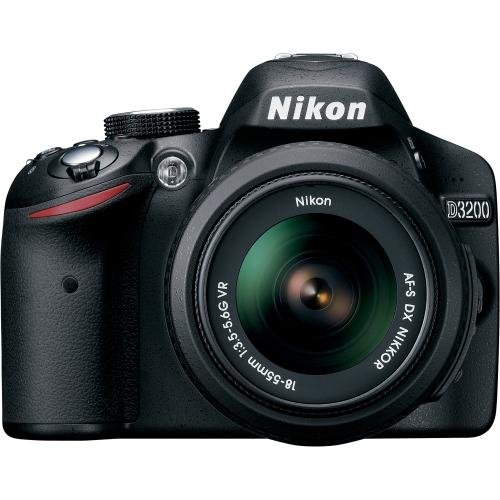
The D3200's 24MP sensor delivers image quality that holds up against much newer cameras, and the refurbished price makes that resolution unusually accessible. Combined with the 18-55mm kit lens, it's a compact, light DSLR that is clearly oriented toward stills — the direct counterpart to the video-focused top pick in this roundup.

The optical viewfinder is bright, the 11-point autofocus locks on quickly for stills, and the body is light enough to carry through a day of travel. Refurbished units tend to arrive with minimal wear, and the kit lens covers the everyday focal lengths a beginner needs.

This is for stills-first beginners who want the most resolution per dollar and are comfortable with a menu system and button layout that feel dated. The learning curve is real, but so is the payoff in photo quality. Video is an afterthought here: 1080p recording with basic controls will cover a casual clip, but deliberate movie-making needs the top pick's 4K, tilting screen, and faster autofocus.

Pros

  • 24MP sensor captures sharp, vivid stills at a budget-friendly price.
  • Refurbished units arrive looking close to new in many cases.
  • Beginners can get clear photos right away with minimal setup.

Cons

  • The kit lens narrows to f/5.6 at the telephoto end, so indoor shots may need a faster prime or flash.
  • Refurbished kits may include a third-party battery or charger, and one charger arrived unusable.
Our verdict

For a beginner who values maximum stills resolution and can accept an older menu, this is the most economical way into Nikon's F-mount system.

Check Latest Price
4

Budget Canon WiFi Starter

Canon EOS Rebel T6

89 /100
Studio Score Strong Evidence

Key details

Mic Input
None
Burst Speed
3 fps
Screen Type
3.0-inch fixed LCD
Autofocus System
9-point AF, center cross-type
Check Price on Amazon

The Canon EOS Rebel T6 is the lowest-cost Canon Rebel with WiFi in this comparison, and the renewed package makes that entry point more approachable. It pairs an 18MP APS-C sensor with the EF-S 18-55mm IS II kit lens, and that zoom range covers everyday framing from group shots to close portraits.

Renewed bodies usually arrive in near-new condition, and the 18MP sensor delivers pleasing stills in daylight. The guided user interface keeps the learning curve shallow, which helps beginners stick with it. WiFi transfer works well for quick phone sharing once the app has been set up, though the initial connection takes a few minutes to establish. Image quality is not going to challenge higher-tier cameras, but it is well matched to a first camera.

This is for budget-conscious newcomers who want a Canon DSLR with WiFi and are comfortable buying renewed gear rather than paying new prices. A missing external microphone jack limits audio capture, so it is not the body for vloggers or interviews, and renewed-unit condition can vary, so inspect the kit quickly after delivery.

Pros

  • Renewed units usually arrive looking and working like new, keeping the cost of entry low.
  • The 18MP sensor produces satisfying stills for a beginner DSLR.
  • WiFi and the renewed price make it a strong budget value in this lineup.
  • First-time DSLR users get a guided, beginner-friendly interface.

Cons

  • Fixed 3-inch LCD has no tilt or touch input for flexible video framing.
  • Video is capped at 1080p/30, so buyers expecting 4K need a higher-tier body.
Our verdict

For a first DSLR, this renewed Rebel is a practical way to learn Canon's system while keeping the initial investment low.

Check Latest Price

How to Choose

Choose Your Recording Format

4K UHD capture gives you four times the pixel data of 1080p, which matters when you crop in post or want a future-proofed file. But 4K also brings larger files, shorter record times, and more processing heat.

A 1080p-only camera can still deliver clean video, but it caps your flexibility when you're learning to edit.

Autofocus Under Live View

DSLR video autofocus is not the same as stills autofocus. In live view, the mirror is up and the camera relies on contrast-detect or hybrid detection, so the lens hunts on low-contrast subjects and smooth tracking is rare.

A large phase-detect array from stills mode doesn't automatically translate to movie AF; the body has to use that array while recording. A camera with usable movie AF lets you record a moving subject without constant refocusing, while one that hunts makes every clip noticeably soft.

Screen Articulation and Touch

A fixed screen locks you into eye-level framing, which gets awkward for waist-level, high-angle, or self-facing shots. A tilting or fully articulated touchscreen lets you see the frame while the camera sits lower or higher, and touch-to-focus makes manual pulling easier when you're shooting handheld.

If you plan any vlogging, a screen that faces you is a requirement, not a convenience.

Burst Speed for Hybrid Shooters

Continuous shooting determines whether the same camera can carry video and action photography. An 8 fps body captures peaks that a 3 fps entry model often misses.

Video shooters may not need that speed, but hybrid shooters use it to justify carrying one body instead of two.

Audio Input

Built-in DSLR microphones are fine for reference audio, but they pick up handling noise and compress room tone. A 3.5mm mic jack lets you use a shotgun or lavalier and clearly improves dialogue intelligibility for interviews and events.

If a camera lacks this jack, the only workaround is recording audio separately and syncing in post, which adds time to every project.

Frequently Asked Questions