7 Best Camera for Live Event Production in 2026: Match Outputs

Find the best camera for live event production by checking where 4K, NDI, SDI, and USB outputs actually land - not just the label.

Most live event camera listings sell 4K and AI tracking, but the first question belongs to your switcher: can it accept NDI, SDI, HDMI, or USB at the resolution your shoot needs? Across current PTZs, 4K often appears only on USB or local recording while NDI and HDMI outputs remain 1080p. Matching outputs to your production path avoids paying a 4K premium you cannot actually use.

The practical trade-off is between feature mix and proven field use. A less expensive camera may include 4K and NDI on paper, while a similarly priced option with more real-world use delivers 1080p with smoother control and clearer setup. Venue size, volunteer skill level, and fixed-install versus wireless needs settle that choice.

Treat auto-tracking as a convenience for static speakers, not an operator replacement. The camera that fits your live event is the one whose output paths and control surface match how your volunteers actually run the show.

1

Best Overall

TONGVEO 4K NDI PTZ 20X

90 /100
Studio Score High Confidence

Key details

PoE
Yes
Outputs
4K HDMI/USB; NDI 1080p
AI Tracking
AI auto-tracking
NDI Support
Official NDI
Check Price on Amazon

The TONGVEO 4K NDI PTZ pairs true 4K30 over HDMI/USB with official NDI, locking 3G-SDI, PoE, and 20x optical zoom, giving a fixed production room one camera for several signal paths. Among the PTZ options in this class, it does not force you to choose between 4K, NDI, and SDI. The 20x zoom reaches from the back of a sanctuary to a speaker without losing face detail, and PoE keeps power and network on a single cable for ceiling or rear-wall installs. The image stays sharp in the mixed lighting of a church or conference room, and the long lens covers wide stage shots and close-ups from the same mount. That output package is rare at a mid-range price.

Streaming workflows slot into OBS, vMix, and ATEM switchers over NDI, while USB mode connects to Zoom, Teams, or a laptop encoder. The official NDI license is included, so no add-on purchase is required to put the camera on an NDI network. In a multi-camera room, the NDI source shows up as a selectable input inside vMix or OBS, and the 3G-SDI output gives a direct path into an ATEM switcher.

Long-term use includes weekly Zoom calls, and image quality holds up against a more expensive Logitech alternative. The output set matters when the camera is mounted above a crowd and the operator is at a switcher, because the signal can travel over NDI, SDI, or USB without a dedicated capture card. This is a fixed-install camera, not a quick-run camera for a mobile production cart.

Best for churches, nonprofits, and production teams running fixed multi-camera streams from a sanctuary, conference room, or auditorium. The 4K HDMI/USB path works for program recording, while NDI and SDI feed OBS, vMix, or an ATEM switcher over long cable runs. Pan speed is not adjustable, and HDMI/USB handshaking can require a reboot after standby or when routed through a laptop. Fixed installs absorb those quirks; a crew expecting fluid manual PTZ response or zero handshake issues should set expectations before buying. This is the camera to pick when the room already has network drops for PoE and the operator wants one product to cover 4K, NDI, and SDI.

๐Ÿ’ก Assign a static IP before mounting so NDI discovery stays predictable during events.

Pros

  • Sharp 4K image keeps speakers and slides readable on house screens.
  • Drops into OBS, vMix, ATEM, Zoom, and Teams workflows without extra capture hardware.
  • Official NDI, locking 3G-SDI, PoE, and 20x zoom cover the fixed-install signal chain.
  • Build quality and image hold up against costlier alternatives.
  • Packs a broadcast-oriented feature set at a mid-range price.

Cons

  • AI tracking is best for a stationary presenter; fast sideline sports can outrun it, so a human operator is still needed.
  • NDI/IP output maxes at 1080p, so 4K has to travel over HDMI or USB rather than IP.
Our verdict

For churches and conference teams running fixed multi-camera streams, this is a complete 4K, NDI, SDI, and PoE package at a mid-range price.

Check Latest Price
2

Best Budget NDI PTZ for Church/Worship

AVKANS LV20N NDI PTZ

89 /100
Studio Score Strong Evidence

Key details

PoE
Yes
Outputs
HDMI, 3G-SDI, USB, NDI
AI Tracking
AI auto-tracking
NDI Support
NDI HX2/HX3
Check Price on Amazon

The AVKANS LV20N puts NDI HX3, 3G-SDI, and 20x optical zoom on a budget-friendly 1080p PTZ platform. The image is sharp at 1080p60, the pan-tilt motors are quiet in a sanctuary, and PoE lets a single network cable carry power, video, and control. Fixed installs that need broadcast outputs without a 4K upgrade get the essentials here, including a built-in tally light for the production desk.

In church streaming workflows, the camera has worked cleanly with OBS and NDI production tools. The 20x zoom can frame the front of the room from the back wall, and the built-in tally light gives the video team an instant live-camera indicator. Quiet pan-tilt movement means the camera can adjust during worship without drawing audible attention, which helps when an operator needs to reframe mid-service.

This is for volunteer-run worship teams that can use vendor support during the initial network setup. Auto-tracking is a single-operator aid, not an operator replacement; support can ease setup friction but does not change that tracking limit. Budget-focused 1080p churches get strong value, while productions that need true 4K capture should step up to the 4K NDI top pick. For churches already standardized on NDI and SDI, the LV20N fits without new infrastructure.

๐Ÿ’ก Set NDI discovery to the same subnet as the production network before first use.

Pros

  • NDI HX3, 3G-SDI, PoE, and 20x zoom deliver a broadcast-style camera path at a budget-friendly price.
  • Sharp 1080p60 image and quiet PTZ motion suit sanctuary live production.
  • Responsive vendor support has guided volunteer teams through setup questions.
  • Integrates with OBS and NDI workflows used by church production teams.

Cons

  • ONVIF support is missing, so some screen-based PTZ controllers that depend on it won't recognize the camera.
  • In fast-moving scenes, auto-tracking can lose the subject and require a manual reframe.
  • First-time network setup may require video guides or vendor help; the printed manual can miss some install scenarios.
Our verdict

Worship teams streaming in 1080p get NDI, SDI, PoE, and 20x zoom without paying the 4K premium.

Check Latest Price
3

Best Long-Reach PTZ for Large Venues

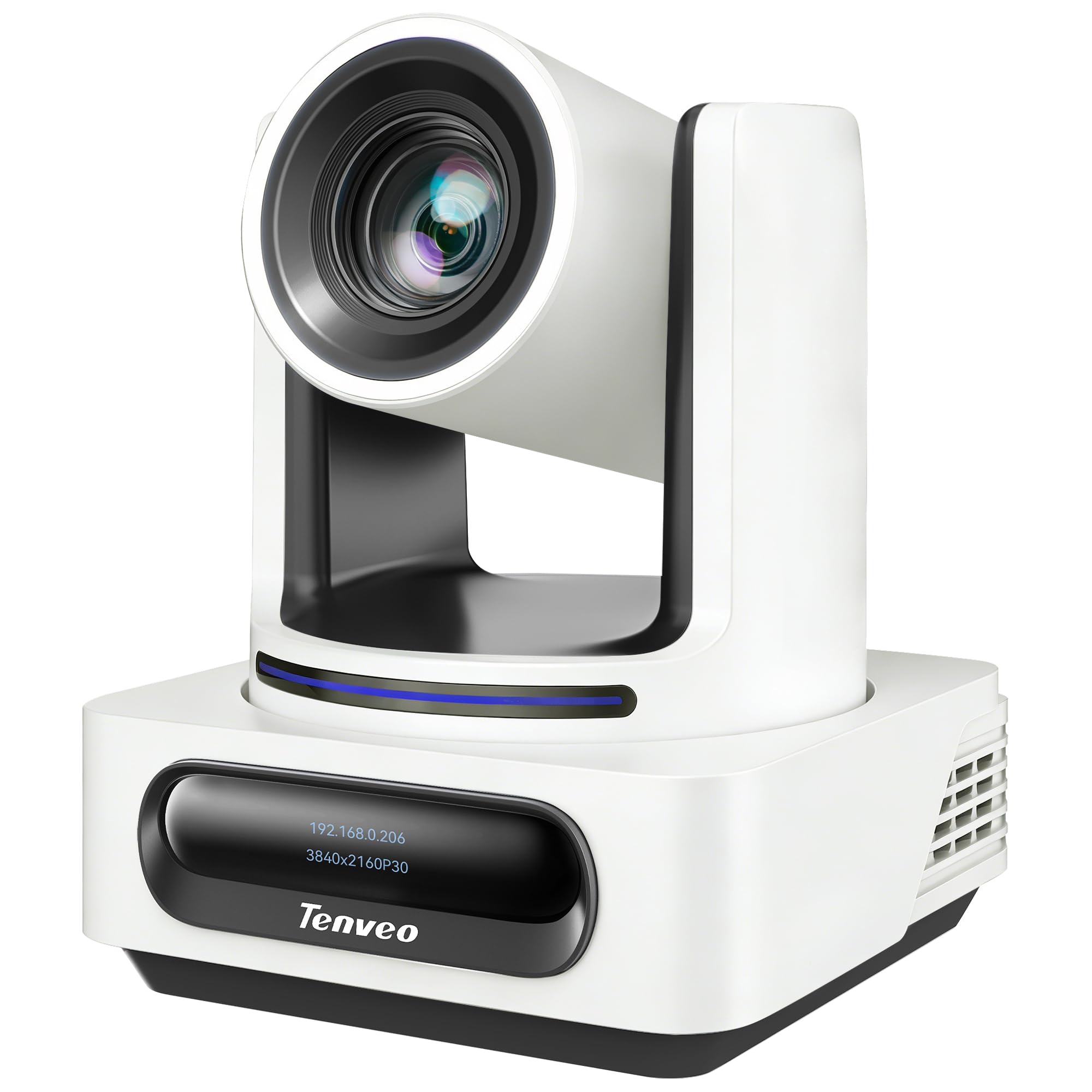
Tenveo 30X NDI PTZ

85 /100
Studio Score Strong Evidence

Key details

PoE
Yes
Outputs
3G-SDI/HDMI/IP/NDI
AI Tracking
AI auto-tracking
NDI Support
NDI HX license
Check Price on Amazon

The 30x optical zoom is the longest reach in this roundup, and it holds up where it matters: faces on a distant stage stay sharp when the camera is mounted at the back of a large sanctuary. The 1080p60 feed runs over 3G-SDI, HDMI, USB, and NDI HX, with PoE covering power and network over a single cable.

AI auto-tracking follows a speaker moving across the platform, and it can be switched off for locked-off shots. Weekly service use keeps color and focus steady, while line in/out audio lets a podium mic ride in the same stream. The body and head controls feel like professional AV gear, not a consumer webcam.

This is for large churches, auditoriums, and conference halls that route 1080p60 through SDI or NDI switchers and need close-ups from the far end of the room. 4K output isn't on the table, so productions with a 4K pipeline should use the top pick in this lineup. Teams in this position get the longest zoom in the set without paying for a broadcast camera.

Pros

  • 30x optical zoom brings distant speakers into sharp close-up from the back of a sanctuary.
  • Build and control hardware feel like professional AV gear at the price.
  • 30x NDI/SDI feature set delivers more reach per dollar than comparable PTZs.
  • Color and focus stay consistent through repeated weekend service use.

Cons

  • For rooms that don't need 30x reach, the price is a premium for reach that goes unused.
  • An individual unit can hang and refuse to reconnect after about a week of use; early burn-in testing is worthwhile.
Our verdict

For a large sanctuary that needs close-ups from the back wall in a 1080p60 SDI/NDI stream, the Tenveo 30X is the long-reach camera to mount.

Check Latest Price
4

Best Portable Wireless Multi-Cam

Mevo Start Wireless

88 /100
Studio Score Strong Evidence

Key details

PoE
No
Outputs
Wi-Fi; Ethernet; LTE
AI Tracking
No
NDI Support
No
Check Price on Amazon

The Mevo Start is the portable multicam option in this roundup: one phone app controls up to three wireless cameras, so a church service, DJ set, or sideline can be covered from multiple angles without pulling cable. The camera body is compact, and the tripod and netting rig gets it into position quickly.

Setup is app-driven and does not require AV training. A single operator can mount the camera, join a stream, and cut between angles from the phone, which is the practical payoff for fast mobile events. The 1080p feed is clean and smooth in well-lit rooms.

The app can also use the phone's LTE connection for streaming, which helps at outdoor sports venues or pop-up event spaces where wired internet is not available.

This is for solo streamers, church helpers, DJs, and sports parents who need extra camera angles without a fixed network drop. Plan around two boundaries: use Ethernet for the primary stream if Wi-Fi links are shaky, and keep low-light expectations modest. Large auditorium work that needs optical zoom or a pan-tilt-zoom head belongs with the wired PTZ cameras in this group.

Pros

  • App-based multicam switching for up to three wireless cameras from one phone.
  • Compact body and included tripod and netting get a live event rig up in minutes.
  • Single-operator control that turns one person into a multi-camera crew.

Cons

  • Battery drain can be faster than expected during continuous streaming; USB-C power is a worthwhile backup.
  • The 1080p sensor needs generous light; darker event scenes can look soft or noisy.
  • Wi-Fi and app connections can drop during a live stream, which may interrupt the feed.
Our verdict

The Mevo Start fits when the event moves fast and the venue cannot justify cable runs; permanent installs with fixed framing needs should use a wired PTZ camera.

Check Latest Price
5

Best for Sports/Sideline Streaming

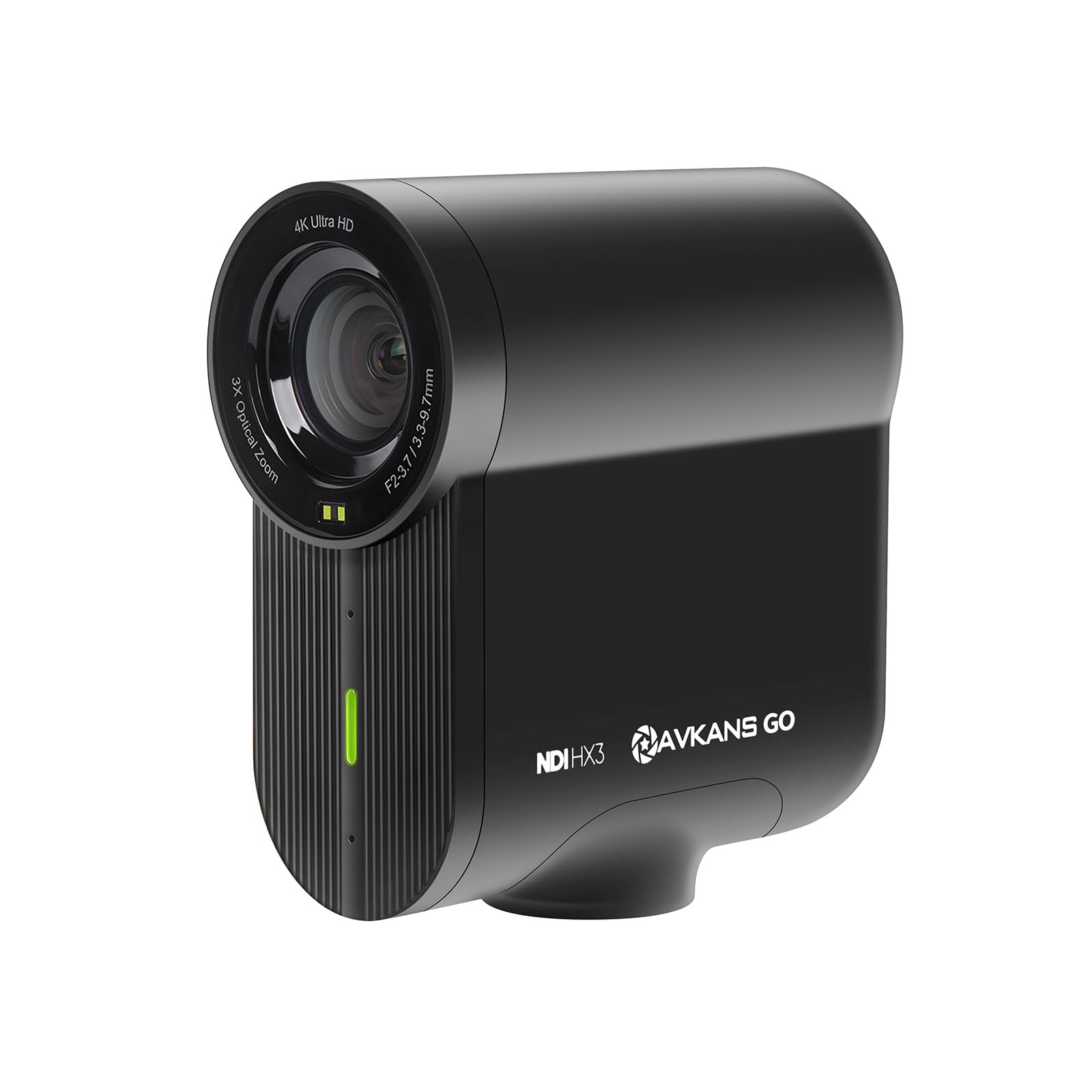
AVKANS Go Wireless 4K

85 /100
Studio Score Strong Evidence

Key details

PoE
Yes
Outputs
NDI HX3; RTMP/SRT
AI Tracking
No
NDI Support
NDI HX3
Check Price on Amazon

The AVKANS Go is built for field-side sports streaming: the 90-degree lens and 3x optical zoom frame home plate to the baselines on GameChanger or SidelineHD, and the battery-powered body keeps the setup away from power outlets. That makes it the mobile-sports alternative to the fixed PTZ cameras in this lineup.

4K local recording produces clean event footage for later edits, while NDI HX3 streaming over Wi-Fi holds up with vMix without a cable run. For a single-camera rig, the framing is forgiving enough to keep the play in view even when the action shifts between bases.

The internal battery lasts up to six hours, enough for a day of tournament action without hunting for an outlet. That removes the need to run power to a distant sideline camera.

This is a go-anywhere camera for youth baseball tournaments, softball showcases, and sideline producers who want one battery-powered unit in a bag. It is not a fixed multi-cam replacement: there is no PTZ, so the camera holds one framing and the tripod does the repositioning. The tradeoff is acceptable for mobile/outdoor streaming, but teams that need remote pan-tilt from a control room should stay with an installed PTZ.

๐Ÿ’ก Plug into Ethernet via PoE when a cable run is available; it powers the camera and gives the live stream a steadier connection.

Pros

  • Wide field of view keeps home plate and baselines in frame while 3x zoom tightens on batters.
  • Local 4K recording gives you a high-res copy for post-game highlights.
  • NDI HX3 support and GameChanger/SidelineHD compatibility fit mobile sports streaming.

Cons

  • Setup is non-intuitive and no printed manual is included, so first-time users should expect some trial and error.
  • Wireless app connection can require repeated pairing attempts before video appears, so leave extra setup time.
Our verdict

The AVKANS Go is a single-camera sideline rig for streamers who want 4K recording, NDI output, and battery freedom without installing PTZ infrastructure.

Check Latest Price
6

4K NDI Production

Tenveo 4K NDI PTZ 20X

84 /100
Studio Score Strong Evidence

Key details

PoE
Yes
Outputs
4K HDMI/USB; SDI 1080p
AI Tracking
AI auto-tracking
NDI Support
NDI
Check Price on Amazon

This Tenveo is a spec-forward 4K PTZ for live event teams that need more than a single feed: 4K over HDMI/USB3.0, 3G-SDI, PoE, and a built-in tally light with real-time IP display. The tally and IP status give a director or camera operator program/preview awareness without extra hardware. NDI and 3G-SDI run at 1080p, not 4K, so a production expecting a 4K IP path should capture via HDMI/USB instead. For a church or conference with a network-savvy volunteer, this is a broader package than the 30x zoom model in this set, but the tally/IP behavior should be confirmed on your network before committing. Tight budgets may still be better served by the lower-priced top pick.

Pros

  • 4K over HDMI and USB3.0 with 20x optical zoom gives a high-detail feed for live event recording or streaming.
  • Built-in tally light and IP display let the production team see program/preview status without extra hardware.
  • PoE carries power, network, and NDI video through one cable, simplifying fixed installs.

Cons

  • On a single-camera stream, the tally light and IP display have no operational role; they matter only with a dedicated director or switcher.
  • NDI and 3G-SDI are capped at 1080p, so a 4K IP or SDI path is not available; 4K needs HDMI/USB capture.
Our verdict

Fits a production team that needs 4K over HDMI/USB plus NDI and a built-in tally light, as long as the IP output stays at 1080p and the tally behavior is validated in your environment.

Check Latest Price
7

Budget USB Streaming

NearStream VM20 4K

76 /100
Studio Score Established

Key details

PoE
โ€”
Outputs
4K USB; 1080p HDMI/RJ45
AI Tracking
No
NDI Support
No NDI/SDI
Check Price on Amazon

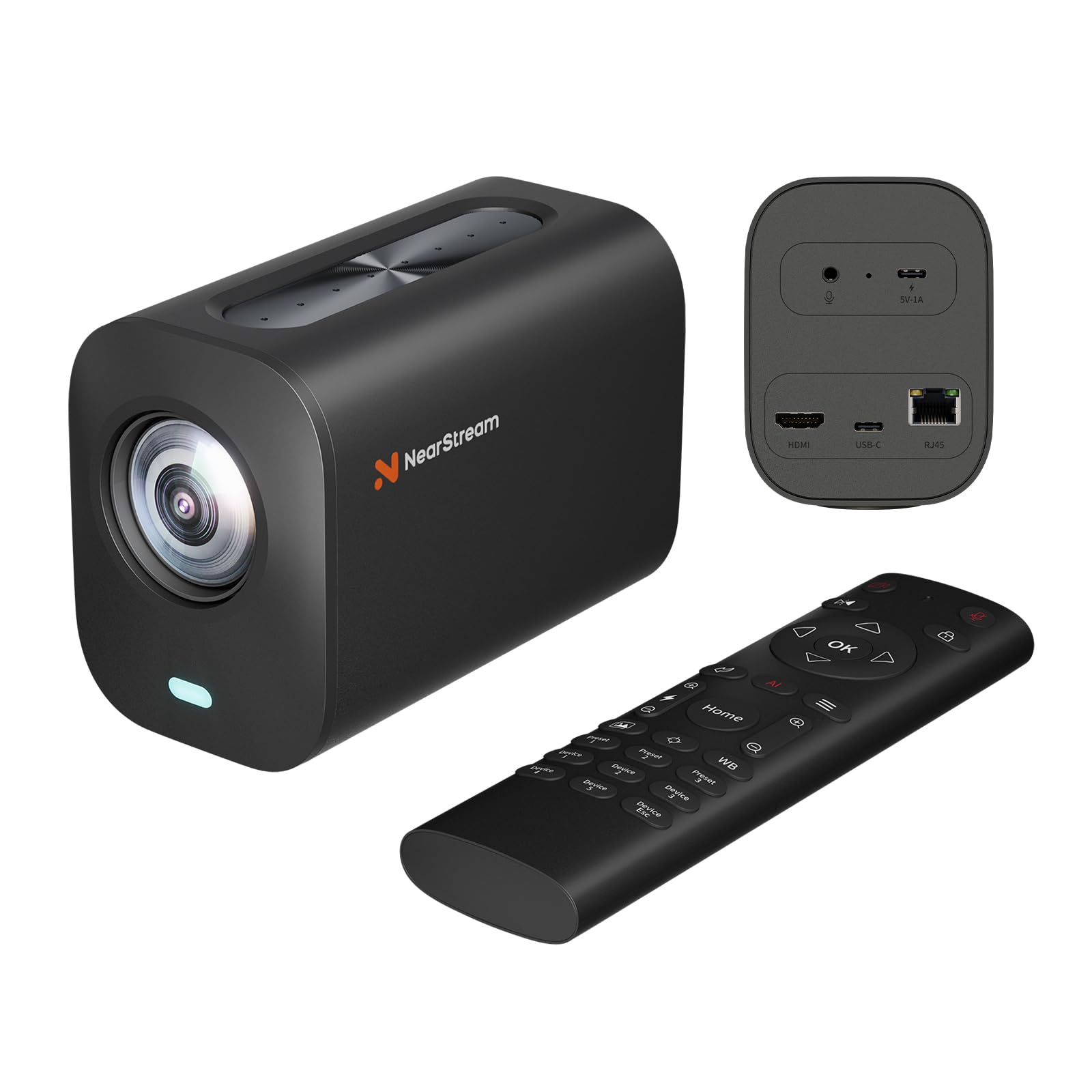
The NearStream VM20 brings sharp 4K USB video and an 8x optical zoom to a budget price point, making it a practical camera for classroom lectures, meeting rooms, and small-stage productions. The hybrid zoom feels mechanical and controlled, which helps when framing a speaker or pushing in on a product. The output path is where the ceiling appears: 4K is available over USB only, while HDMI and RJ45 stay at 1080p, so this is not a broadcast-path camera for NDI/SDI production. It fits best where the capture chain runs through a computer.

Pros

  • Sharp 4K USB video for classroom and small-production streams.
  • 8x optical zoom reach is useful for speaker close-ups and product shots.
  • Sturdy build quality for the price, with a clean live-stream image.

Cons

  • IR remote can lag or trigger the wrong unit when multiple cameras are in the same room.
  • Autofocus override and app controls may require repeated attempts during setup.
Our verdict

If your event capture runs through a USB-connected computer, the VM20 delivers sharp 4K and useful zoom at a budget price; teams needing a production PTZ workflow will need a different camera.

Check Latest Price

How to Choose

NDI Protocol Support

NDI turns a networked camera into a virtual video cable, but the protocol version changes how much bandwidth your network switch must handle. NDI HX3 compresses video, lowers bitrate, and works better on ordinary gigabit networks; full NDI uses higher bitrate and suits dedicated video networks.

Confirm the NDI license is included before purchase, because licensing can add cost later. For church installs with long cable runs through a managed PoE switch, NDI HX3 is the practical choice.

Output Interfaces and Resolution

A 4K camera does not mean 4K everywhere. Many PTZs send 4K only over USB or store it locally, while NDI, HDMI, and SDI outputs stay at 1080p; your switcher or capture card determines what the audience sees.

Check each physical output's resolution and frame rate against your streaming computer, ATEM, or vMix input. A 1080p60 SDI feed is often more useful than 4K that cannot reach your switcher.

Optical Zoom

Optical zoom uses glass to magnify before the sensor, preserving detail and light. Digital and hybrid zoom enlarge the image after capture, so a 40x hybrid claim does not deliver the same usable reach as 30x optical.

A sanctuary back wall needs at least 20x optical; large auditoriums and sports fields justify 30x. If long close-ups are part of the service, prioritize optical reach because digital reach at distance produces soft faces.

PoE Support

PoE sends power and network data over one Ethernet cable, which makes ceiling installs clean. The practical catch is that PTZ motors draw more current when moving, so a weak or unmanaged switch can drop the camera during a pan.

Use a PoE+ injector or a managed PoE switch with enough power budget for every camera. This matters most in permanent installs where a wall adapter at ceiling height is unrealistic.

AI Auto-Tracking

Most PTZ auto-tracking uses a single-person subject model, not an operator replacement. It locks onto the speaker and pans or tilts, but fast movement, overlapping people, or a podium obstruction can make it hunt.

Use AI tracking for static presentations and announcements. For fast-moving conference speakers or sports, keep a joystick operator in the workflow.

Frequently Asked Questions