9 Best Canon Camera of 2026: Choose Modern Autofocus

Find the Canon camera that matches how you actually shoot, from budget mirrorless to full-frame, without paying for outdated autofocus or video.

Canon's lineup spans pocket zoom compacts, budget DSLRs, and full-frame mirrorless bodies. The real risk is paying a large share of a current camera's price for an older model's autofocus and video limits. Knowing which specs matter before you buy does more than comparing megapixels.

Autofocus and battery life are the two complaints that show up most often once a new Canon is in hand. Slow live-view focus and a drained spare battery affect everyday shots more than a slight resolution difference. Modern RF mirrorless bodies solve the first; compact and full-frame owners should plan around the second.

This guide sorts the lineup by sensor size, body style, and intended use: budget learners, travel superzooms, vlogging compacts, and pro hybrid bodies. The goal is matching the camera to your actual shooting habits and avoiding older models whose only remaining virtue is a discount price.

1

Best Overall

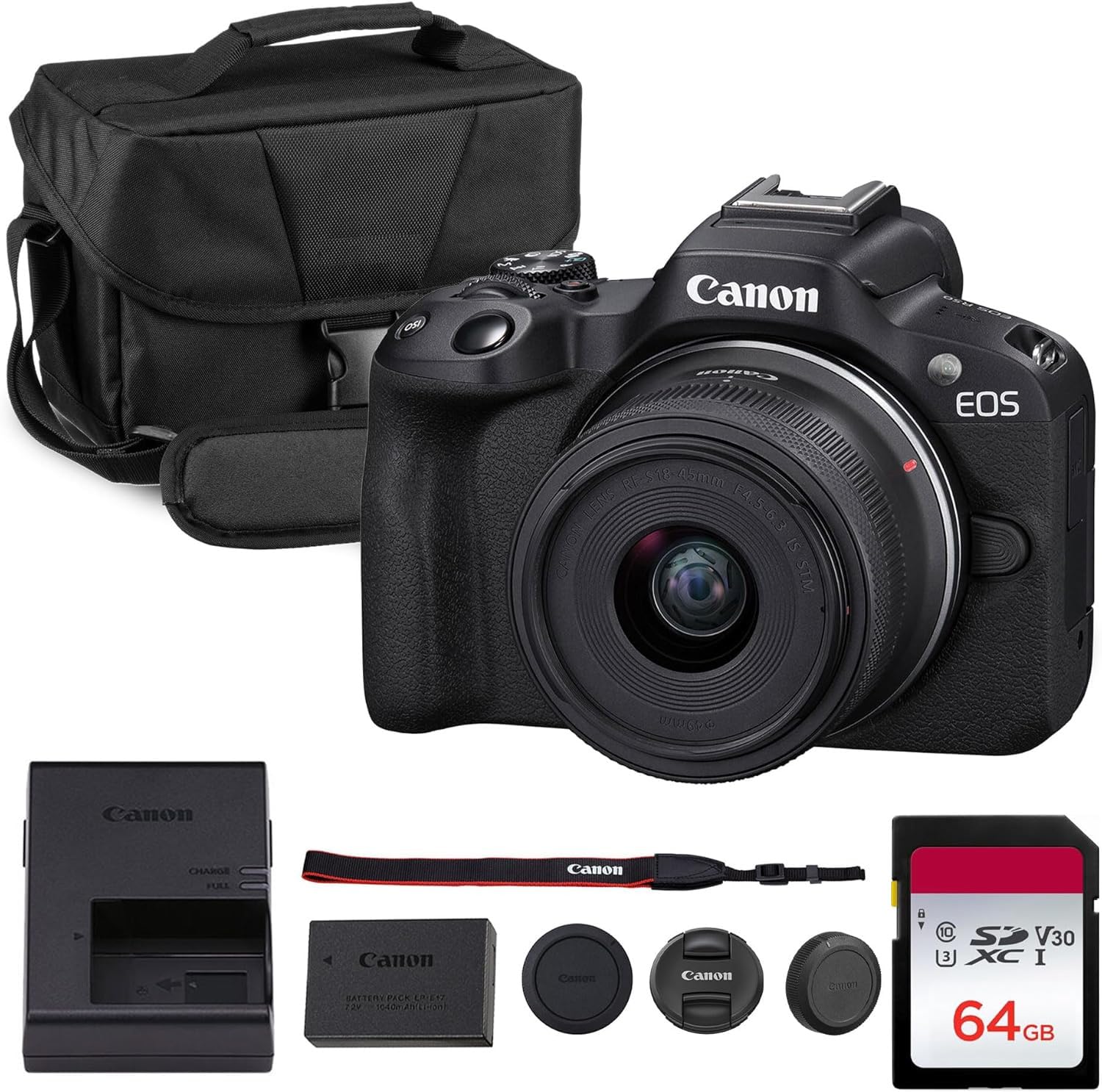
Canon EOS R50 Mirrorless Kit

90 /100
Studio Score High Confidence

Key details

Video
Oversampled 4K
Sensor
24.2MP APS-C CMOS
Autofocus
Dual Pixel AF II
Lens System
RF-S 18-45mm f/4.5-6.3 IS STM
Check Price on Amazon

The R50 pairs Canon's Dual Pixel AF II with oversampled 4K video, putting modern subject tracking and clean video in a body a first-time mirrorless buyer can carry all day. The 24.2MP APS-C sensor turns in strong color and detail, and the 3-inch vari-angle touchscreen provides framing freedom that older Canon entry models lack: tap to focus, tilt for waist-level shots, or rotate the screen for self-recording. This is the current-generation feature set rather than a recycled DSLR interface.

The 18-45mm kit lens collapses to a compact riding position, which keeps the camera small enough for a crossbody bag or a deep jacket pocket. The lens's image stabilization helps hold steady handheld video and stills at slower shutter speeds, and the focal range handles the usual travel shots: wide scenery, group photos, and moderate portrait framing. A bag and 64GB card round out the bundle, so first-time buyers skip two separate accessory purchases.

Image quality is the least contested part of the R50's case. Colors hold natural saturation straight out of the camera, the JPEG engine keeps skin tones even in casual portraits and street scenes, and the sensor retains enough detail for printing and cropping. The 24.2MP file gives room to crop after the fact, which matters for travel images where a tighter frame can replace a lens change. The autofocus keeps sharpness where it was aimed, so the final image depends more on composition than on coaxing focus from the body.

This bundle is aimed at first-time mirrorless buyers, travel and everyday shooters, and content creators who want a screen that faces them for vlogging. The RF-S 18-45mm lens is compact but slow, so low-light stills and evening video will eventually need a faster prime or a small flash. Full-frame-only low-light expectations sit outside this kit's role.

Canon's budget RF mirrorless body is the lower-cost entry to the mount, but its fixed screen and cropped 4K leave a clear gap. The R50's mid-range price closes that gap with the focus system from the current generation and a complete kit, so the camera remains useful long after the first few weeks.

Pros

  • Dual Pixel AF II and oversampled 4K keep focus accurate and video detailed in a compact kit.
  • Compact body and collapsing lens make the camera easy to carry through full days of travel.
  • Image quality and natural color hold up well on the 24.2MP APS-C sensor.
  • Bundle adds a bag and 64GB card, covering two accessories new owners usually buy separately.

Cons

  • The 18-45mm zoom ends at 45mm, so distant sports and wildlife subjects require a telephoto lens.
Our verdict

The R50 bundle is the Canon kit for first-time mirrorless buyers and daily carry shooters who want current autofocus, usable 4K, and a vari-angle touchscreen without moving to full-frame.

Check Latest Price
2

Best Budget DSLR

Canon EOS Rebel T7 DSLR Kit

93 /100
Studio Score High Confidence

Key details

Video
1080p Full HD
Sensor
24.1MP APS-C CMOS
Autofocus
9-point AF
Lens System
EF-S 18-55mm f/3.5-5.6 IS II
Check Price on Amazon

The Canon EOS Rebel T7 is the classic budget DSLR for stills-first learners: a 24.1MP APS-C sensor behind an optical viewfinder, paired with the EF-S 18-55mm IS II kit lens. It is a deliberate step away from mirrorless complexity, aimed at buyers who want to learn shutter speed, aperture, and ISO before adding modern conveniences.

The 24.1MP sensor resolves enough detail for large prints and heavy crops, and the kit lens's image stabilization steadies handheld daylight shots. The control layout keeps manual settings within reach, which helps when moving from auto to aperture-priority or shutter-priority mode.

The optical viewfinder keeps composition direct and is less demanding on the battery than continuous rear-screen use. The 18-55mm range covers group photos, portraits, and modest travel scenes without frequent lens changes.

This setup fits first-time DSLR buyers, students on a budget, and family still-photo enthusiasts who treat video as a backup rather than the main event. The mirrorless top pick in this guide adds modern autofocus and 4K, but it costs more; the T7 keeps the entry fee lower for buyers who want the traditional optical-viewfinder experience.

Pros

  • Entry-level DSLR with manual controls and a 24.1MP sensor for learning exposure and composition.
  • Strong still-image quality for the price, with an APS-C sensor and 18-55mm kit lens covering everyday shots.
  • Budget-friendly first camera that leaves room to grow into Canon's EF/EF-S lens lineup.
  • Simple setup and a clear control layout get beginners shooting without a steep learning curve.

Cons

  • When transferring a card full of images, built-in WiFi can stall; a card reader is more direct.
  • When shooting video or relying on live view, autofocus can be slow; the optical viewfinder remains the better stills path.
Our verdict

The T7 is a cost-effective entry to Canon's EF-S system for stills-first beginners who prefer the traditional optical-viewfinder experience.

Check Latest Price
3

Best Value Full-Frame

Canon EOS R8 Body

91 /100
Studio Score High Confidence

Key details

Video
Uncropped 4K60
Sensor
24.2MP full-frame CMOS
Autofocus
Dual Pixel AF II
Lens System
RF mount, no kit lens
Check Price on Amazon

The R8 is the lightest full-frame body in Canon's RF lineup, and it brings Dual Pixel AF II and uncropped 4K60 oversampled from 6K to a price well below comparable full-frame models. The 24.2MP sensor produces clean, natural color, and autofocus locks onto faces, animals, and vehicles without hunting. For hybrid shooting, that combination is hard to beat.

Carrying the R8 with a compact prime or an RF lens with image stabilization makes for a travel-friendly kit. The body is small enough to slip into a bag section you would normally reserve for a lens, and the controls stay accessible. It is built for someone who wants full-frame output but does not want the weight of a professional body.

This camera is for hybrid creators moving up from APS-C, full-frame upgraders who have been waiting for a lighter body, and travel photographers who weigh every gram. There is no in-body stabilization, so handheld video or short telephoto work depends on IS lenses. Battery life is short enough that an all-day event needs spares. If your main work is fast action or stabilized handheld video, the step-up body in the same lineup is the better fit.

Pros

  • Outstanding full-frame value at a mid-range price for both stills and video.
  • Image quality stays clean with natural color in varied light.
  • Autofocus locks onto subjects quickly and tracks them accurately.
  • Lightweight body suits travel and long carry days.

Cons

  • No in-body stabilization, so handheld video or short telephoto work relies on IS lenses.
  • Battery life is short, so an all-day shoot needs spare batteries.
Our verdict

The R8 is the value-oriented full-frame RF body for hybrid creators and travel photographers who want modern autofocus and 4K60 without a heavy kit.

Check Latest Price
4

Best for Action & Hybrid Pros

Canon EOS R6 Mark II Body

92 /100
Studio Score High Confidence

Key details

Video
4K60 oversampled
Sensor
24.2MP full-frame CMOS
Autofocus
Dual Pixel AF II
Lens System
RF mount, body only
Check Price on Amazon

The R6 Mark II pairs a 24.2MP full-frame sensor with DIGIC X to deliver 40fps electronic burst shooting, 5-axis IBIS, subject-detection AF, and oversampled 4K60 in a rugged full-frame body. That combination separates it from the lighter full-frame model in this lineup, which trades stabilization and burst speed for a smaller, lower-priced body.

Autofocus holds onto people, animals, and vehicles through bursts, so event and sports shooters can trust the tracking while they compose. The 24.2MP sensor keeps noise low in dim venues, and 4K60 footage is clean enough for professional hybrid work.

The premium price makes this a serious investment rather than a casual upgrade, and the headline 40fps burst runs through the electronic shutter; mechanical-shutter burst is lower, which matters if you rely on flash at high speed. For the shooters this body serves, those are acceptable boundaries on a full-featured workhorse.

The natural fit is event, sports, and wildlife photographers plus hybrid shooters who need one Canon body for both stills and video. Static-stills-only buyers or those watching a budget will get more relevant performance from a lighter APS-C body in the same set. Professionals already in the RF system can treat this as the do-it-all body; photographers starting fresh should count lens costs into the total setup.

Pros

  • Full-frame sensor keeps low-light shots clean and preserves shadow detail in event work.
  • Subject detection locks onto people, animals, and vehicles, so tracking stays accurate through action bursts.
  • 40fps electronic burst captures peak action without viewfinder blackout.
  • One body covers event stills, high-speed action, and 4K60 video without a second camera.

Cons

  • For slow stills work, the burst and subject-tracking speed are features you rarely call on.
  • Body-only purchase means RF lens costs are separate from the camera price.
Our verdict

For working event, sports, and hybrid shooters who need one full-frame Canon body to handle fast action and serious video, the R6 Mark II is the practical pick.

Check Latest Price
5

Best Vlogging Compact

Canon PowerShot V1

86 /100
Studio Score Strong Evidence

Key details

Video
4K, Canon Log 3
Sensor
22.3MP 1.4-type CMOS
Autofocus
Dual Pixel CMOS AF
Lens System
Built-in 16-50mm f/2.8-4.5
Check Price on Amazon

Canon's PowerShot V1 is the compact camera built around video-first creators: a 16-50mm F2.8-4.5 wide-angle zoom, a 3-inch vari-angle LCD, and an active fan for longer 4K takes in a hand-filling body.

The 1.4-type 22.3MP sensor delivers image quality that holds up against 1-inch compacts, and the wide end of the zoom frames a handheld vlog shot without a selfie stick. Canon Log 3 gives color flexibility for clips that need grading, while the active fan helps sustain recording sessions longer than a typical sealed compact.

This is for vloggers, livestreamers, and traveling creators who want a dedicated wide-angle camera without a mirrorless rig. The short zoom and missing EVF set clear boundaries: telephoto hunting and optical-viewfinder stills are better served elsewhere. Heavy 4K recording can drain the battery, and the box includes no charger, so a spare cell or external charger belongs in the bag.

The internal mic is usable for quick clips, and the compact body makes it a practical carry for daily content work. It won't replace a full-frame body, but it also won't fill a camera bag. The value is in the wide lens, cooling, and log profile combined at a mid-range price.

💡 Keep a spare battery or external charger in the bag if 4K recording is a daily task.

Pros

  • Built-in 16-50mm wide zoom frames handheld vlogs without extra lenses.
  • Active cooling and Canon Log 3 make longer 4K recording realistic in a compact body.
  • Compact body with strong output makes it a sensible mid-range creator tool.

Cons

  • 50mm maximum reach and slower aperture limit distant subjects; this is a wide-angle camera.
  • Battery can drain quickly during 4K recording, and no charger ships in the box.
Our verdict

An intentional creator compact: strong 4K, a genuinely wide built-in zoom, and active cooling. It suits a wide-angle vlogging kit, not a travel superzoom.

Check Latest Price
6

Best Travel Superzoom

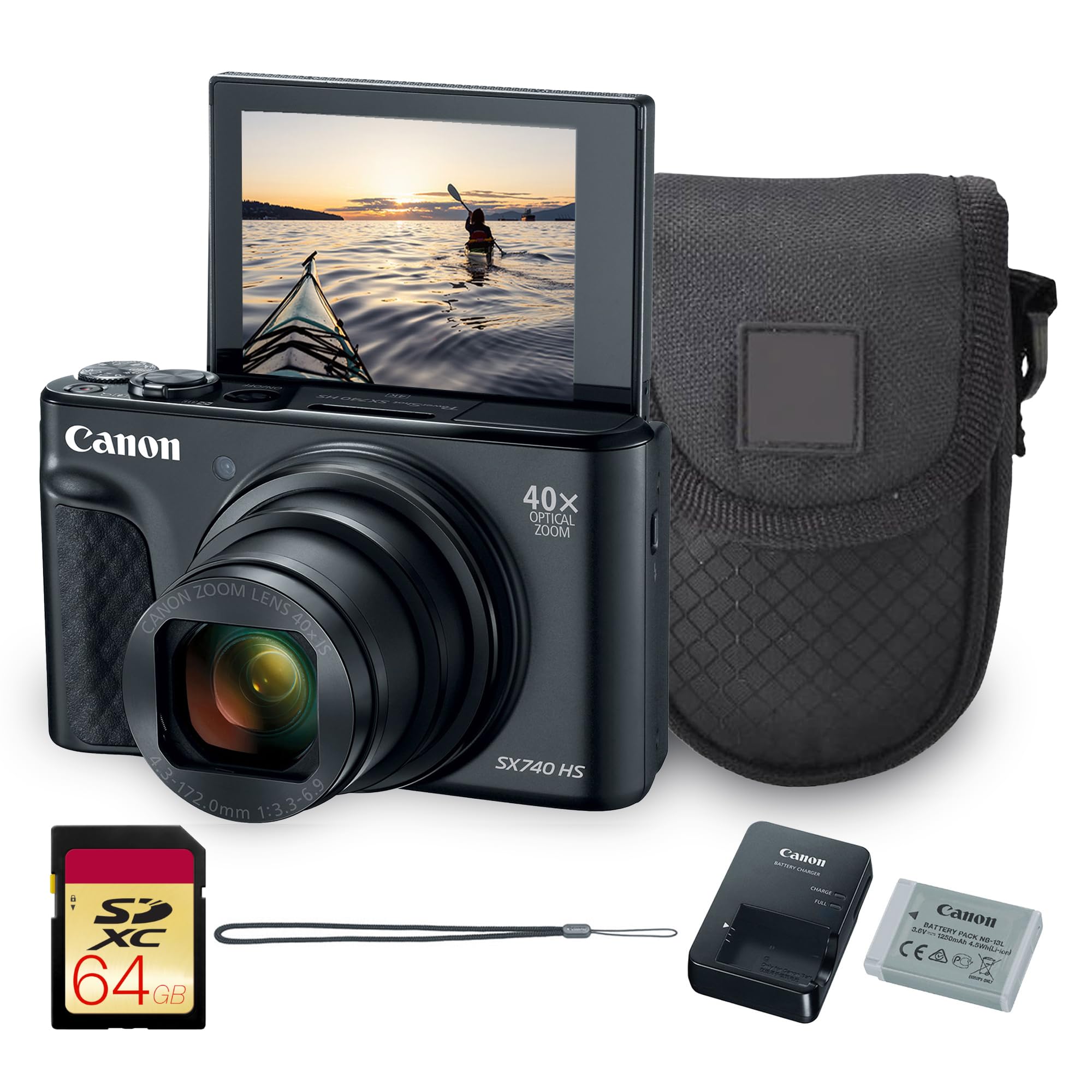
Canon PowerShot SX740 HS

79 /100
Studio Score Established

Key details

Video
4K UHD 30p
Sensor
20.3MP 1/2.3-inch CMOS
Autofocus
Contrast-detection AF
Lens System
40x optical, 24-960mm equiv.
Check Price on Amazon

The 40x optical zoom spans 24-960mm equivalent, letting distant peaks or performers on stage fill the frame without a lens change. The 20.3MP 1/2.3-inch sensor produces satisfying daylight detail, and the included bag and 64GB card make this a grab-and-go travel kit.

Travel and outdoor shooters who value reach over sensor size are the right audience, and beginners will find the controls simple enough to learn quickly. The small sensor limits low-light performance, and flash reliability can vary among units, so this is a daylight-first camera rather than an after-dark compact. Low-light enthusiasts and professional video users should look toward larger-sensor Canon bodies.

The 40x reach is the reason to bring this camera; at 960mm, handholding is the limiting factor, so a tripod or faster shutter keeps distant subjects sharp. 4K UHD 30p is a casual-video bonus rather than a dedicated video substitute.

Pros

  • 40x optical zoom covers 24-960mm, pulling distant subjects close without changing lenses.
  • Simple controls and a pocket-size body make it easy for novices to carry and operate.
  • 4K UHD 30p, Wi-Fi, and Bluetooth add casual video and quick sharing to the travel kit.
  • Bundled bag and 64GB card cut the usual setup steps before a first trip.

Cons

  • The 24mm wide end starts tight for indoor group shots.
  • The pop-up flash can vary between units, so a quick test after unboxing is worthwhile.
Our verdict

For a traveler who wants one pocketable Canon kit with a long lens, the SX740 bundle covers the distance without weighing down a daypack.

Check Latest Price
7

Stills-First Beginners

Canon EOS R100 Kit

88 /100
Studio Score Strong Evidence

Key details

Video
4K 24p cropped
Sensor
24.1MP APS-C CMOS
Autofocus
Dual Pixel CMOS AF
Lens System
RF-S 18-45mm f/4.5-6.3 IS STM
Check Price on Amazon

Canon's R100 kit is the budget doorway into RF mirrorless: a 24.1MP APS-C sensor, Dual Pixel AF, and a lightweight RF-S 18-45mm zoom bundle for someone focused on stills. Image quality for the price is the main draw, and the fixed 3-inch LCD is a minor issue when you mainly use the viewfinder and physical controls. The cropped 4K and absent touchscreen are the clear boundaries — the R50 adds a vari-angle touchscreen and better video for hybrid shooters, but that costs more. For a stills-first buyer who wants cheap access to Canon RF glass and doesn't plan to vlog or shoot 4K, this bundle does the job.

Pros

  • Budget-friendly entry into Canon RF mirrorless with a capable kit lens.
  • Stills-first beginners get a 24.1MP APS-C sensor and Dual Pixel AF in a light body.
  • Kit bundle covers the essentials, so new owners can start shooting immediately.

Cons

  • The fixed 3-inch LCD has no touch input, so framing angles and menu control stay limited.
  • 4K video is cropped to 24p, which narrows wide-angle framing for vloggers.
Our verdict

This fits the stills-first beginner who wants RF-system access without paying for video features they won't use. The R50 becomes the better buy only when 4K and a vari-angle touchscreen enter the picture.

Check Latest Price
8

Full-Frame Beginners

Canon EOS RP Kit

90 /100
Studio Score High Confidence

Key details

Video
4K UHD
Sensor
26.2MP full-frame CMOS
Autofocus
Dual Pixel CMOS AF
Lens System
RF 24-105mm f/4-7.1 IS STM
Check Price on Amazon

Full-frame RF image quality and a compact 24-105mm kit make the EOS RP a low-stress entry into Canon's mirrorless system. The body stays light for a full-frame travel kit, and stills-focused beginners have room to grow inside the RF ecosystem. The autofocus system is older and can hesitate in low light or with quick action, while 4K is cropped and battery life is modest; those limits keep it a step below Canon's current full-frame body for hybrid work. For travel, everyday stills, and compact full-frame vlogging, the tradeoffs sit inside a comfortable range.

Pros

  • Full-frame stills quality makes this a low-stress entry for new RF shooters.
  • Strong value for getting into Canon's RF system without the usual full-frame premium.
  • Compact body and kit lens keep an all-day travel setup light.

Cons

  • Autofocus can lag in low light or with quick action, limiting fast-action use.
  • Battery life is below average for a mirrorless body.
Our verdict

For stills-focused travel and everyday shooters, the RP kit is a practical compact full-frame starting point.

Check Latest Price
9

Everyday Pocket Shooters

Canon PowerShot ELPH 360

84 /100
Studio Score Strong Evidence

Key details

Video
1080p Full HD
Sensor
20.2MP 1/2.3-inch CMOS
Autofocus
Contrast-detection AF
Lens System
12x optical, 25-300mm equiv.
Check Price on Amazon

The ELPH 360 is a pocketable Canon compact that pairs a 12x optical zoom with simple controls and good daytime image quality for casual family and travel photos. Its small body is the main draw: it rides along without a bag and still gives enough reach for a busy sightseeing day. The small sensor and 12x zoom optics are not built for demanding low-light work, so this works best as a take-anywhere companion rather than a serious creative tool. Wireless image transfer can be finicky, and battery behavior can vary between units, so it is a sensible secondary/travel camera rather than a primary all-round pick.

Pros

  • Pocket-size body slips into a jacket or day bag for everyday and travel carry.
  • Simple controls let a beginner start shooting family snapshots without reading a manual.
  • 12x optical zoom brings distant sights closer while keeping colors pleasing in daylight.

Cons

  • Wireless transfer may require a few tries before photos move to a phone.
  • Battery behavior can vary between units, so an early checkout is worth doing.
Our verdict

A budget-friendly pocket Canon for daytime travel and family snaps, if you accept its wireless quirks and verify the unit soon after purchase.

Check Latest Price

How to Choose

Sensor Size and Megapixels

A larger sensor collects more light per pixel, which controls high-ISO noise, dynamic range, and depth of field. Full-frame bodies are best in low light but require heavier lenses, while APS-C is the practical middle ground for most buyers.

Megapixels matter less than pixel size. A 24MP APS-C camera can outperform a high-count compact sensor in dim conditions. Choose the sensor class first, then compare resolution within that class.

Autofocus System

Modern Dual Pixel AF II tracks eyes and subjects across the frame and works during video. Older 9-point AF systems are fine for static subjects through the optical viewfinder but hunt in live view and video.

The extra factor is that AF speed depends on the lens and processor, not just the body. If you shoot kids, pets, or events, a newer AF system matters more than megapixels.

Video Capability

Canon's 4K modes are not equal. Some models crop the sensor for 4K, making the lens tighter and reducing the light used, while oversampled or full-width 4K produces better detail.

Check resolution, crop, frame rate, and recording limit. Vloggers should look for uncropped 4K, a microphone input, and a vari-angle screen, not just a 4K badge. Frame rates below 4K60 matter for slow-motion.

Lens System and Kit Zoom

The kit lens sets the first-year experience. A slow variable-aperture zoom keeps the bundle small but loses light at the telephoto end, forcing higher ISO or slower shutter speeds.

Fast primes or a brighter zoom are the usual later upgrade. Zoom compacts reach far but cannot fix a small sensor in low light, and RF/RF-S is the lens mount with a future; older EF-S DSLRs are not the upgrade path.

Body, Weight, and Controls

Body design changes shooting. A vari-angle touchscreen makes waist-level shots and vlogging easier, while a fixed screen is a real limit, and lightweight bodies often pair with smaller batteries.

Compact cameras drain a spare battery quickly when recording video. Grip depth also matters with telephoto lenses; a small body and large lens becomes front-heavy.

Frequently Asked Questions