8 Best Camera for Macro Photography in 2026: True Close-Up Detail

Find the right camera for macro and close-up shooting, from budget kits with macro lenses to full-frame systems with real magnification options.

Many cameras advertise 8K video, 88MP stills, and built-in macro modes, yet the sensor and lens inside determine whether those specs actually deliver close-up detail. Budget listings often lean on large resolution numbers while the native sensor is far smaller than the headline figure suggests.

For macro and close-up work, the deciding specs are magnification and minimum focusing distance. A camera with a dedicated macro lens or a kit lens that reaches 0.4x-0.5x magnification produces genuinely close shots; one that relies on digital zoom or a screw-on close-up filter only gets you so far.

This guide separates cameras that fit serious macro work from those better suited to casual close-ups, and it explains what to check before trusting a lens marketing claim. The right choice comes down to whether you want a complete budget kit now or a system body you can grow into with dedicated macro glass later.

1

Best Overall

Canon EOS RP Kit

90 /100
Studio Score High Confidence

Key details

Sensor
Full-frame 26.2MP
Lens Mount
Canon RF
Magnification
0.5x
Stabilization
Lens IS
Check Price on Amazon

The RF24-105mm F4-7.1 IS STM kit lens reaches 0.5x magnification at the 105mm end, so close-up framing is available from the first shot. The 26.2MP full-frame sensor keeps those close-ups clean, with rich color and the shallow depth of field that makes small subjects stand out. Lens-based image stabilization steadies handheld shots when working close to a subject, which is useful with a variable-aperture zoom.

At the 105mm end, autofocus magnification tops out at 0.4x; switching to manual focus pushes that to 0.5x. For still subjects such as flowers, coins, or small products, manual focus is a simple way to reach the full magnification without adding a dedicated macro lens. That range covers many practical close-up subjects before you would need to invest in specialist glass.

This is for full-frame upgraders who want close-up capability immediately and plan to build an RF kit. The lens stops at 0.5x rather than 1:1, so life-size dedicated macro work will still call for an RF macro lens. It is not the pick for first-time buyers on a tight budget or shooters who need in-body stabilization in a smaller body.

The body sits below other Canon RF full-frame models on price while keeping the same lens mount and the 26.2MP sensor, which makes it a practical entry point for someone moving up from APS-C. Full-frame depth-of-field control is the main gain: close-up subjects separate from backgrounds in a way that smaller sensors have to work harder to match.

The RF mount also provides room to grow toward a dedicated macro lens without changing cameras. Compared with the compact stabilized option in this lineup, the Canon body is physically larger, but the kit lens alone does close-up work that would require a separate lens on that system. For buyers weighing the two paths, this one delivers close-focus results before the first camera purchase is complete.

The RF24-105mm range also works as a general-purpose walkaround lens, so the close-focus ability is not a specialty compromise. You get wide-angle to short-telephoto coverage in the same unit, which is why this kit feels complete for a full-frame starter setup.

Pros

  • Close-focus out of the box: the RF24-105mm kit lens reaches 0.5x without extra glass.
  • Overall camera quality holds up across a range of shooting conditions.
  • Full-frame color and detail give close-ups a clean, rich look.
  • A cost-effective entry into full-frame for buyers planning an RF system.
  • RF lens lineup leaves room to add dedicated macro glass later.

Cons

  • In low-contrast scenes, autofocus can hunt before locking onto close-up subjects.
  • A long session away from power can drain the battery quickly; some bundles omit a wall charger.
Our verdict

The Canon EOS RP kit is the out-of-box close-up pick here: full-frame image quality and 0.5x magnification before you add another lens.
Check Latest Price
2

Best Budget Macro / Close-Up

VJIANGER W02 4K Camera

88 /100
Studio Score Strong Evidence

Key details

Sensor
48MP small-format
Lens Mount
Fixed lens
Magnification
Macro lens included
Stabilization
None
Check Price on Amazon

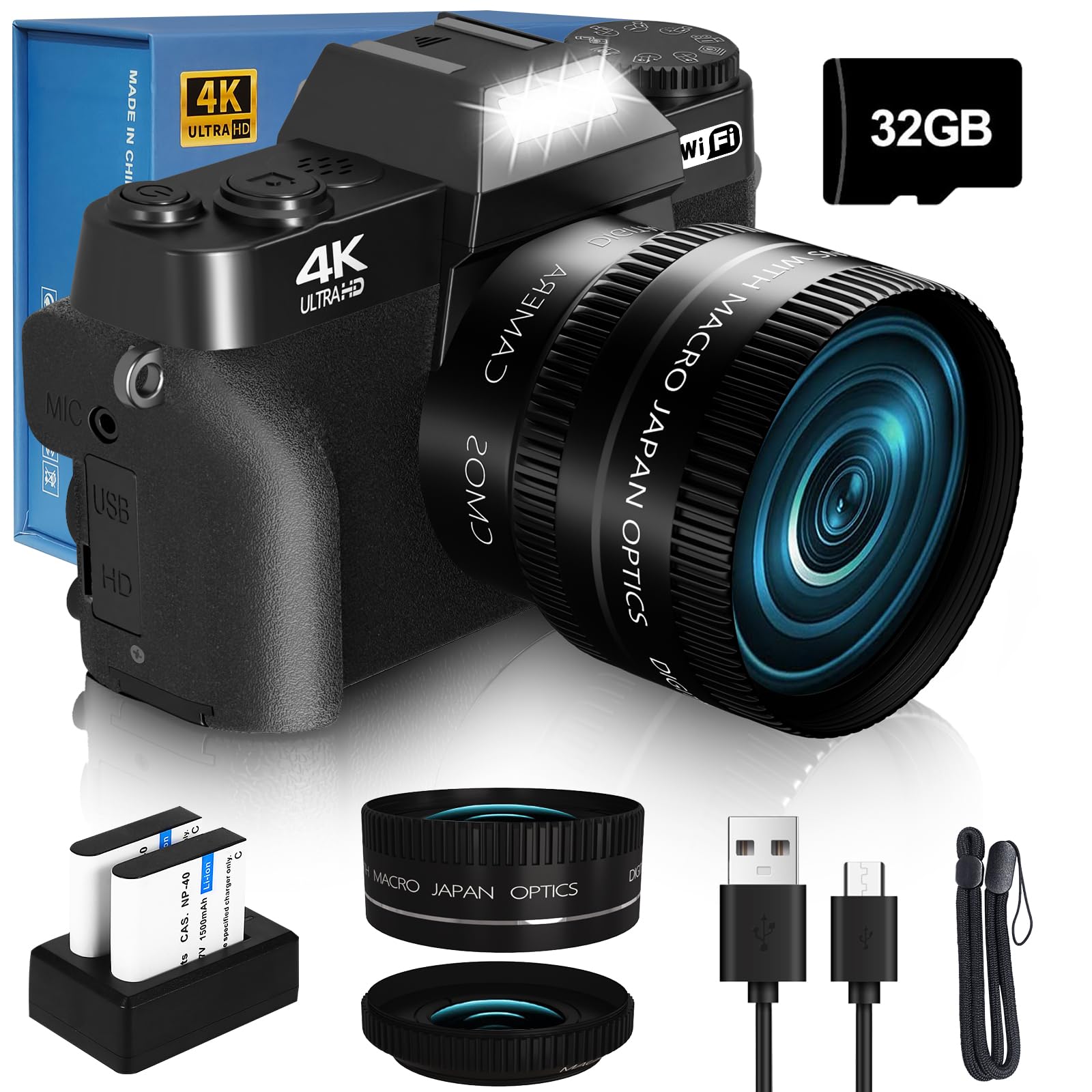
The VJIANGER W02 is a turnkey budget macro bundle: a 52mm wide-angle and macro lens attachment comes in the box with a 32GB SD card and two batteries, so a beginner can start close-up shooting immediately. The lens screws onto the filter thread, which means no adapter or extra purchase is required.

In daylight, the 48MP sensor records crisp detail, and the macro attachment brings coins, flowers, and product textures close enough for satisfying casual shots. The 4K UHD video mode covers short clips without fuss.

First-time users find the controls approachable, the flip screen aids tabletop framing, and the two included batteries allow a full day of casual shooting before reaching for a charger. Outdoor family snaps and casual vlogs are handled without menu digging.

This bundle suits budget macro beginners, families, teens, and casual vloggers who want one box with everything needed to start. The included macro attachment is a screw-on close-up optic, not a dedicated 1:1 macro lens, so serious photographers should plan for a true macro lens on a larger-sensor body. For those buyers, the W02 is an inexpensive way to test close-up photography without committing to a full lens system.

Pros

  • Solid overall build and consistent performance for a budget camera.
  • Crisp picture quality in good light.
  • Great value for a complete kit with macro attachment, card, and two batteries.
  • Beginner-friendly controls and flip screen make first-time use approachable.

Cons

  • WiFi pairing and image transfer can require a few connection attempts before files move.
  • In dim lighting, fine detail softens and 4K/64MP specs promise more than the small sensor delivers.
Our verdict

For anyone testing whether macro photography fits their hobby, the W02 answers that question without a major investment.

Check Latest Price
3

Best Compact System for Macro

OM System E-M10 IV Kit

88 /100
Studio Score Strong Evidence

Key details

Sensor
20MP Micro Four Thirds
Lens Mount
Micro Four Thirds
Magnification
Kit lens 0.23x
Stabilization
5-axis IBIS
Check Price on Amazon

The OM System E-M10 IV’s five-axis in-body stabilization is the reason to start a macro kit here: handheld close-up frames stay steady without the bulk of a tripod. The Micro Four Thirds mount supports dedicated M.Zuiko macro lenses that turn this small body into a field-ready close-up rig, and the 20MP sensor keeps fine detail sharp. This is a body-first tool, so the included zoom is a start rather than the final answer.

Buyers who already plan to add a dedicated macro lens will get the most value from this kit. The bundled 14-42mm EZ power zoom reaches 0.23x magnification, so serious close-up work requires a separate M.Zuiko macro lens, extension tube, or close-focus accessory. Occasional startup or lens-recognition quirks can occur, which makes a return-friendly retailer and clean lens-mount contacts worthwhile precautions.

Compared with the full-frame close-up alternative in this comparison, the E-M10 IV gives away out-of-box magnification to gain a lighter, smaller body with stabilization. That trade-off suits travel photographers building a compact system, and the 5-axis stabilization extends handheld shooting into lower light. The kit lens handles general photography well, but the real payoff comes when you pair the body with a dedicated macro optic.

At its price tier, the E-M10 IV offers a balanced mix of build quality, image output, and portability. It is a sensible entry point into Micro Four Thirds for photographers who want a body that can grow into a macro kit, not a camera that promises close-ups straight from the box.

Pros

  • Five-axis in-body stabilization keeps handheld close-up frames steady.
  • Small and light body suits travel and field macro sessions.
  • Compact build and 20MP sensor produce strong image output.
  • Micro Four Thirds mount opens a clear path to dedicated M.Zuiko macro lenses.

Cons

  • Occasional startup or lens-recognition hiccups can interrupt a session.
  • The bundled 14-42mm zoom reaches only 0.23x, so true close-ups wait until you add a macro lens.
Our verdict

The E-M10 IV is a compact, stabilized foundation for a macro system, not a one-box close-up solution; buyers who add a dedicated M.Zuiko macro lens get the best return on the kit.

Check Latest Price
4

Best Budget DSLR Macro Upgrade Path

Canon EOS Rebel T7 DSLR

94 /100
Studio Score High Confidence

Key details

Sensor
24.1MP APS-C
Lens Mount
Canon EF/EF-S
Magnification
Dedicated lens required
Stabilization
Lens-based
Check Price on Amazon

Canon's EF/EF-S mount opens inexpensive macro lens options like the EF-S 35mm f/2.8 Macro, and the 24.1MP APS-C sensor delivers strong image quality for an entry-level DSLR. The full-frame close-up pick in this lineup reaches 0.5x from its kit lens; this Rebel concentrates the budget on the body and mount, leaving the macro lens choice open until you know which focal length fits your work.

The bundled 18-55mm and 75-300mm lenses cover a wide range of everyday subjects, so the kit remains useful beyond close-up work. The 75-300mm end adds reach for distant subjects, which balances the kit for general shooting. Canon's EF/EF-S ecosystem includes several macro primes at reasonable prices, so the upgrade path is clear.

This is for beginners who want an affordable DSLR with a large lens ecosystem, and hobbyists who plan to grow into macro photography with Canon EF-S/EF macro lenses. Setup and controls are simple enough for a first-time shooter. The double zoom kit lenses are not macro lenses; true macro requires adding dedicated EF-S/EF macro glass, so budget for that as a future purchase.

Pros

  • Strong 24.1MP APS-C image quality in a body priced for first-time DSLR buyers.
  • Double zoom kit covers wide-angle to telephoto, so general shooting needs are met immediately.
  • Setup and controls are easy for a beginner to learn.
  • EF/EF-S mount keeps the macro upgrade path affordable with dedicated macro primes.

Cons

  • Live view autofocus can be slow, and the listing's Dual Pixel AF claim overstates what the 9-point system delivers.
  • Occasional power-on issues can surface after limited use, so testing the camera early is wise.
Our verdict

A practical first DSLR for a macro-focused beginner who wants to build close-up capability through Canon's EF/EF-S system instead of replacing the body later.

Check Latest Price
5

Complete All-In-One Budget Macro Kit

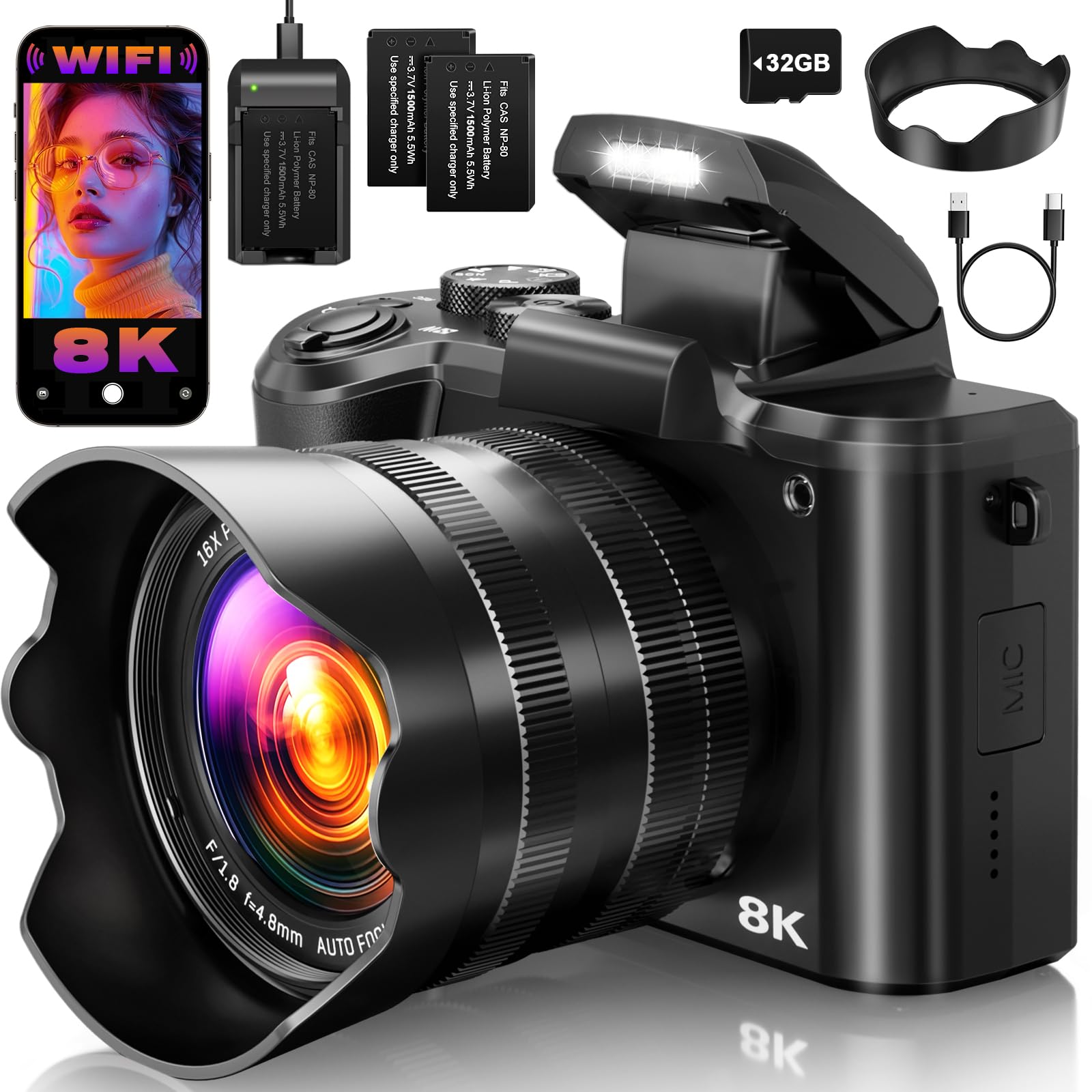
Tecglem DC226 8K Macro

86 /100
Studio Score Strong Evidence

Key details

Sensor
12MP native
Lens Mount
Fixed lens
Magnification
Macro lens included
Stabilization
None
Check Price on Amazon

The Tecglem bundles a dedicated macro lens with everything a first-time close-up shooter needs: 32GB card, two batteries, charging stand, and lens hood. The dual-lens body also covers vlogging duty, and the native 12MP sensor's image quality runs above what the price point suggests. Autofocus locks onto everyday subjects without hunting.

This kit is for first-time owners who want close-up photography without researching accessories. The 88MP and 8K figures are interpolated from a 12MP native sensor, so the camera behaves like a capable 12MP shooter, not an 88MP/8K source. For flower, coin, and product shots, that expectation reset is easy to accept.

The dedicated macro lens fills the frame with small objects quickly, and the touchscreen makes focus-point selection simple enough for a beginner. Image quality holds up well with adequate light, which is where this class of camera is meant to operate.

The two supplied batteries and charging stand support longer shooting sessions without hunting for a wall outlet, and the included memory card removes one more first-purchase obstacle. This is a complete starter bundle rather than a future-proof system; its value comes from having everything in the box at a budget entry price.

Pros

  • No extra purchases needed for a first close-up kit: macro lens, memory card, two batteries, lens hood, and charging stand are in the box.
  • Close-up image quality exceeds budget expectations, with fine detail on everyday subjects.
  • First-time owners can start shooting quickly; the touchscreen simplifies focus-point selection and menu navigation.
  • Autofocus works well for everyday subjects, locking on without hunting.

Cons

  • The 88MP and 8K modes interpolate from a 12MP sensor, so high-resolution captures look softer than the headline numbers suggest.
  • For flat subjects or tiny mechanical parts that need life-size reproduction, the included macro lens won't reach 1:1.
Our verdict

For a first close-up kit, the Tecglem is the one-box answer: dedicated macro lens, memory, and power included, with image quality that suits casual macro work.

Check Latest Price
6

Budget Macro Bundle

WIKICO WX02 4K Camera

81 /100
Studio Score Strong Evidence

Key details

Sensor
48MP small-format
Lens Mount
Fixed lens
Magnification
Macro lens included
Stabilization
None
Check Price on Amazon

The WIKICO WX02 is a budget-friendly starter for close-up photography: the included 52mm wide-angle and macro lens attachments give beginners two creative paths without extra accessories, and the setup process is simple enough for a first camera. Clear, vibrant images and 4K UHD video make it a reasonable choice for casual vlogging and travel shots.

The reason it is not higher in this set is that out-of-box behavior is less certain than the safer macro-focused bundles in the same budget tier. This suits a patient beginner who wants low-cost macro and wide-angle experimentation rather than someone who needs guaranteed function from the first box.

Pros

  • Good quality for a first camera
  • Easy to use and set up, with 4K video and webcam mode for beginner vloggers.
  • Strong budget value when the wide-angle and macro lens attachments are included.

Cons

  • The included macro lens attachment is a close-up optic, not a full 1:1 macro lens.
  • Functionality can vary between units; a new camera may arrive non-working or not power on.
Our verdict

For a first-time creator who wants both wide-angle and macro attachments without spending much, this is a fair entry point. Buyers who need consistency from the first purchase should choose the safer macro kit in this set instead.

Check Latest Price
7

Compact Budget Close-Up

Notoldpine 5K Macro Cam

81 /100
Studio Score Strong Evidence

Key details

Sensor
80MP interpolated
Lens Mount
Fixed lens
Magnification
Macro-capable lens
Stabilization
None
Check Price on Amazon

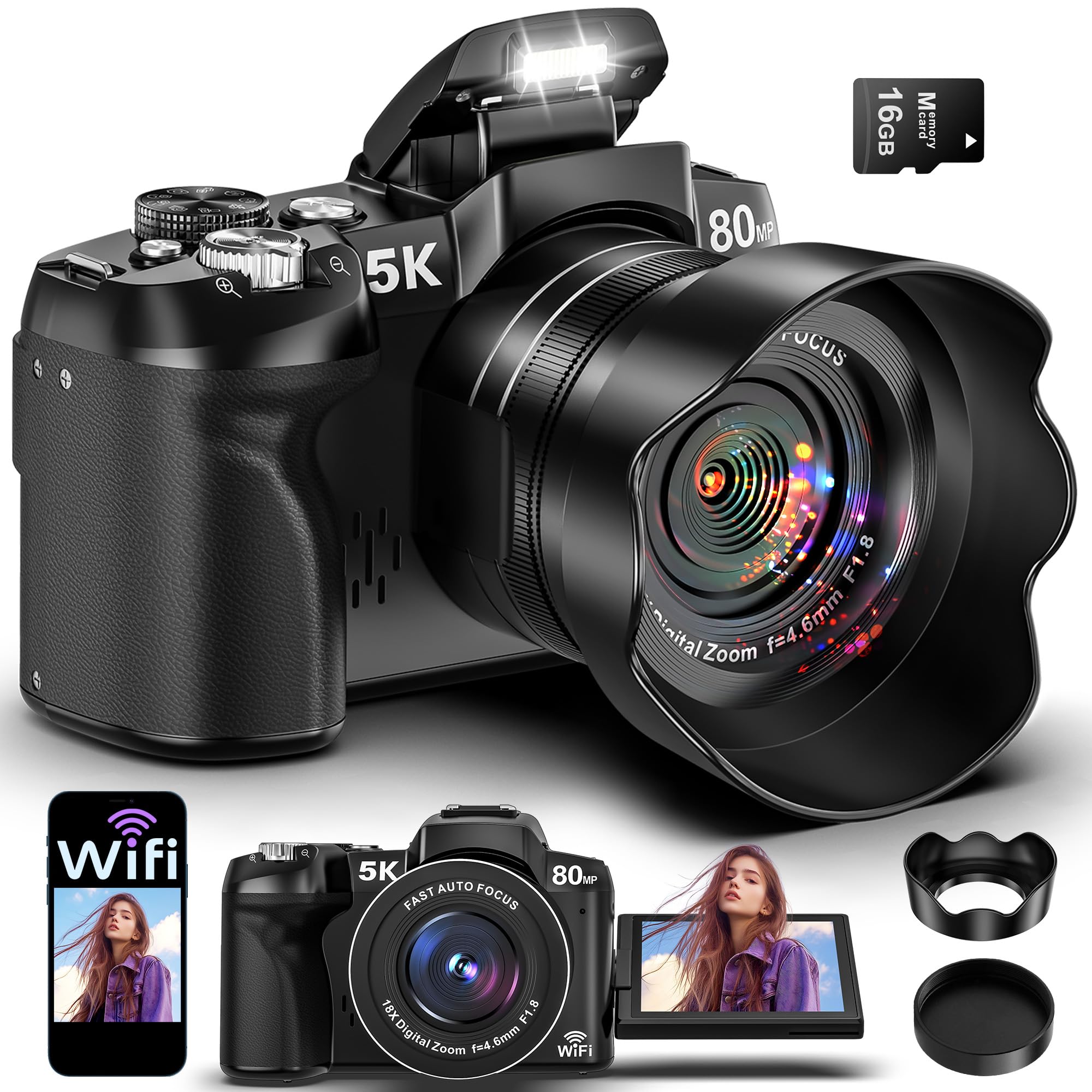
This palm-sized camera combines an 18x digital zoom with a macro-capable fixed lens and a 3-inch flip screen, so framing small subjects for photos or travel vlogs stays easy. The 80MP still output is paired with 5K video, and a detachable lens hood helps control glare in tight shots. It fits the budget beginner who wants a single compact camera for casual close-ups and vlogging. Shoppers who prefer a more complete kit in one box can find a budget bundle with a screw-on macro attachment, but this camera keeps the package small.

Pros

  • Everyday photo and video quality holds up for casual close-ups and vlogging.
  • Sharp images at a budget price for small subjects.
  • Good value for a compact camera with flip screen and macro-capable lens.

Cons

  • Digital zoom can soften fine detail at full extension, so distant subjects lose sharpness.
  • Fixed lens stops short of true 1:1 macro reproduction, so serious close-up work needs a dedicated macro lens or body.
Our verdict

For budget beginners who want one compact camera for casual flower and product close-ups plus vlogging, this covers the basics without demanding a bigger kit.

Check Latest Price
8

Casual Macro Kit

Monitech S100F 8K Camera

77 /100
Studio Score Established

Key details

Sensor
64MP small-format
Lens Mount
Fixed lens
Magnification
Macro lens included
Stabilization
None
Check Price on Amazon

This Monitech bundle includes wide-angle and macro lens attachments, a microphone, tripod, three color filters, and two batteries in a single budget-friendly kit, making it a convenient entry point for casual close-up photography. The included macro attachment provides close-focus capability without adding another camera system, and the wide-angle lens handles wider scenes. For a hobbyist who wants to experiment with both perspectives, the all-in-one setup is genuinely useful. The tradeoffs are battery and sharpness: a single charge may run short after roughly 30 minutes, and image clarity can vary from shot to shot. That variability keeps it from outranking more predictable macro bundles, particularly for photographers who need consistent performance.

Pros

  • Wide-angle and macro lens attachments provide close-up and broad-scene coverage in a single box.
  • Includes microphone, tripod, color filters, extra flash, and two batteries for creator-focused use.
  • Budget price point makes it a low-cost experiment for hobbyists.

Cons

  • Battery life can run short in some cases, with a full charge lasting roughly 30 minutes.
  • Image sharpness can vary between copies, with some shots showing softened detail.
Our verdict

For casual hobbyists who want to try macro and wide-angle shooting without a large investment and can accept variability in battery and sharpness, this kit is a functional starting point.

Check Latest Price

How to Choose

Magnification and Minimum Focus Distance

True macro photography typically means 1:1 magnification, where the subject appears life-size on the sensor. Budget cameras with a macro lens attachment often deliver a close-up effect closer to 0.2x or 0.3x, which works for coins, flowers, and product details but not for tiny insects or small mechanical parts.

A kit lens that reaches 0.5x magnification offers a practical middle ground: it captures fine detail without forcing you to buy a dedicated macro lens immediately. The trade-off is that 0.5x is half life-size, so subjects like small insects will still require cropping or a true macro lens for frame-filling shots.

Sensor Size and Native Resolution

The native sensor determines real resolution: a 12MP sensor with an 88MP interpolated output cannot capture more physical detail than the hardware allows. Budget cameras with small sensors also tend to lose sharpness in low light and at close focus distances because depth of field is thinner and the lens has less light-gathering area.

Larger sensors such as APS-C or full-frame hold more tonal and color detail and provide a wider field of view at the same magnification. That wider view gives you more working distance between the lens front and your subject, meaning you are less likely to cast a shadow and the lens is less likely to bump the object.

Image Stabilization

Handheld close-up photography magnifies camera shake: at 1:1 macro, a tiny movement shifts the frame noticeably and makes precise focus difficult. In-body stabilization, like the 5-axis system on the OM-D E-M10 IV, steadies the camera body itself, while optical lens stabilization in Canon RF and EF lenses works within those specific lenses.

A tripod remains the most reliable solution, but stabilization allows more usable handheld shots for flowers and specimens outdoors. Reviewers of the OM-D specifically credit the 5-axis in-body stabilization for keeping handheld macro shots sharp at close distances.

Lens Mount and Macro Lens Availability

The lens mount determines how expensive and varied your macro lens choices are. Canon's EF and EF-S mounts have a deep catalog of both first-party and third-party macro lenses, including affordable options like the EF-S 35mm f/2.8 Macro with built-in macro lights and the EF 100mm f/2.8 Macro for 1:1 reproduction.

Micro Four Thirds also offers dedicated macro lenses from OM System, Panasonic, and third-party brands, but the selection is smaller than Canon's EF system. Fixed-lens budget cameras offer no upgrade path; the macro lens attachment included in the box is a screw-on optic that remains your best option unless you add a separate clip-on lens.

Autofocus at Close Distances

Macro autofocus is more demanding than everyday shooting because depth of field is extremely shallow and close-range subject contrast is often low. A camera with slow or hunting autofocus requires more patience or a switch to manual focus, which is commonly how macro shooters focus anyway.

For a beginner, focus peaking or a zoomed-in live view can make manual focus much easier. If a camera's autofocus is sluggish in live view, such as the Canon Rebel T7 at close distances, using manual focus with live view magnification often produces more consistent results.

Frequently Asked Questions