6 Best Camera for Film Students of 2026: Pick One You Can Count On

Find the best camera for film students, from budget autofocus SLRs to manual classics, without buying a faulty used body.

Shopping for a student film camera usually means sorting through decades-old bodies sold by different sellers with different standards. A famous nameplate does not guarantee a working light meter or a shutter that fires at every speed. Condition and seller grading decide whether a classic body is a learning tool or a repair project.

The bigger trade-off sits between two learning paths. A fully mechanical camera forces you to set aperture, shutter speed, and focus every time, which builds fundamentals quickly but punishes mistakes. An autofocus SLR with full manual modes lets you start in auto and gradually take control, which is easier on a busy class schedule while still covering course requirements.

Budget matters, but the cheapest option is not necessarily the cheapest to own if it needs servicing. A camera that arrives working and matches how you want to learn is worth more than one that simply has the right brand on the front.

1

Best Overall for Film Students

Canon EOS Rebel G

86 /100
Studio Score Strong Evidence

Key details

Focus Type
3-point autofocus
Film Format
35mm standard
Lens / Mount
35-80mm EF zoom
Condition Notes
Used, seller-dependent
Check Price on Amazon

The Rebel G is a budget-friendly autofocus SLR that lets a film student shoot in auto while learning manual controls. The 3-point autofocus is quick enough for typical classroom walk-around subjects, and the 11 exposure modes include full manual for assignments that require choosing aperture and shutter speed yourself. The included 35-80mm EF zoom covers the wide-to-short-telephoto range a typical film course expects.

The body is light enough to ride in a backpack next to a notebook, and the built-in retractable flash covers indoor group shots without adding an accessory to the kit. Motorized film loading and rewind remove two classic beginner mishaps: torn sprockets and half-wound rolls. The shutter button uses a standard half-press for focus lock, so a student can separate focusing from firing. The viewfinder shows focus confirmation and exposure information, which helps when a class critique asks you to explain why a frame metered the way it did.

This is the right film body for a budget-conscious student who wants autofocus help in the first weeks but still needs a manual mode before the final project. A student can move into manual at their own pace, which lowers early frustration without eliminating the lesson. It is also a low-cost film body for any photographer with existing Canon EF lenses. Because the Rebel G is discontinued, used condition varies from unit to unit; test the light meter, shutter speeds, and lens aperture soon after delivery.

The exposure-mode dial includes program, aperture-priority, shutter-priority, and full manual, so an instructor can build a semester of assignments around the shift from auto exposure to full control. Red-eye reduction is built into the flash, which helps for the occasional portrait assignment. The EF lens mount keeps the door open: if the student later buys a faster prime, the Rebel G can use it without modification.

The Rebel G keeps the exposure triangle visible. When you change the shutter speed or aperture, the viewfinder meter updates so you can connect your adjustments to the reading. That removes part of the guesswork that comes with a fully manual body.

For a first film camera, the Rebel G is less fussy than a fully mechanical body: the autofocus and exposure automation keep frustration low, while the manual mode stays accessible whenever the course requires it. The kit zoom is a practical working lens, so it will carry a student through the first semester without demanding extra glass.

Pros

  • Autofocus and full manual controls cover both beginner auto shooting and coursework assignments.
  • Built-in retractable flash with red-eye reduction saves students from buying extra equipment.
  • 35-80mm EF zoom covers the wide-to-short-telephoto range typical class assignments need.
  • Motorized film loading and rewind prevent winding mishaps that waste frames.
  • Buyer satisfaction stays high for a budget used SLR.

Cons

  • The meter and autofocus need battery power, so this is not a battery-free mechanical camera.
  • No factory support or warranty comes with a discontinued used model; repair costs are on the buyer.
Our verdict

The Rebel G is the right first film SLR for a student who wants autofocus convenience and manual coursework in one budget-friendly body.

Check Latest Price
2

Classic Vintage SLR

Canon AE-1

84 /100
Studio Score Strong Evidence

Key details

Focus Type
Manual focus
Film Format
35mm standard
Lens / Mount
50mm f/1.8 FD
Condition Notes
Renewed, seller-dependent
Check Price on Amazon

The Canon AE-1 is the iconic vintage choice in this group, and the included 50mm f/1.8 prime gives it a real low-light advantage over a basic zoom. The metal body and tactile controls deliver the classic film-SLR experience without needing a separate lens purchase.

This is for the student who wants a hands-on film-SLR lesson and is ready to verify the specific unit they receive. Because this is a renewed vintage camera, the condition of the actual unit depends on the seller; check the shutter, light meter, and lens on arrival, and run a test roll before class depends on it.

The TTL meter reads through the lens, and automated exposure mode can carry part of the exposure math while you learn. Full manual is there when an assignment expects you to set the readings yourself, so the camera scales with a semester of progress. The FD mount also keeps a path open for adding another era Canon lens later.

💡 For moving subjects, preset the focus near the expected spot and stop down to f/8 until your manual-focus rhythm feels natural.

Pros

  • Included 50mm f/1.8 prime gives a fast, usable lens without a separate purchase.
  • TTL metering plus automated exposure keeps early rolls on track while manual mode remains for assignments.
  • Metal body and tactile controls suit students who prefer a physical, deliberate shooting process.

Cons

  • Manual focus only, so photographers used to autofocus will need to slow down and confirm focus on every shot.
  • Premium-priced for a renewed classic, so a strict student budget has less room for film and development.
Our verdict

The AE-1 is for the student who wants the film lesson itself to be part of the craft: set the lens, read the meter, and learn from the results.

Check Latest Price
3

Best for Learning Manual Exposure

Pentax K1000

83 /100
Studio Score Strong Evidence

Key details

Focus Type
Manual focus
Film Format
35mm standard
Lens / Mount
50mm K-mount
Condition Notes
Used, varies by unit
Check Price on Amazon

The K1000's mechanical shutter fires at every speed from 1 second to 1/1000 plus Bulb with no battery in the body; the only battery-powered part is the light meter. That fully manual position sets it apart from the autofocus SLR in this lineup. The included 50mm lens can deliver sharp, crisp images once focus and exposure are set by hand.

This is the right camera for a film student whose course requires mastering the exposure triangle, and for teachers or parents buying a recommended class body. Used K1000 units vary widely, so the light meter, frame counter, and mirror are worth checking on arrival. Shooters who want autofocus or auto modes will find the top pick easier to live with.

Every frame demands a shutter-speed choice, an aperture choice, and a focus decision, which is exactly the rehearsal a film student needs. The battery-free shutter keeps working even when the meter runs out, so a dead cell ends metering but not shooting.

💡 Run one test roll through the camera before the return window closes.

Pros

  • Classic build quality and overall shooting satisfaction make it a comfortable long-term film camera.
  • Photography instructors recommend it as a beginner-friendly manual-learning tool.
  • The 50mm lens can produce sharp, crisp images when exposure and focus are set manually.

Cons

  • A used body can show cosmetic wear, missing covers, or lens damage, so condition depends on the seller.
  • A specific unit may have a mechanical or metering fault that appears only after loading film and shooting.
Our verdict

The K1000 rewards a film student who treats it as a manual-learning tool; just be ready to verify the individual camera you receive.

Check Latest Price
4

Modern Half-Frame

Pentax 17

83 /100
Studio Score Strong Evidence

Key details

Focus Type
Zone focus
Film Format
Half-frame, 72 shots
Lens / Mount
Fixed 25mm f/3.5
Condition Notes
New, warranty
Check Price on Amazon

The Pentax 17 is a new half-frame 35mm compact that puts 72 frames on every roll and carries a manufacturer warranty. That combination makes it a genuine alternative to used student cameras with unknown histories. The 25mm f/3.5 lens (37mm equivalent), six-zone focus, and retro-modern body keep things pocketable and casual.

The shooting flow is genuinely joyful and easy to live with: set the ISO, pick a focus zone, and release the shutter. The lens stays sharp, and the half-frame images carry a pleasing and consistent look. The controls are simple enough that the camera gets out of the way during street or travel shooting.

Half-frame format means a 35mm cartridge produces 72 frames instead of the usual 36. That changes how you approach a roll: you can experiment with twice the exposures before reloading. The camera handles ISO 50–3200 film and shutter speeds up to 1/2000s, giving it enough range for everyday lighting.

This is a premium-priced, plastic-heavy alternative for students who want a new camera with warranty coverage instead of a vintage gamble. The body is denser than a toy but less substantial than old metal SLRs, and occasional shutter QC can surface. It suits casual street and travel shooters who want easy operation and a compact retro feel.

Pros

  • Genuinely fun, casual shooting experience that stays easy to live with.
  • Sharp 25mm lens and pleasing half-frame image quality in a compact body.
  • Simple controls and modern usability keep the shooting flow fast.

Cons

  • Half-frame savings only show up at high roll counts; occasional shooters get extra frames, not real economy.
  • Full manual exposure control is absent, so students learning fundamentals from scratch need another body.
Our verdict

A new half-frame camera with warranty coverage for students who shoot steadily and want a low-friction retro film experience.

Check Latest Price
5

Budget Point-And-Shoot

Kodak Snapic A1

84 /100
Studio Score Strong Evidence

Key details

Focus Type
2-zone focus
Film Format
35mm standard
Lens / Mount
Fixed 3-element glass
Condition Notes
New, plastic body
Check Price on Amazon

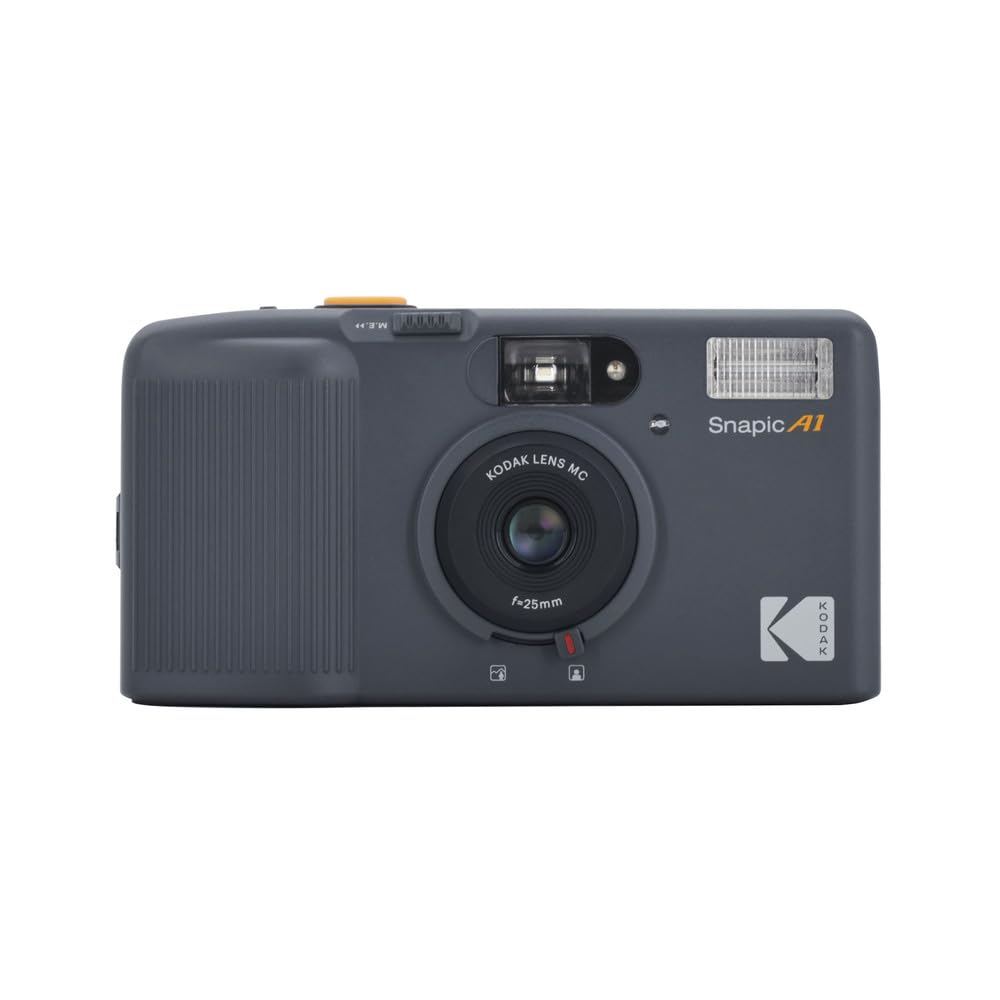
The Snapic A1 is a pocketable 35mm point-and-shoot with a three-element glass lens. It uses automatic exposure and a built-in auto flash, so a beginner can load a roll and start shooting without learning metering modes first. The shutter button and film advance are the only mechanical actions to manage. Compared with the ultra-budget panoramic camera in this set, it keeps the standard 35mm frame and uses a glass lens rather than a plastic wide-angle optic.

The right buyer is a student who wants a take-anywhere film camera outside of formal coursework. This model is automatic-only and plastic-bodied; it will not replace a manual-learning SLR if a class requires aperture and shutter control. For casual rolls between assignments, the light body and simple controls make it an easy pocket companion.

At a budget-friendly price, the Snapic fills the gap between a disposable and a used SLR. You get a genuine glass lens and a compact frame without taking on the unknown condition of a decades-old film body. That makes it a reasonable secondary camera for students who already have a manual body for class.

💡 Run a test roll through the Snapic after purchase to catch any shutter or transport quirks early.

Pros

  • Simple controls and automatic exposure let a beginner start shooting immediately.
  • Light, pocket-sized body is easy to carry every day.
  • Three-element glass lens produces sharp, detailed negatives for a compact point-and-shoot.

Cons

  • Plastic shell can feel less solid than metal-bodied SLRs.
  • Unit behavior can vary; occasional sudden shutdowns have been noted.
Our verdict

For a student who needs a manual-exposure SLR for class, the Snapic falls short; as a pocketable secondary camera for everyday rolls, it is a fair entry-level buy.

Check Latest Price
6

Experimental Pano Shooting

RETO Pano

77 /100
Studio Score Established

Key details

Focus Type
Fixed focus
Film Format
35mm pano/standard
Lens / Mount
Fixed 22mm
Condition Notes
New, plastic build
Check Price on Amazon

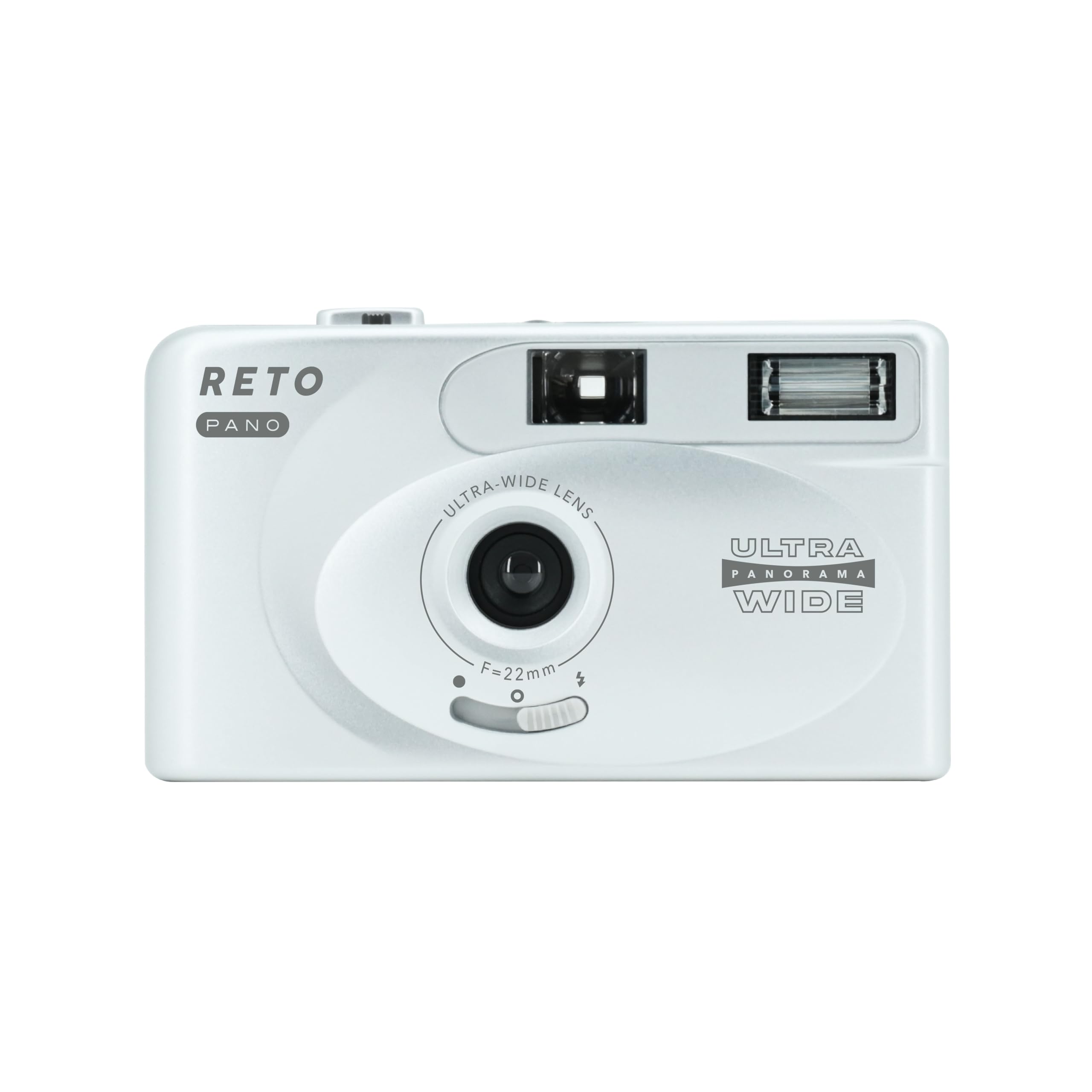
The RETO Pano is the cheapest way to shoot wide 35mm panoramas with an ultra-wide 22mm lens and built-in flash, and the standard/panoramic switch gives casual shooters two framings from one roll. That playful, low-stakes approach makes it an easy add-on for a student who already owns a capable primary camera for coursework. Film transport and exposure consistency can be uneven, though, so a roll shot in variable light may come back with overlapping or washed-out frames. Treat it as a toy-style experiment rather than a primary learning tool; students who need predictable results for assignments will want something else.

Pros

  • An ultra-wide 22mm lens and built-in flash make it a playful, budget-friendly entry into film.
  • The standard/panoramic switch delivers two framings from a single roll.

Cons

  • Plastic shutter door can stick, slowing the pace of a shooting session.
  • Film transport can be uneven, so frames may overlap or wash out on some rolls.
Our verdict

For a student already shooting assignments on a conventional SLR, the Pano is a low-cost ultra-wide experiment.

Check Latest Price

How to Choose

Manual Controls

A camera with a full manual mode lets you set aperture, shutter speed, and film speed yourself. A fully mechanical body can fire without batteries; an electronic body depends on a working battery and circuit.

If your course includes exposure exercises, a true manual setting is non-negotiable. With auto-only controls, you never see the exposure triangle in action.

Autofocus vs. Manual Focus

Autofocus SLRs focus for you, which removes one variable while you learn exposure. Manual focus bodies put the focusing task on your eye and hand, slower in dim light but better for teaching focusing discipline.

If the class requires manual focus, pick a manual-only camera; otherwise, autofocus saves time and avoids missed shots.

Lens Quality and Interchangeability

An SLR's lens mount determines what you can borrow or upgrade to later. A fast 50mm f/1.8 prime helps in low light and gives blur that a kit zoom cannot.

Fixed-lens compacts cannot switch focal lengths, so they limit coursework that requires different perspectives.

Condition and Reliability

Time affects vintage cameras beyond appearance: rubber light seals harden, foam mirror bumpers get sticky, and electronic capacitors drift. 'Renewed' does not mean the meter was calibrated or shutter speeds were checked.

Test film advance, every shutter speed, the meter, and the lens glass as soon as the camera arrives.

35mm vs. Half-Frame

Standard 35mm gives 36 frames and a full-size negative. Half-frame cameras put two images on one negative, giving 72 shots per roll and cutting film and development costs, but the smaller negative shows more grain in large prints.

The savings only matter if you shoot enough rolls to offset the higher price.

Frequently Asked Questions