10 Best Camera Drone of 2026: Smooth Footage, Honest Flight Times

Best camera drones for photographers who want true gimbal-stabilized 4K and GPS reliability without paying for inflated specs.

Aerial photo and video create a misleading gap between the listing and the landing. Many camera drones print 4K on the box, but the footage wobbles because the stabilizer is doing far less than the resolution suggests.

The practical distinction is mechanical: a 3-axis gimbal holds the sensor steady while the aircraft corrects, while electronic stabilization crops and smooths after capture. For stills and video you intend to keep, that physical layer matters more than pixel count or the longest advertised combined flight time.

This guide sorts camera drones by the stabilizer, GPS return-to-home behavior, and real per-battery runtime you will actually feel in the field, so you can buy a photo tool rather than a high-resolution toy. A sub-249g airframe can simplify registration, but only if the camera and flight link hold up when the wind picks up.

1

Best Overall

DJI Mini 4K

91 /100
Studio Score High Confidence

Key details

Stabilization
3-axis mechanical gimbal
Camera Capture
4K UHD, 12MP stills
Controller & FPV
10km HD video transmission
GPS & Flight Modes
GPS RTH, QuickShots
Check Price on Amazon

The DJI Mini 4K pairs true 4K UHD capture with a three-axis gimbal, the feature most responsible for smooth aerial footage in this budget tier. A 12MP stills mode, GPS Return-to-Home, and brushless motors round out the package, keeping it firmly in the camera-drone category rather than toy or EIS-only territory.

Stable flight matters more than pixel count for first-time pilots. The Mini 4K holds position well in open areas and predictable light wind, and the GPS Return-to-Home path gives new pilots a fallback when orientation gets confusing. QuickShots turn basic maneuvers into usable reveal and orbit clips without manual skill. That combination is more valuable than raw range or automated subject tracking.

First flights feel predictable. The control app and beginner resources lower the learning curve, and the sub-249g takeoff weight removes recreational FAA registration for adult pilots in the U.S. This keeps travel and casual use simpler than heavier camera drones.

The value case holds up because the Mini 4K delivers the core camera-drone experience—smooth 4K, GPS Return-to-Home, and DJI flight behavior—without pushing into premium pricing. Open-area signal quality keeps the live view useful for framing, which matters more than maximum transmission claims.

This is the right entry point for first-time camera drone pilots, travel and hobby content creators staying under 249g, and budget-conscious buyers wanting DJI flight behavior without a premium price. Pilots needing obstacle avoidance or multiple batteries and maximum combined flight time out of the box should look elsewhere. Plan around realistic single-battery runtime; the 31-minute rating can fall short in real conditions.

💡 Plan flights around one battery and keep the drone within visual line of sight; the Mini 4K asks the pilot, not sensors, to manage session length and obstacle clearance.

Pros

  • True 4K footage with three-axis gimbal stabilization keeps aerial video smooth and clear.
  • Beginner-friendly controls and learning resources make early flights feel predictable.
  • Strong feature-to-price balance for a true 4K gimbal camera drone.
  • Stable flight and GPS Return-to-Home add confidence in open-area flying.

Cons

  • Real-world battery life can land below the 31-minute maximum, especially when owners avoid fully draining packs.
  • No obstacle avoidance means the pilot must manage clearance near trees, buildings, and other obstacles.
Our verdict

The Mini 4K is the natural starter camera drone for adults who want smooth stabilized 4K, GPS Return-to-Home, and sub-249g convenience without paying for premium sensor extras.
Check Latest Price
2

Best Fly More Combo for the Money

Potensic Atom 2 Fly More

90 /100
Studio Score High Confidence

Key details

Stabilization
3-axis gimbal
Camera Capture
1/2-inch Sony CMOS, 4K/30
Controller & FPV
5.5-inch 700-nit FHD touchscreen, 10km
GPS & Flight Modes
GNSS, Smart RTH, AI track
Check Price on Amazon

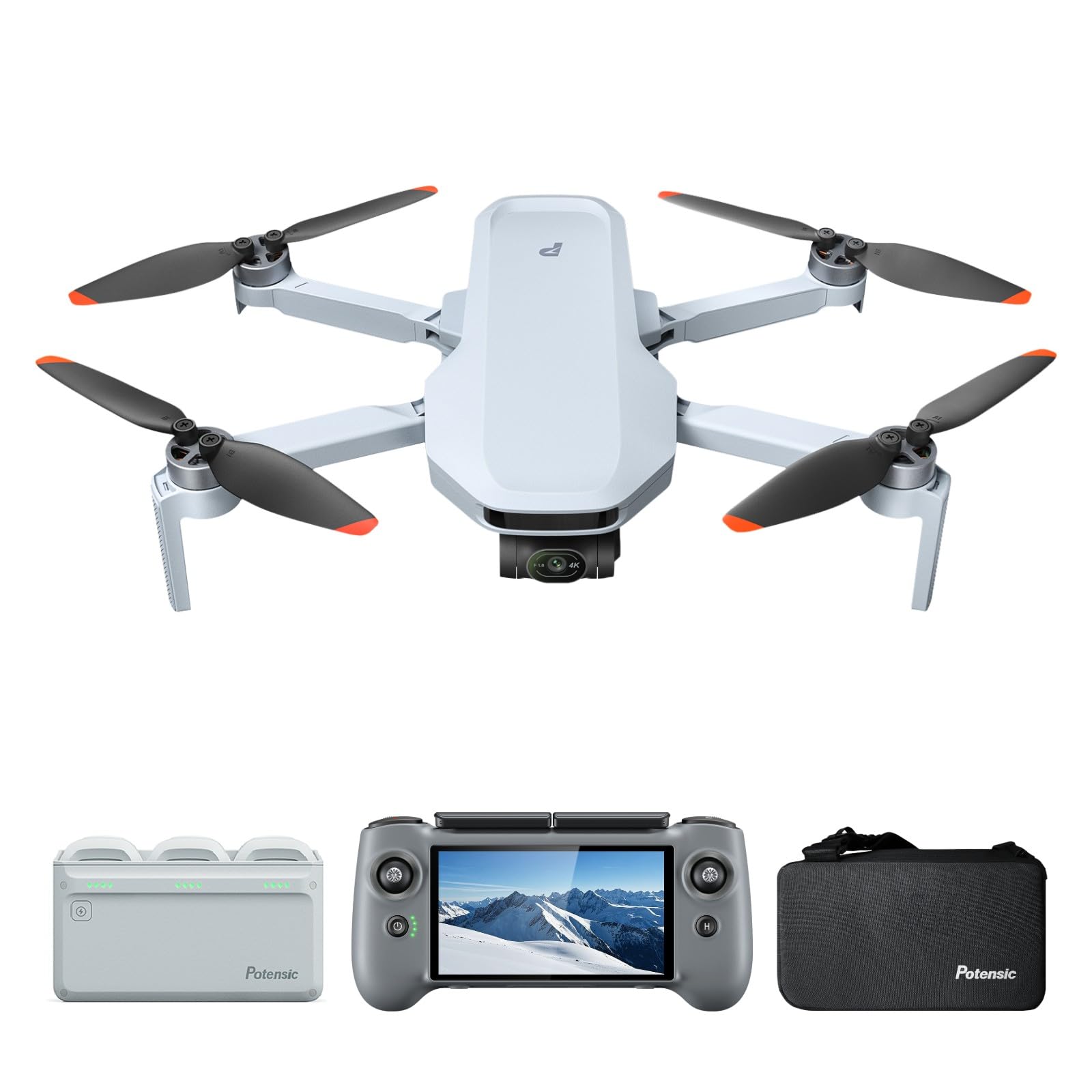
The Potensic Atom 2 Fly More Combo separates itself from basic 4K EIS drones with a 1/2-inch Sony sensor, a 3-axis gimbal, and the PTD 1 controller's 5.5-inch 700-nit FHD touchscreen. That integrated display removes phone tethering, while PixSync 4.0 and three batteries support long sessions and 10km transmission in open conditions. For aerial photo and video work, the F1.8 aperture and P-Log color profile add control that entry-level kits omit.

This fits intermediate pilots and travelers who want a complete sub-249g camera kit without moving to premium compact pricing. AI tracking, cruise control, and night modes add creator flexibility, and the three-battery total flight time stretches a day shoot more easily. The main boundaries are obstacle-heavy environments and occasional controller or Return-to-Home variance, so open air and updated firmware keep flights within safe margins.

💡 Set the home point in a clear area before takeoff, particularly when flying beyond visual line of sight.

Pros

  • Strong 4K HDR video and 48MP stills from a 1/2-inch Sony sensor.
  • The PTD 1 controller's built-in 5.5-inch touchscreen removes phone dependency and adds flight tools.
  • GPS, Smart RTH, AI track, and cruise control keep flights accessible for newer and intermediate pilots.

Cons

  • Controller or app connection and Return-to-Home precision can vary, so firmware and home point updates matter.
  • No omnidirectional obstacle avoidance, so flights near trees or structures require visual clearance.
Our verdict

The integrated display and three-battery flight time are the reasons to pick this over basic 4K EIS alternatives. It suits open-air outings where visual flying is part of the plan.

Check Latest Price
3

Best Premium Sub-250G Camera Drone

DJI Mini 5 Pro Fly More

87 /100
Studio Score Strong Evidence

Key details

Stabilization
3-axis gimbal, true vertical filming
Camera Capture
1-inch CMOS, 4K/60 HDR
Controller & FPV
DJI RC 2 included
GPS & Flight Modes
Smart RTH, obstacle sensing
Check Price on Amazon

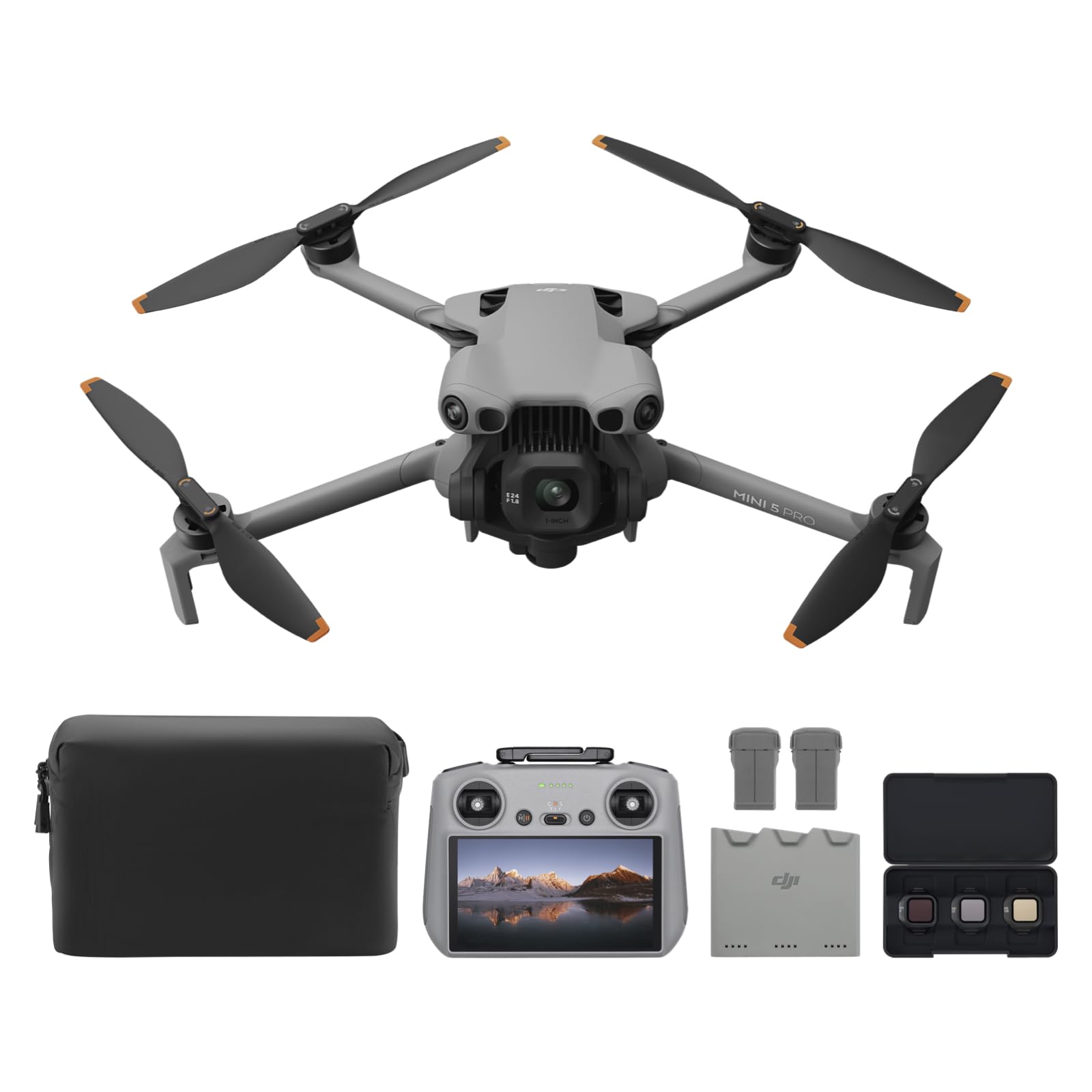
The Mini 5 Pro Fly More sits a clear step above the entry-level 4K gimbal pick by pairing a 1-inch CMOS sensor and 4K/60 HDR capture with true vertical filming and Nightscape omnidirectional obstacle sensing. The 3-axis gimbal handles true vertical filming and a 225-degree roll rotation, so creators get stable footage for both landscape and short-form framing without a heavier airframe.

This bundle suits enthusiast creators and travelers who want a sub-250g platform with a larger sensor and obstacle avoidance. The three-battery Fly More package helps cover longer travel shoots, and the flight modes make it approachable once you are past DJI's initial setup. It is not the budget pick for beginners, and buyers should treat the 249g figure as a starting point rather than a guarantee. Weight tolerances can push a unit over the no-registration line in strict jurisdictions, and occasional camera-feed or feature hiccups may require a quick restart.

Pros

  • Captures 1-inch CMOS stills and 4K/60 HDR video with a stabilized 3-axis gimbal.
  • Nightscape omnidirectional obstacle sensing and LiDAR improve safety during tight or low-light travel flights.
  • Three-battery Fly More bundle and quick deployment make the drone easy to fly and shoot longer.

Cons

  • Camera-feed or intelligent-flight handoffs can occasionally interrupt a shot, and flyaway coverage support can be a concern.
  • Takeoff weight can vary enough to exceed 249g on some units, so no-registration status needs a scale check.
Our verdict

For enthusiast creators who want a larger sensor and obstacle avoidance without stepping up to a heavier airframe, the Fly More bundle covers aerial photo and video work well. Buyers who need guaranteed no-registration status in every jurisdiction should verify local rules before flying.

Check Latest Price
4

Long-Flight 3-Axis Gimbal Starter

Ruko F11PRO 2

89 /100
Studio Score Strong Evidence

Key details

Stabilization
3-axis mechanical gimbal
Camera Capture
4K/30fps video, 19MP CMOS
Controller & FPV
10,000ft digital transmission
GPS & Flight Modes
GPS RTH, follow, waypoint, orbit
Check Price on Amazon

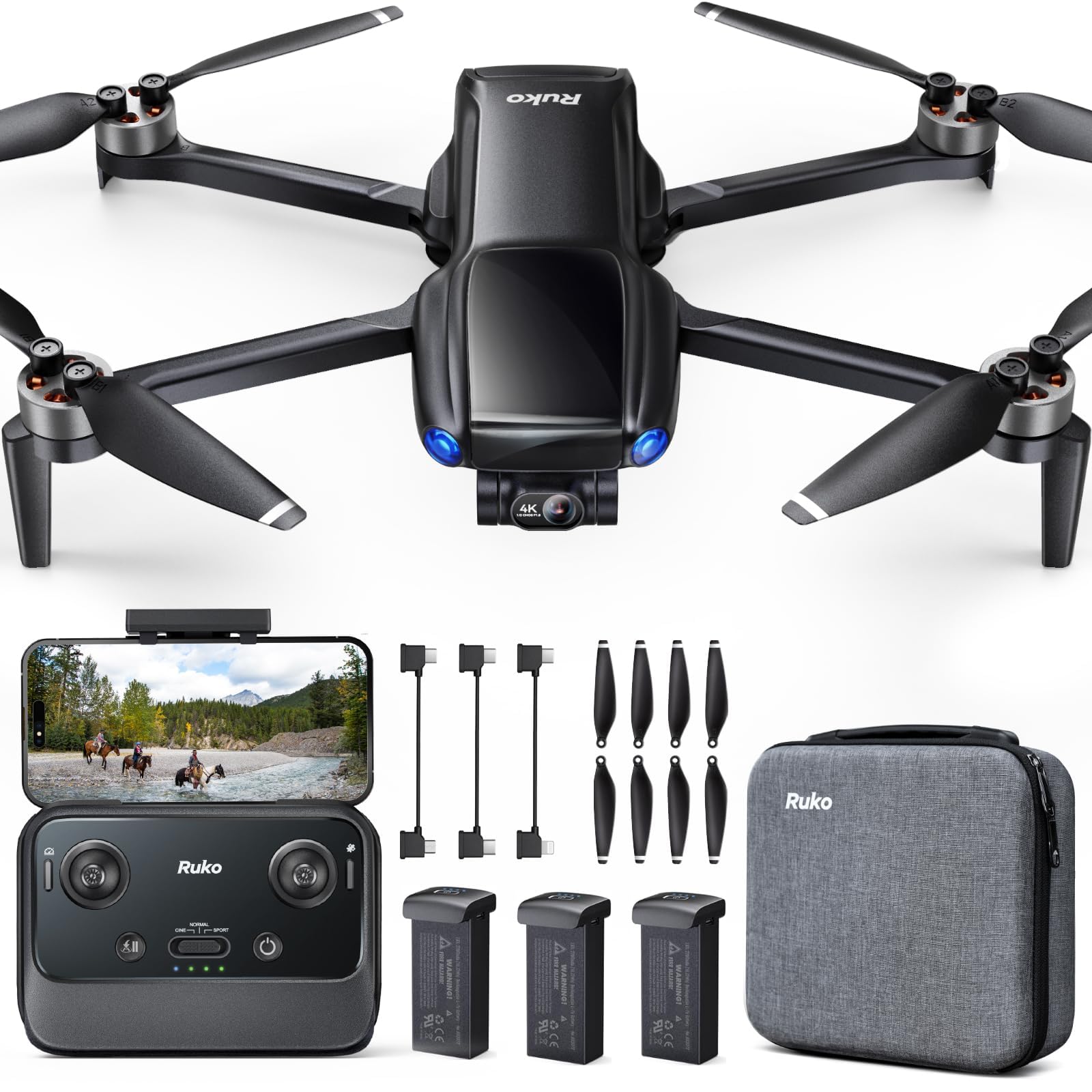
Unlike lighter sub-249g alternatives in this set, the Ruko F11PRO 2 leads with a 3-axis gimbal, GPS follow, waypoint, and orbit controls, plus two batteries in the box. That package suits open-area pilots who want smoother 4K/30fps footage than electronic stabilization alone and enough combined power for extended practice or property runs. The 4K video and 6K photo capture are workable for casual aerial documentation, and GPS return-to-home helps reduce basic flyaway risk over open terrain.

Adult beginners and rural or ranch users get the most here. This airframe is for buyers who value autonomous flight modes and longer combined sessions over sub-249g no-registration convenience or obstacle avoidance. The honest tradeoff is that per-battery runtime can land closer to 25 minutes than the combined rating, and occasional battery or WiFi quality-control issues may require a support exchange. That makes it best for wide-open fields rather than tight residential or wooded paths.

💡 Fully charge and drain both batteries once before relying on planned flight time.

Pros

  • 3-axis gimbal keeps 4K/30fps video stable without relying on electronic stabilization alone.
  • GPS follow, waypoint, and orbit modes cover basic automated shots over open property.
  • Two included batteries extend combined flight time for longer practice or ranch use.

Cons

  • Per-battery runtime may fall closer to 25 minutes, making combined flight-time planning less linear.
  • Occasional battery or WiFi connection issues can require a support exchange.
Our verdict

For open-area flyers, this is a gimbal-first GPS drone with extended combined flight time; just verify the batteries and connection on arrival.

Check Latest Price
5

Long-Range 3-Axis Gimbal with Remote ID

Bwine F7GB2 Pro

83 /100
Studio Score Strong Evidence

Key details

Stabilization
3-axis gimbal
Camera Capture
4K UHD, 120-degree FOV
Controller & FPV
3000m range
GPS & Flight Modes
GPS RTH, follow, waypoint, circle
Check Price on Amazon

A 3000m control range and a mechanical 3-axis gimbal give this drone a different role from sub-249g travel cameras: covering open ground and holding a steady frame over a rural property. The three-battery bundle supports up to 75 minutes of combined flying time, while GPS auto return, follow, waypoint, and orbit modes handle positioning work during solo flights. The 4K camera gains a real stability advantage from the gimbal, producing smoother pans and less jump than electronic-only stabilization at this price.

This is aimed at rural and property owners who want a long-range inspection platform with FAA Remote ID certification already built in. The 550g airframe requires registration and is not the grab-and-go sub-249g option, so travelers looking for a lightweight drone should choose the compact picks in this set instead. The three-battery bundle and GPS toolset make the extra weight worthwhile for distance work.

💡 Update firmware and test GPS auto return from a short distance before relying on the 3000m range.

Pros

  • 4K footage looks sharp for the price, with enough clarity for real aerial inspection and property monitoring.
  • The 3-axis gimbal keeps video stable through pans and hover, limiting the jitter and roll that weaker drones show.
  • The three-battery bundle and GPS modes provide a long, flexible filming session at a mid-range price.

Cons

  • Per-charge runtime can dip below the combined 75-minute rating in wind, cold, or aggressive flight.
  • Phone and app pairing can be inconsistent at setup, and support may be required on some devices before first flight.
Our verdict

For a property owner who needs a Remote ID-compliant 3-axis gimbal with long range and three batteries, this is a practical mid-range tool that prioritizes distance over travel portability.

Check Latest Price
6

Best Budget GPS 4K EIS Drone

Potensic ATOM SE

89 /100
Studio Score Strong Evidence

Key details

Stabilization
EIS only, no gimbal
Camera Capture
4K EIS, 1/3-inch Sony CMOS
Controller & FPV
4km PixSync 2.0 FPV
GPS & Flight Modes
GPS RTH, follow, waypoint
Check Price on Amazon

The Potensic ATOM SE holds the value spot with a foldable sub-249g GPS body, 4K EIS capture, and two batteries for 62 minutes of total flight. GPS auto return, follow me, waypoint, and circle flight modes put it in the camera-drone class rather than the toy-drone shelf. The 4km PixSync 2.0 FPV link and 1/3-inch Sony CMOS sensor give the platform a credible aerial photo and video base for the price.

This is the right boundary for first-time drone buyers and travelers who want GPS return-to-home and foldable travel convenience without paying for a premium 3-axis gimbal. The honest tradeoff is that EIS-only stabilization has smoothing limits in harder wind, and occasional flyaway or app-glitch loss can occur if firmware or calibration is stale, so pre-flight updates and calibration should be routine. Buyers needing a true 3-axis gimbal or omnidirectional obstacle sensing should step up.

💡 Keep the app, aircraft firmware, compass, and IMU calibration current before flying in a new area.

Pros

  • Saves money for first-time pilots while retaining GPS, 4K EIS capture, and two batteries.
  • Gentle learning curve with beginner-friendly controls and automated flight modes.
  • Daylight stills and video hold up well for casual aerial shooting.

Cons

  • In gusty or fast-moving shots, EIS-only stabilization can show more shake than a 3-axis gimbal.
  • Occasional flyaway or app-glitch loss may occur when firmware or calibration is not kept current.
Our verdict

First-time and travel-focused pilots get GPS return-to-home, foldable sub-249g hardware, and two batteries for real aerial practice.

Check Latest Price
7

Beginner Travelers

Ruko U11MINI 4K

88 /100
Studio Score Strong Evidence

Key details

Stabilization
3-axis gimbal plus EIS
Camera Capture
4K/30fps video, 48MP stills
Controller & FPV
20,000ft digital transmission
GPS & Flight Modes
GPS, beeper, TOF, auto-return
Check Price on Amazon

The Ruko U11MINI 4K pairs a 3-axis gimbal, EIS, GPS return-to-home, and three batteries in a 248g frame, keeping it under the sub-249g registration threshold. That combination gives travelers and families strong long-flight capability for the price. Flight-performance and battery consistency can vary across units and conditions, and that keeps it a step below the top pick for pilots wanting a more settled hover or a smoother app experience. Buyers who accept some variance get capable 4K gimbal footage without a heavier airframe.

Pros

  • Beginner-friendly controls and overall build quality reduce the usual first-flight learning curve.
  • Sub-249g frame, 3-axis gimbal, and three-battery bundle deliver strong value for aerial practice.

Cons

  • Per-battery runtime may fall below the ideal three-battery estimate, so keep sessions shorter than the printed total.
  • Hover stability can vary by unit, with possible sudden movements that make tight-space flying riskier.
Our verdict

This fits a beginner or traveler who values long combined flight time and sub-249g simplicity, provided open flying space is available and some unit-to-unit variance is acceptable.

Check Latest Price
8

Hands-Free Vloggers

HOVERAir X1

84 /100
Studio Score Strong Evidence

Key details

Stabilization
Triple stabilization, visual odometry
Camera Capture
2.7K/30fps video, 1080p HDR
Controller & FPV
App or optional RC control
GPS & Flight Modes
No traditional GPS RTH
Check Price on Amazon

The HOVERAir X1 launches from an open palm and tracks a subject without a controller, making close-range hands-free video practical for solo vloggers and cyclists. The 125g body with full propeller guards and 2.7K/1080p HDR output is shareable and easy to fly. It is not a primary aerial camera for this search: about 11 minutes of flight per battery and visual positioning limits over water or low light keep it a controlled-condition companion for short sessions.

Pros

  • Palm takeoff and subject tracking make hands-free operation nearly effortless.
  • Smooth 2.7K/1080p HDR clips suit shareable follow-cam footage.

Cons

  • No GPS return-to-home; navigation depends on visual inertial odometry.
  • Video tops out at 2.7K/30fps and 1080p HDR, not 4K.
Our verdict

Fits solo vloggers and cyclists who want a palm-sized hands-free follow cam for open, well-lit ground spaces with a separate primary drone for GPS aerial work.

Check Latest Price
9

Casual Families

Oddire HK11

85 /100
Studio Score Strong Evidence

Key details

Stabilization
No gimbal or EIS
Camera Capture
2.7K video, 12.3MP stills
Controller & FPV
500m range
GPS & Flight Modes
GPS auto return, follow, waypoint
Check Price on Amazon

GPS auto return, follow, waypoint, and orbit modes make this a forgiving first drone for adults and supervised families, with a foldable 249g body that keeps outdoor sessions simple. Camera results are decent for casual use, but the 4K title overstates the actual 2.7K/2048x1088 capture, and there is no 3-axis gimbal for smooth aerial footage. Treat it as a casual 2.7K flyer rather than a true aerial photo platform.

Pros

  • GPS auto return and follow, waypoint, and orbit modes lower the risk for first flights.
  • Foldable 249g body suits casual family flying and simple outdoor sessions.

Cons

  • Battery runtime can land below the 48-minute total with two batteries.
Our verdict

This fits first-time pilots and families who want a low-risk GPS drone for casual practice and can accept the camera caveat described above. Buyers looking for a higher-resolution or mechanically stabilized camera platform should consider the top pick in this set.

Check Latest Price
10

Casual Beginners

karuisrc GPS Drone

86 /100
Studio Score Strong Evidence

Key details

Stabilization
EIS
Camera Capture
1080p video capture with EIS
Controller & FPV
4.5-inch LCD controller screen
GPS & Flight Modes
GPS auto return, follow, waypoint
Check Price on Amazon

The built-in 4.5-inch controller screen removes phone pairing during setup, while GPS auto return, follow-me, waypoint, and orbit modes create a controlled practice environment. EIS steadies 1080p capture well for casual clips, but this is not a 4K aerial camera. Long-term durability can vary between units, so the fit is supervised learning and light outdoor flying rather than serious camera work.

Pros

  • Built-in 4.5-inch controller screen keeps practice flights phone-free.
  • GPS auto return, follow-me, waypoint, and orbit modes give beginners a controlled flight path.

Cons

  • Video capture is capped at 1080p, limiting large prints and heavy crops.
  • Durability can vary between units, with occasional early wear after a few weeks.
Our verdict

This is a budget-friendly practice drone for supervised beginners who value a phone-free controller screen and GPS modes over 4K detail.

Check Latest Price

How to Choose

Camera Sensor and True Capture Resolution

Start with the actual capture resolution and sensor size rather than the badge on the listing. A small sensor paired with aggressive compression can still write 4K to a file, but fine detail, shadow recovery, and print crops will disappoint. For aerial stills, a 1/2-inch or 1-inch CMOS gives noticeably cleaner low-light footage and more usable color information.

Stabilization Type

A 3-axis mechanical gimbal physically isolates the camera from pitch and roll. Electronic stabilization crops the frame and smooths movement after capture, which can introduce more edge artifacts and can struggle in gusty wind.

If most flights happen over open water, in coastal wind, or at speed, choose a gimbal. For still afternoons and occasional clips, EIS can save money.

GPS Return-to-Home and Flight Modes

GPS is not only a location feature; it is the failsafe that takes over when the link drops or the battery reaches a critical threshold. Drones with RTH still require a current home point and enough satellite lock before takeoff.

Follow and waypoint modes add hands-free shots, but their value depends on open sightlines and reliable compass calibration.

Real-World Flight Time and Included Batteries

Advertised totals often combine multiple batteries under ideal conditions. Per-battery runtime is the number that matters for planning a sunset shoot or a long property pass, and many models land 20-30 percent below the maximum in normal use. Extra batteries in the box reduce the gap between one launch and the next.

Weight and Recreational FAA Registration

Sub-249g models skip recreational registration in the US, making them easier to pack and deploy on short notice. Heavier drones may require registration and more pre-flight planning, but they often carry larger gimbals or sensors for windier open areas. Commercial use and battery upgrades can change the sub-249g calculus.

Controller Type and FPV Transmission

A dedicated controller screen removes the friction of pairing a phone and keeps the feed live even when calls or notifications arrive. Phone-based controllers can be enough if the app is stable, but connection drops and app glitches are the most common interruptions in budget models. Match the control link to the environment: longer transmission ranges help only when the airspace stays clear.

Frequently Asked Questions