5 Best APS-C Compact Camera of 2026: AF and Video Matter Most

Find the best APS-C compact camera for how you actually shoot — from budget mirrorless starters to premium hybrid bodies with modern AF and usable 4K.

A truly compact APS-C camera has to cut something. Some bodies drop the viewfinder to keep the size down; others shortchange battery life or impose recording limits on 4K. The result is that two cameras with similar sensors can feel completely different in everyday use.

The same sensor size also spans two formats: pocketable fixed-lens cameras and small interchangeable-lens mirrorless bodies. Before deciding, choose which trade-off fits your routine — a jacket-pocket camera with no zoom, or a lens system you build over time.

The practical dividing lines are autofocus speed, video usability, screen flexibility, and lens options. Match those to the way you shoot, and the right body becomes obvious.

1

Best Overall

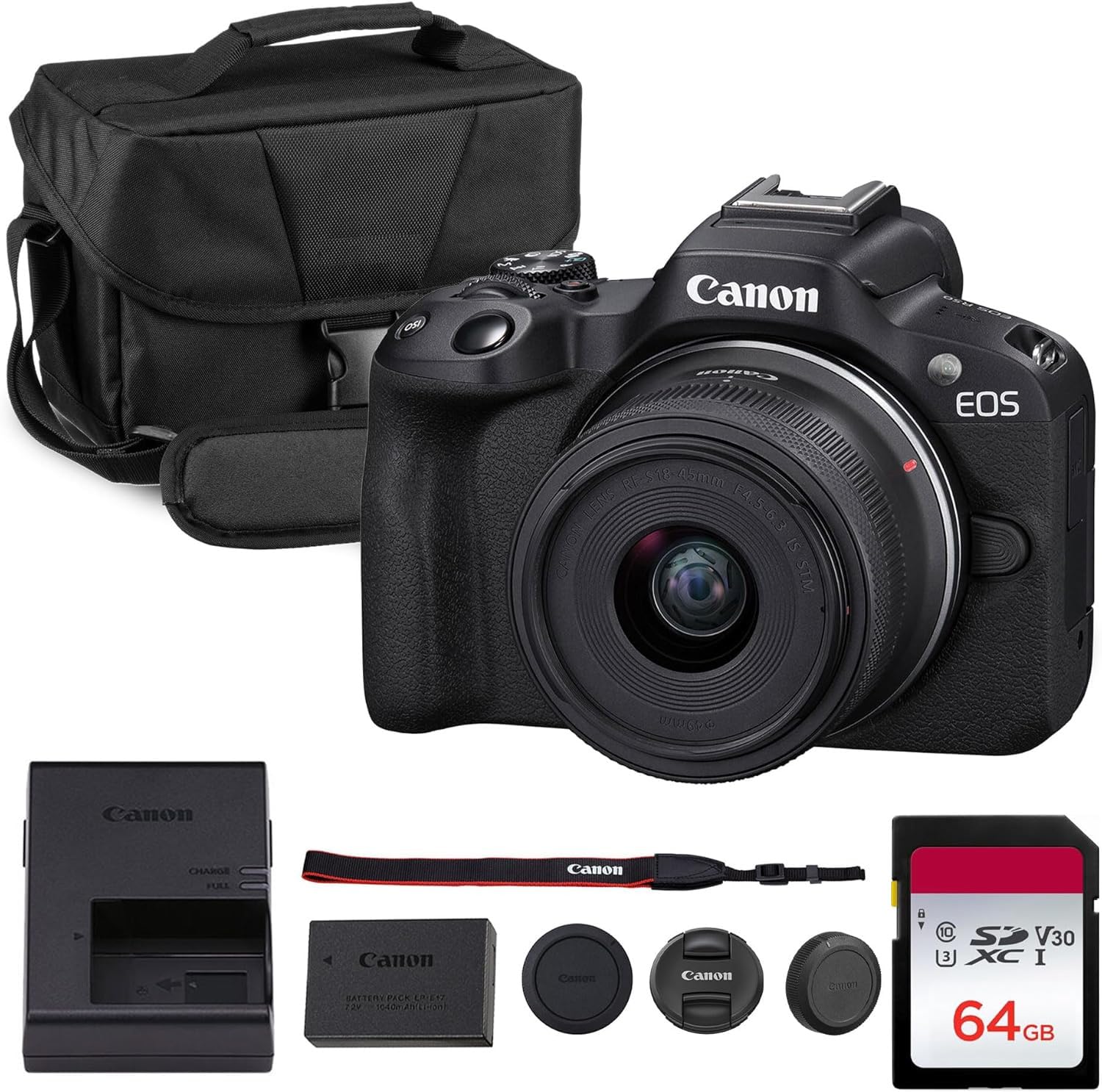
Canon EOS R50

90 /100
Studio Score High Confidence

Key details

Sensor
24.2MP APS-C CMOS
4K Video
4K oversampled, 120p FHD
Autofocus
Dual Pixel CMOS AF II
Lens Ecosystem
Canon RF-S mount
Check Price on Amazon

The R50 combines Canon's Dual Pixel CMOS AF II, oversampled 4K, and a vari-angle touchscreen in a small RF-S body, making it a compact hybrid for shooters who split time between stills and video. The 24.2MP APS-C sensor keeps image quality competitive with larger mirrorless bodies, and the body is a clear step up from the budget RF-S option for anyone who plans to do more than stills. It brings modern autofocus, usable 4K, and a flippy screen into a package that older compact APS-C bodies don't match in this segment.

Face and eye detection carries over to video, so people and pets stay in focus while you move. The kit lens covers the everyday focal lengths used for street scenes, meals, and family group shots, and the whole package stays light enough for a long day out. This matters more than raw resolution when the goal is to bring a camera without bringing a backpack.

The vari-angle touchscreen pulls double duty: it handles focus selection with a tap when the camera is at eye level, and it flips around for self-framing or low-angle shots. Vertical video and Creative Assist are built into the menu, so social-first clips don't require external editing tricks. The 120p FHD slow-motion mode gives you dramatic motion for short edits without a dedicated video camera.

At a mid-range price, the kit includes the body, a zoom lens, and the tilt-out touchscreen without pushing you toward a monitor or gimbal right away. The RF-S mount has a growing lens lineup, so the kit lens is a starting point rather than a dead end. For a family vacation or a weekend trip, the practical result is one small camera bag instead of a case full of gear.

This is for travel and family photographers who value compactness but still want modern autofocus, and for new streamers or YouTubers who prefer a camera that doesn't demand menu diving. It is not for shooters who need in-body stabilization or dual card slots; low-light handheld work leans on lens IS, and a single card slot suits everyday backups rather than paid-event redundancy.

Pros

  • Consistent build quality spans stills, video, and travel use.
  • Strong stills and detailed 4K cover both photo sessions and casual video work.
  • Small, light body keeps travel and family outings comfortable.
  • Value bundle puts the body, kit lens, and creator controls at a mid-range price.
  • Dual Pixel AF II with face and eye detection simplifies focus for stills and video.

Cons

  • Long interview-style 4K can hit crop/heat limits; this body is better for short clips.
  • The bundled SD card can interrupt 4K recording until you switch to a U3 card.
Our verdict

The R50 is the compact APS-C body to beat for travel, family, and social-first hybrid shooting.

Check Latest Price
2

Best for Hybrid Enthusiasts

Sony a6400 w/ 16-50mm

89 /100
Studio Score Strong Evidence

Key details

Sensor
24.2MP APS-C CMOS
4K Video
4K 2160p
Autofocus
425-point phase detect, Eye AF
Lens Ecosystem
Sony E-mount
Check Price on Amazon

The Sony a6400 pairs class-leading Real-Time Eye AF, strong 4K, and the deepest APS-C E-mount lens system in a compact body. The top pick's touchscreen and menus are easier for newcomers, but the Sony rewards those who plan to build a lens kit over time rather than stay at the kit lens level. That combination of capable stills and video in a small body is why it remains a benchmark in this class.

This is for hybrid shooters who want fast Eye AF, a compact body with a viewfinder, and room to grow into E-mount glass. It is not for creators who need a fully articulating screen or in-body stabilization; the top pick and Sony's higher-tier model cover those needs. Battery life is modest, so a spare pack is practical for all-day shoots.

If you are already invested in E-mount lenses, this is a cost-effective way to upgrade your body while keeping your glass. The bundled 16-50mm keeps the package small; the system grows when you add primes or a faster zoom. For newcomers who want a simpler out-of-box experience, the top pick is the easier recommendation.

Pros

  • Real-Time Eye AF locks onto subjects and keeps them in focus during stills and video.
  • 4K video and stills deliver high image quality for the price.
  • Compact body with built-in viewfinder is easy to carry for travel and daily use.
  • E-mount lens selection gives a clear upgrade path beyond the kit lens.

Cons

  • 4K capture is 8-bit, so color grading has less headroom than newer 10-bit rivals.
  • Individual units can develop power-on issues, so a flexible return policy is worth checking.
Our verdict

The a6400 is the compact body for shooters who value Eye AF and lens-system growth over the top pick's out-of-box simplicity.

Check Latest Price
3

Best Premium APS-C

Sony a6700 Body

89 /100
Studio Score Strong Evidence

Key details

Sensor
26MP APS-C CMOS
4K Video
4K60 10-bit, 4K120p
Autofocus
759-point phase detect, AI tracking
Lens Ecosystem
Sony E-mount
Check Price on Amazon

The a6700 packs a 26MP APS-C sensor, 759-point phase detection, and BIONZ XR processing into a body that still fits a compact everyday kit. In-body stabilization and AI-driven subject recognition push it past the older E-mount all-rounder for hybrid work, while the smaller frame avoids the bulk of a full-frame setup.

Still captures hold up in high-contrast scenes, with dynamic range that lets you recover highlight and shadow detail without losing clean texture. Video shooters get 10-bit 4K60 and 4K120 for graded color and slow motion, and the compact shell makes it far more likely the camera comes along on a shoot. Enthusiasts and pros who need one portable body for photo and video will find the control layout responsive.

The right buyer is already invested in Sony E-mount or ready to pay for a premium APS-C hybrid: someone who wants a compact body for both stills and video without stepping up to full-frame. The a6700 assumes patience with a deep menu system, possible heat warnings during sustained 4K in warm rooms, and the need to verify a new body powers on at delivery.

💡 Set aside time to learn the menu before an important shoot; custom keys reduce the hunt later.

Pros

  • High dynamic range and clean color make it easy to recover highlights and shadows in challenging light.
  • Autofocus tracks people, animals, and subjects through movement, so action shots stay sharp.
  • Compact body keeps the camera practical for daily carry while still offering the controls serious shooters expect.
  • The hybrid feature set gives video-first users a single compact body for high-quality stills and graded 4K footage.

Cons

  • Initial setup can feel slow until you map the camera's custom keys.
  • Warm-room 4K recording can generate heat warnings during longer clips, so air movement matters.
  • A body can arrive unable to power on, making a delivery-day check worthwhile.
Our verdict

If your hybrid shooting has outgrown a mid-range E-mount body, the a6700 delivers professional AF and video tools in a genuinely portable APS-C package.

Check Latest Price
4

Best Fixed-Lens Compact

Fujifilm X100F

91 /100
Studio Score High Confidence

Key details

Sensor
24.3MP APS-C X-Trans III
4K Video
1080p, no 4K
Autofocus
Contrast-detect AF
Lens Ecosystem
Fixed 23mm f/2
Check Price on Amazon

The X100F pairs a 24.3MP APS-C sensor with a fixed 23mm f/2 lens and Fujifilm's film simulations, producing vivid JPEGs straight out of camera in a body that slips into a jacket pocket. The hybrid optical/electronic viewfinder lets you frame without EVF blackout, and it remains visible in bright daylight, where rear screens can wash out. Physical shutter-speed and ISO dials keep the shooting experience hands-on.

This is a street/travel companion for photographers who enjoy composing within a fixed 23mm view. The lens has no zoom, so framing is a footwork exercise; that's a feature for some, a boundary for others. If focal-length flexibility is the priority, the interchangeable-lens top pick in this roundup is a better match.

The 24.3MP sensor holds up well in daylight and low-light street scenes, with high-ISO output that stays usable after dark. The f/2 lens is bright enough for evening work, though deep shadow may require a higher ISO setting. The compact body is the real headline: it disappears into a jacket, so it tends to be the camera you actually carry.

Fujifilm's film simulations are built into the JPEG pipeline, so shooters can select a look before pressing the shutter and skip heavy editing.

💡 Set the shutter-speed and ISO dials to 'A' when you want to move quickly; the camera will handle exposure while you concentrate on framing.

Pros

  • Fixed 23mm f/2 lens and film simulations produce vivid JPEGs straight from the camera.
  • Compact body slips into a jacket pocket, making it easy to carry every day.
  • Hybrid viewfinder and physical dials provide a tactile, hands-on shooting experience.
  • Strong value for a premium fixed-lens compact.

Cons

  • Some controls require a learning curve, and a few settings are buried in menus.
  • Autofocus can lag in low light or with moving subjects, so action sequences may include missed frames.
Our verdict

This is the street/travel compact for anyone who wants Fujifilm color and a hybrid viewfinder in a jacket-pocket body.

Check Latest Price
5

Best Budget Entry

Canon EOS R100

90 /100
Studio Score High Confidence

Key details

Sensor
24.1MP APS-C CMOS
4K Video
4K up to 24p
Autofocus
Dual Pixel AF, 143 zones
Lens Ecosystem
Canon RF-S mount
Check Price on Amazon

The R100 is the budget entry point for Canon RF-S, with a 24.1MP APS-C sensor and 4K capture in a compact mirrorless body. It undercuts the top pick, leaving room in the budget for a better lens later. The 18-45mm kit lens covers practical travel and family focal lengths, and the controls stay simple enough for a first interchangeable-lens camera.

Image quality carries the experience. Handheld daytime shots produce clean detail and natural color, and the 24.1MP sensor keeps up with everyday printing. The 4K mode tops out at 24p, with 1080p up to 60p, so video is an occasional feature rather than a primary workflow.

The body fits a small camera bag or daypack, which makes it a realistic travel companion. Casual stills use feels like a deliberate step up from a phone without the bulk of a DSLR.

This is for first-time buyers and parents who want a small APS-C camera for stills and casual video, not self-facing video or action-sports speed. The fixed screen, older autofocus, and modest burst are acceptable limits for that buyer; the occasional need for early service is the reason to check the return policy.

Pros

  • Captures clean, detailed stills beyond the typical entry-level bar.
  • Simple controls and a compact body make it easy for beginners.
  • Offers the least expensive path into Canon RF-S while keeping a large APS-C sensor.

Cons

  • Vloggers will struggle to confirm framing while recording.
  • A unit can require service shortly after setup, so a first-week test with the return window is worthwhile.
Our verdict

For casual stills photographers who want a compact APS-C body without paying for modern video tools, this is the sensible RF-S starter.

Check Latest Price

How to Choose

Sensor and Resolution

APS-C sensors use a 24MP-class chip that gathers more light than smaller sensors, which is why these bodies pull ahead of phone-sensor compacts in low light. The practical difference is less about resolution and more about sensor generation: older 16MP models still deliver pleasing stills but miss current video, autofocus, and processing features.

If you crop heavily or print large, a 24MP or 26MP body gives more room to work.

Autofocus

Modern phase-detect autofocus covers most of the frame, and eye or animal tracking locks onto a moving subject without shifting away. Older systems use fewer points and slower processors, which shows up as hunting in low light or when a child runs toward you.

For family and travel photography, the autofocus system matters more than megapixels.

4K Video

4K recording in a compact body is a thermal balancing act. Oversampled 4K reads more of the sensor to make sharper footage, but it generates heat, so some bodies limit clip length or warn after 20-50 minutes.

The memory card matters too: a slow card can stop recording mid-clip. Buy a U3 or V30 card, format it in-camera, and check the camera's recording limits before relying on long takes.

Screen and Viewfinder

A vari-angle screen makes self-framing, tripod work, and low-angle shots easier because the screen can face you. A fixed screen forces you to compose from behind the camera, which is awkward for vlogging.

Adding an eye-level viewfinder uses space and cost, so video-first bodies often drop it; bright-light shooters should keep it.

Lens Ecosystem

An interchangeable-lens body is only as useful as the lenses available for its mount. A compact camera with a tiny 18-45mm zoom can stay small, but a fast prime or telephoto lets you change its character later.

Fixed-lens compacts avoid lens choice entirely and keep the body smaller, locking you into one focal length.

Frequently Asked Questions