4 Best Underwater Camera Housing in 2026: Seals That Last

Find the best underwater camera housing for your dive style — one that keeps its seal, not just its depth rating.

Most underwater camera listings lead with a depth rating. In practice, the housing body is rarely the weak point. The latch, the O-ring, and the control layout decide whether a case still feels trustworthy on dive 20.

That gap between marketing and lived use is why the same rated depth can feel different in the water. A smartphone housing with a vacuum check and leak alarm gives you feedback before you splash. A dedicated compact housing with full manual controls offers a different kind of confidence. Both can work, but only if the closure is cared for and the controls match your dive style.

This guide sorts those choices into clear use cases, with a focus on seal confidence, closure durability, and how each housing handles underwater. Pick the one that fits your camera and your diving habits, not the one with the biggest number on the box.

1

Best Overall

DIVEVOLK Seatouch 4 Max

88 /100
Studio Score Strong Evidence

Key details

Leak Safety
No leak alarms
Build & Latch
Polycarbonate shell
Compatibility
iPhone 12-16 Pro Max
Depth Vs Seal
Rated 196 ft, 130-ft dives
Check Price on Amazon

The Seatouch 4 Max runs the iPhone's native Camera app underwater with full touch control down to 196 feet, and it does that without O-rings, batteries, or a companion app. Sliding the phone in and latching the polycarbonate shell is the entire setup routine; there are no seals to grease, no vacuum pump to engage, and no app to pair before a dive.

At common scuba depths, the touchscreen stays responsive through thick gloves, so you can move between photo, video, and any other app by direct touch instead of memorizing a physical button map. The housing has handled dive profiles from 84 to 130 feet without water intrusion, and the iPhone's image processing is left intact, which is why stills and video come out crisp and clear. Snorkelers who stay shallow get the same direct control, and the phone stays dry.

The right buyer is an iPhone 12-16 Pro Max owner who wants one housing for snorkeling, scuba, and travel, and who prefers native Apple controls over a dedicated camera app. Android users and divers tied to physical shutter controls will not find that here. Touch sensitivity can drop after the screen sleeps at depth, and a careful even latch close matters for keeping the seal watertight; AssistiveTouch and a pre-dive closure check are the workarounds.

Because the same shell fits iPhone 12 through 16 Pro Max models, it remains useful across a phone upgrade cycle, and the 196-foot depth rating covers recreational and extended no-decompression diving. With no proprietary app lock-in, the same touchscreen that controls the camera also handles any other app on the phone. For traveling divers, one housing can move between an older 12 Pro Max and a newer 16 Pro Max, or cover a household with mixed current-gen flagships.

At a mid-range price, this undercuts dedicated compact-camera housings by using the phone you already own. The tradeoff is that you give up physical shutter levers and leak alarms in exchange for direct control on the iPhone's own screen, which is the right exchange for anyone who wants native iPhone controls rather than a second camera to charge and carry.

💡 Set AssistiveTouch before the dive and latch the case with even pressure from both sides.

Pros

  • Full touchscreen operation underwater gives direct access to native camera controls, all apps, and settings.
  • Holds up at typical scuba depths without water intrusion, covering recreational dive profiles to 130 feet.
  • Setup is quick: slide the phone in and close the latch; no O-rings, batteries, or app pairing.
  • iPhone's own camera processing stays intact, producing crisp images and clear video.

Cons

  • Touch responsiveness can slow after the screen sleeps at depth, so a wake gesture or AssistiveTouch may be needed.
  • A watertight seal depends on an even closure; occasional water intrusion is possible if the latch seats unevenly.
Our verdict

iPhone shooters get the fewest barriers between their existing camera and the water with the Seatouch 4 Max — full touchscreen, no app, and a 196-foot rating — at a mid-range price.

Check Latest Price
2

Best Budget Action-Camera Housing

FitStill GoPro Housing

93 /100
Studio Score High Confidence

Key details

Leak Safety
No leak alarms
Build & Latch
Acrylic shell, steel latch
Compatibility
GoPro Hero 9-13
Depth Vs Seal
Rated 196 ft, 102-ft dives
Check Price on Amazon

The FitStill Underwater Housing gives GoPro Hero 9-13 owners a precise-fitting shell that protects at recreational depths for a budget-friendly price. It suits snorkelers and surfers who want physical button access and a clear flat lens without paying for extras they will not use.

The housing has maintained a dry seal on recreational dives to about 100 feet, and the buttons remain easy to work for mode changes and recording. The large flat glass lens keeps the image clear, and the included anti-fog sheets plus mount adapter cover the basics for a saltwater outing. It does not complicate the GoPro's normal controls.

This is for GoPro Hero 9-13 owners who want an extra protective shell for snorkeling and recreational diving and are comfortable giving the latch a quick check before entering the water. Treat the 196-foot rating as a ceiling; the housing earns its keep in the recreational zone rather than at the bottom of its spec.

For a budget shell, the job is simple: protect the camera, keep controls usable, and do not leak at the depths you actually dive. The FitStill clears that bar at recreational depths, which is why it fits the casual action-camera diver better than a premium housing.

Pros

  • Low-cost way to add a waterproof shell to any GoPro Hero 9-13 Black.
  • Precise fit keeps buttons and modes usable while maintaining video quality.
  • Maintains a dry seal at recreational depths down to about 100 feet.
  • Includes anti-fog sheets and a mount adapter, so saltwater outings need less extra gear.

Cons

  • Plastic clasp durability can vary between units, so the closure is the part to inspect before trusting it underwater.
  • Seal confidence drops near the bottom of the depth range, especially when pressing buttons at depth.
Our verdict

For anyone whose dives stay in the recreational zone, this is the most cost-effective GoPro shell in the set.

Check Latest Price
3

Best Cross-Platform Smartphone Housing

SeaLife SportDiver Housing

86 /100
Studio Score Strong Evidence

Key details

Leak Safety
Moisture/pressure alarms
Build & Latch
Compatibility
Android and iOS phones
Depth Vs Seal
Rated 130 ft, 110-ft dives
Check Price on Amazon

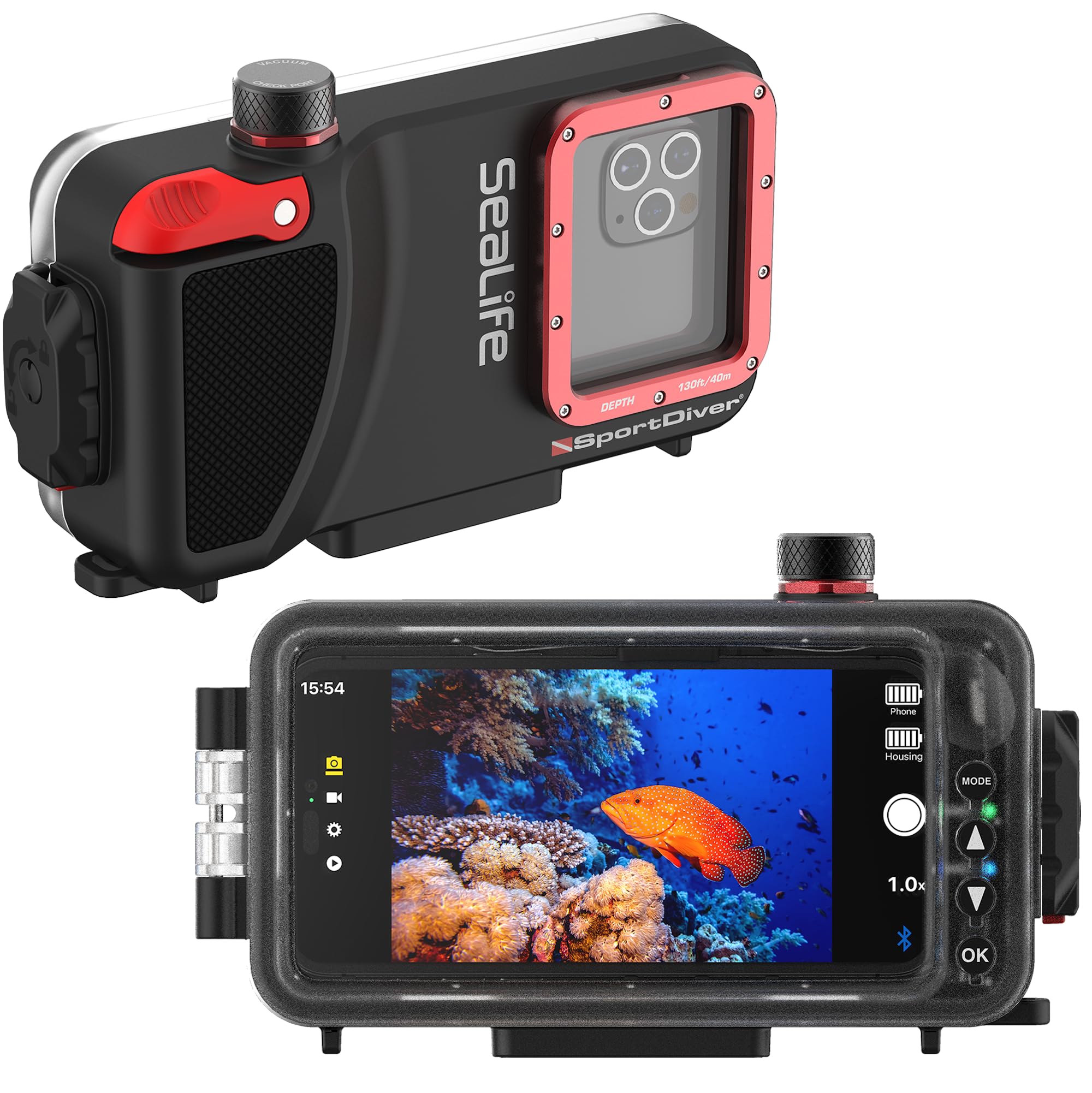
The SeaLife SportDiver is the only housing in this set that works with both Android and iOS phones while adding a dedicated camera app, a physical shutter lever, and both moisture and pressure alarms. Rated to 130 ft, it covers recreational scuba depths. That combination puts it ahead of action-camera shells for people who want to shoot with the camera they already own.

At scuba depths the case does its main job: phones come back dry from dives past 100 ft. The included red color-correction filter restores natural tones in underwater photos and video, and the camera app keeps stills and video modes a quick press apart. Automatic syncing moves photos onto the phone quickly, so the gap between surfacing and sharing stays short. Case construction has held up through repeated dives.

This is for smartphone divers who want physical controls, cross-platform compatibility, and leak alarms rather than full touchscreen operation. The vacuum-check setup can be finicky, so pair the phone and confirm the seal at home before the case goes on a boat. If native touchscreen operation underwater is the priority, the top pick in this set does that; the SportDiver is the alternative for divers who prefer buttons and alarms.

💡 Pack a spare power source for longer dive days.

Pros

  • Keeps a phone dry at scuba depths; dives to 110 ft have come back leak-free.
  • Red color-correction filter restores natural tones in underwater photos and video.
  • Physical shutter lever and app-based controls make photo/video switching simple once configured.
  • Sturdy case construction has held up through regular dive use.

Cons

  • Phone battery drain can vary widely while shooting video and stills.
  • The moisture and pressure alarms can sound on a dry case, so the seal check may take longer than expected.
Our verdict

The SportDiver is the cross-platform phone housing with leak alarms, a red filter, and physical controls for divers who prefer buttons over touchscreens.

Check Latest Price
4

Best for Olympus Tough Cameras

OM SYSTEM PT-059 Housing

92 /100
Studio Score High Confidence

Key details

Leak Safety
No leak alarms
Build & Latch
Sealed compact body
Compatibility
OM SYSTEM TG-6, TG-7
Depth Vs Seal
Rated 147 ft, 100+ dives
Check Price on Amazon

The PT-059 is a dedicated enclosure for TG-6 and TG-7 bodies, rated to 147 feet, with every camera control reachable through labeled buttons. While smartphone housings in this space push touchscreen use, this housing keeps manual aperture, shutter, and white balance adjustments usable underwater, and it supports two external flashes and optional lens accessories.

Seal integrity is the main selling point. The interior stays dry across repeated dive trips, and the anti-fog construction keeps the lens clear in humid conditions. Solid latches let you prep the housing before the dive and trust it through repeated entries. Buttons sit at the camera's existing positions, so a TG-series shooter can adjust settings without relearning the layout.

This is a specialized tool for divers who already own a TG-6 or TG-7 and want full manual control plus external flash support. It is premium-priced, so it fits buyers who put seal confidence ahead of cost. Compatibility ends at those two camera bodies: other Tough-series models, action cameras, and smartphones are not supported, so this only makes sense if the camera itself is already part of your kit.

Pros

  • Seal stays dry through repeated dive trips, and anti-fog construction keeps the lens clear in humid conditions.
  • Every camera control stays reachable through clearly marked buttons, so manual exposure remains usable underwater.
  • Two external flash ports and optional lens accessories let you shape light instead of relying on the built-in flash.
  • Solid latches and sealed body support long-term confidence on extended dive travel.

Cons

  • Only fits TG-6 or TG-7 bodies, so other camera systems are out.
Our verdict

For TG-6 or TG-7 owners who need manual control and external flash support, the PT-059 is the housing that turns a Tough compact into a controllable underwater camera. Without one of those camera bodies, this is not your enclosure.

Check Latest Price

How to Choose

Real-World Sealing

Depth ratings assume a correctly closed housing and a clean O-ring. A housing rated to 196 feet can leak at 50 feet if a grain of sand sits on the seal or the latch is only half-engaged. Experienced divers treat the rated depth as a ceiling, not a guarantee.

Camera and Phone Compatibility

Compatibility determines more than whether your camera fits. A housing built around one camera body keeps every button, dial, and lens port in the correct position. A universal phone tray can stretch across several iPhone generations, but the seal geometry must stay consistent when the phone model changes.

For GoPro users, fit is simpler because the shell follows the same Hero 9-13 outline. If you switch cameras, check the supported list against your exact model before buying.

Control Method

Physical buttons are predictable under pressure but limited to the functions the housing exposes. Touchscreens give you every app and setting, yet the display can become less responsive at depth and after the screen sleeps. App-based shutter controls put the camera app in charge and can drain the phone battery. Divers who need manual white balance or external flash should favor full physical controls; casual snorkelers can manage with a shutter lever.

Leak Detection and Closure Safety

Leak alarms and vacuum checks turn seal problems from a surprise into a pre-dive warning. A vacuum pump removes air and verifies the housing holds pressure before it touches water. Moisture sensors add another layer, but they only help if the battery is fresh and the alarm can be heard over regulator noise.

Build and Latch Durability

The latch is the moving part most likely to wear out. Plastic clasps can snap after repeated openings, while metal hardware holds longer but adds weight. Housings with a separate vacuum-check valve or a larger closure lever give more feedback during setup, but each extra part is another potential leak path.

Frequently Asked Questions