6 Best Tripod for Astrophotography in 2026: Stable Nightscape Base

Find a stable astrophotography base for mirrorless cameras, star trackers, or small telescopes — matched to your payload and shooting style.

Choosing a tripod for astrophotography usually comes down to one number on the spec sheet: maximum height. But under a dark sky, what matters is how the legs hold position during a 30-second exposure, not how tall the column reaches. A 75-inch travel tripod with thin four-section legs can vibrate more than a shorter three-section base.

The trade-off starts with portability. Compact multi-section legs fit in a backpack, but each twist lock or flip lock is another point that can loosen in wind or cold. Rigid three-section legs are heavier and bulkier, yet they damp vibration far better when you are guiding a mount or shooting wide-field nightscapes.

The practical choice depends on payload and shooting location. A compact carbon-fiber base suits hikers; a tall aluminum workhorse suits car-accessible sites; a mount-specific platform suits star trackers and smart telescopes. Match the leg assembly to the gear you actually hang on it, and the sharpest long exposures follow.

1

Best Overall for Astrophotography

Sirui AM-284 Carbon

86 /100
Studio Score Strong Evidence

Key details

Max Height
47.2 in
Mount Type
Legs & Locks
4-section, twist lock
Material & Weight
Carbon fiber, 2.69 lb
Check Price on Amazon

The Sirui AM-284 carries a 33 lb load rating on a 2.69 lb carbon fiber chassis — a combination that puts it in a different class from aluminum travel tripods. The four-section legs fold down to a compact length, and the rubber feet unscrew to expose steel spikes for outdoor astro sessions. This is the base you want when a star tracker, small telescope, or long telephoto lens needs a stiff platform that still fits in carry-on luggage.

Mounting compatibility is direct for astro gear. The AM-284 pairs with iOptron star-tracker mounts and the Seestar S30, and the same base supports small telescopes without the flex you can get from lighter camera tripods. The twist locks hold position through long exposures, and the steel spikes keep the legs from sliding on grass or packed dirt — a real advantage on damp fields. The quarter-turn locks are easy to operate; with four sections, there are more segments to rotate than on a three-section leg, but the payoff is a folded length that slips into carry-on luggage.

This is best for astrophotographers who work at tracker height, not for buyers expecting standing eye-level composition. Maximum height is only 47.2 inches, so you will work low or seated when aiming at the zenith. If your astrophotography happens on a mount or with a Seestar sitting at a low angle, this limitation rarely interferes. Shooters using a star tracker typically set the column at mid-height anyway, which sidesteps the issue. It is also a premium-priced tripod, so it makes sense for shooters who already have money tied up in a tracker or telescope rather than shoppers looking for the cheapest stable base.

Where the AM-284 fits in this set is between a camera tripod and a dedicated star-tracker mount. The dedicated tracker base in this group may lock onto specific mounts more quickly, but the Sirui remains a full camera tripod when you want to shoot wide Milky Way panoramas or timelapses during the same session. The premium price goes into carbon fiber and a 33 lb payload, not into height; buyers who need a 60-inch-plus column for standing composition will find taller aluminum options in this roundup, while those who prioritize stability and portability for astro equipment will get the better trade.

Pros

  • Carbon fiber chassis keeps weight at 2.69 lb while supporting up to 33 lb of camera, tracker, or small telescope.
  • Pairs with iOptron star-tracker mounts and the Seestar S30 without extra adapters.
  • Detachable steel spikes anchor the legs on grass and packed dirt during long exposures.
  • Folded length fits carry-on luggage, so dark-sky gear travels in one bag.

Cons

  • At 47.2 inches, the working height is low; zenith aiming needs a crouch or low seat.
Our verdict

The AM-284 is the astro-focused carbon base that holds trackers and small telescopes steady while staying light enough to travel.

Check Latest Price
2

Best for Star Tracker Rigs

Sky-Watcher SA Tripod

90 /100
Studio Score High Confidence

Key details

Max Height
54 in
Mount Type
Mount-specific
Legs & Locks
3-section, twist lock
Material & Weight
Aluminum
Check Price on Amazon

The Sky-Watcher Star Adventurer Tripod is a purpose-built three-section aluminum base for Star Adventurer, AZ-GT, AZ5, and Seestar S30/S50 users. Its 54-inch working height and rigid leg assembly prioritize steady tracker support over the taller, all-round camera platform that the carbon-fiber pick provides.

The right buyer already owns a Sky-Watcher tracker or Seestar base and wants a dedicated leg set without paying for an all-round carbon tripod. Very tall users will work below eye level at the 54-inch maximum, and standalone nightscape shooters are outside the intended use. The tradeoff is acceptable for grab-and-go telescope and tracker sessions, where the mount interface lines up cleanly with Sky-Watcher hardware.

The three-section leg design is the main stability story: fewer joints than a four-section travel tripod means less flex under a tracking mount during long exposures. The aluminum build is light enough for a dark-sky walk, while the leg locks and mount seat have a solid feel. Setup is simple: drop the tracker on the base, set the legs, and align.

Pros

  • Mount-specific base is matched to Star Adventurer, AZ-GT, AZ5, and Seestar hardware.
  • Three-section aluminum legs keep a tracker steady during long exposures.
  • Light enough for grab-and-go dark-sky sessions.

Cons

  • Mount-specific interface is not a standard ball head, so standalone camera-only astrophotography needs a different tripod.
  • Cold weather can make the twist-lock leg releases stiff or hard to turn.
Our verdict

Sky-Watcher tracker and Seestar owners get a stable, mount-specific base in a lightweight three-section build; camera-only shooters should buy a conventional ball-head tripod.

Check Latest Price
3

Best Budget Heavy-Duty

Victiv AT26 78-inch Tripod

89 /100
Studio Score Strong Evidence

Key details

Max Height
78 in
Mount Type
360° metal ball head
Legs & Locks
3-section
Material & Weight
Aluminum, 3.3 lb
Check Price on Amazon

The Victiv AT26 pairs a 78-inch maximum height with a 22 lb payload rating, so a camera with a telephoto lens can sit at eye level for nightscape framing instead of forcing a crouched position. Three-section aluminum legs keep the lock-joint count low, a meaningful detail for long-exposure stability, and the detachable center column converts to a monopod when a second support is useful. The 360-degree metal ball head feels denser than the rest of the budget class, which helps the whole assembly behave like a more expensive rig.

The metal ball head adjusts with fine control, and the three leg-angle stops hold on uneven dirt or gravel at a dark-sky site. The 3.3 lb aluminum body is heavier than carbon travel sticks, but that mass settles a Nikon D500-class body with a heavy zoom at normal column heights. Between the 78-inch maximum reach and the monopod mode, this is the kind of kit that covers a full session without asking you to change tripods.

This is the right base for budget astrophotographers with camera-and-lens rigs, specifically shooters who want a tall, stable framing position for tracked or untracked nightscapes. The tradeoff sits in the leg locks: confirm each segment has locked before a long exposure. Users who need guaranteed lock behavior in wind or cold should step up to the carbon astro pick in this set.

💡 Extend one leg section at a time and press down on the head to seat each lock before mounting the camera.

Pros

  • Aluminum construction and a dense head give a more expensive feel than the price suggests.
  • Holds a Nikon D500-class camera with a heavy zoom without visible sag at normal column heights.
  • Center column converts to a monopod, covering both tripod and monopod duty in one purchase.
  • A 22 lb capacity and 78-inch reach in this price tier is a strong value match for nightscape shooters.

Cons

  • At 3.3 lb, the aluminum build is a poor match for under-2 lb packing lists.
  • Some leg locks can slip or resist closing, so a pre-exposure check matters more than on pricey alternatives.
Our verdict

The Victiv AT26 is the tall, high-payload budget workhorse for camera-and-lens nightscapes, with monopod flexibility and a metal ball head that punches above its price.

Check Latest Price
6

Also Great

SmallRig CT-10 71-inch

88 /100
Studio Score Strong Evidence
Check Price on Amazon

The CT-10's headline numbers are real: 33 lb max load, 71-inch reach, and monopod conversion in a 3.4 lb body. That spec sheet is enough for a camera and telephoto zoom, and it makes the tripod a tempting budget option for travelers who shoot both photo and video. Durability and lock tightness vary between units; the head may creep on some, so this is not the base for a star tracker or small telescope during critical long exposures. For light-to-medium camera rigs and walking-stick monopod use, the CT-10 still delivers solid value at a mid-range price.

Pros

  • 33 lb max load and 71-inch reach handle heavy telephoto zoom kits and standing-height composition.
  • 3.4 lb body folds to a compact size and converts to a monopod for travel.
  • Mid-range price with a 36mm ball head and 4-section legs for hybrid photo/video use.

Cons

  • On some units, the ball head can creep under load, which matters for long exposures.
  • Plastic leg locks may loosen with repeated use, so check each segment before mounting gear.
Our verdict

Travel-friendly hybrid shooters get the height and monopod flexibility they need; budget for a separate astro base when the night session becomes the main event.

Check Latest Price
7

Light Camera Work

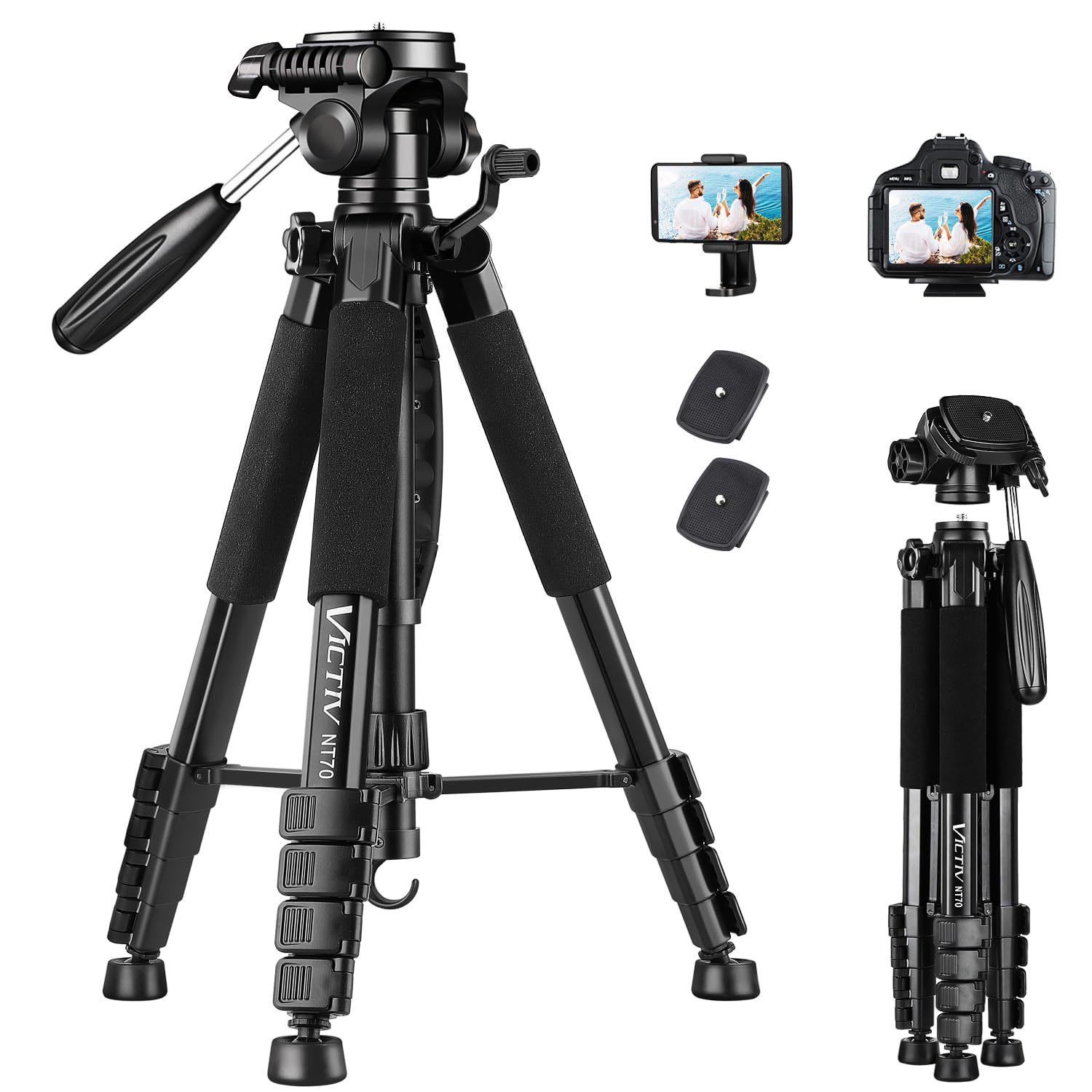
Victiv NT70 74-inch Tripod

93 /100
Studio Score High Confidence

Key details

Max Height
74 in
Mount Type
3-way pan head
Legs & Locks
4-section
Material & Weight
Aluminum, 3 lb
Check Price on Amazon

At 74 inches with a 3-way pan head and a 3-pound body, this is a tall, easy-to-carry base for casual phone and light camera shooting. Long-exposure astrophotography is outside its envelope: on some units legs can slide and the head can drop under load, so keep gear light and check locks before mounting anything valuable. The heavier budget workhorse in this comparison holds locks more dependably, which is why the NT70's role is eye-level video, vlogs, and light stills at a budget price.

Pros

  • Tall 74-inch reach covers standing eye-level shots within comfortable framing.
  • Three-pound body carries easily for location shoots and casual travel.
  • Quality feel exceeds the norm for this price tier.

Cons

  • Phone holder and leg sections have snapped on some units; inspect before mounting anything costly.
  • Rated 9.5 lb max load leaves no practical margin for a star tracker, long telephoto, or small telescope.
Our verdict

Casual phone and light camera shooters get a tall, lightweight tripod at a budget price.

Check Latest Price
8

Travel Content Creation

NEEWER TP14B Tripod

88 /100
Studio Score Strong Evidence

Key details

Max Height
72 in
Mount Type
Arca-type ball head
Legs & Locks
3-section
Material & Weight
Aluminum, 3.2 lb
Check Price on Amazon

The TP14B feels well made for a budget travel tripod, and the Arca-type head carries a light mirrorless camera without complaint. Its 72-inch reach and removable-leg monopod conversion are the selling points for travel content creators. The lightweight legs can feel unsteady in wind, so this is best treated as a lighter-kit travel tool rather than a serious astrophotography platform. For its intended audience, it is a compact and cost-effective base; buyers who need tracker-level support should select a purpose-built astro tripod.

Pros

  • Build quality holds up at a budget price.
  • Sturdy enough for light mirrorless and phone camera loads.
  • Tripod/monopod conversion and phone holder add setup options without extra gear.

Cons

  • Plastic leg-lock tabs can be a long-term durability concern.
  • 13.2 lb max load leaves no headroom for star-tracker or telescope mounts.
Our verdict

For travel content creators who keep loads light, the TP14B is a compact budget buy; astrophotographers should look to the purpose-built carbon option.

Check Latest Price

How to Choose

Tilt Load vs Advertised Capacity

Manufacturers usually quote max load with the column vertical. Point the head at the sky and the center of gravity moves forward, increasing leverage on the locks and the ball head. A rig that feels stable at eye level can creep or vibrate once tilted toward the zenith.

Check the tilt rating if the listing provides one, and keep some margin between your camera or tracker weight and the rated limit. A mount that weighs 8 lb is safer on a 20 lb platform than on one rated just above its weight.

Leg Sections and Lock Type

Three-section legs are stiffer than four- or five-section legs because each joint is a potential flex point. A tripod that folds smaller is easier to pack, but the extra sections add more sleeves that can vibrate during long exposures.

Twist locks are compact and flush with the leg, which makes them easy to slide into a pack. They can become hard to turn in freezing temperatures, so check them before you settle in for a night session.

Material and Weight

Carbon fiber absorbs high-frequency vibration better than thin aluminum, which is why premium travel tripods use it. Aluminum is heavier but often cheaper and stiffer in larger tube diameters.

For a dark-sky site hike, every pound matters; for a car-accessible spot, aluminum's extra weight is less of a penalty.

Height Range and Low-Angle Shooting

Maximum height is less important than minimum height and the ability to tilt the head without the legs blocking the view. A short tripod can be more stable for targets near the zenith because you do not need to extend the center column.

If you shoot through a star tracker, a 47-inch base can be more practical than a 70-inch travel tripod because you work seated or kneeling with a shorter optical axis.

Mount and Head Compatibility

Cameras use 1/4-20 threads; larger mounts and telescopes often need 3/8-16 or a purpose-built saddle. Check that the tripod head can be removed or replaced before buying a base for a star tracker.

A ball-head camera tripod is not automatically compatible with every star tracker; some trackers need a flat mounting plate or a dedicated tripod.

Frequently Asked Questions