9 Best Spotting Scope Tripod of 2026: Heads That Track Smoothly

Find a spotting scope tripod whose head tracks smoothly and holds heavy glass, for birders and hunters tired of wobbly ball-head stands.

On paper, a budget 'spotting scope tripod' can look complete: binocular adapter, phone holder, quick-release plates. Several of these are ball-head camera stands with a binocular adapter bolted on. A ball head lets you tilt and twist, but it does not deliver the smooth horizontal pan needed to follow a bird or scan a ridgeline.

Full extension exposes the second issue. A tripod that is stable at chest height can turn unsteady when a large-aperture scope is raised to its full 70 inches. Matching the load rating to your optics avoids the most common source of frustration.

Good spotting support comes down to a pan/tilt or fluid head, a load rating that clears your scope, and legs that stay planted at working height. The right choice depends on whether you carry it all day or set it up for a long session.

1

Best Overall

Vortex High Country II

93 /100
Studio Score High Confidence

Key details

Head Type
2-way pan head
Max Height
62.5 in
Mounting Kit
Arca-Swiss plate
Load Capacity
22 lb
Check Price on Amazon

The Vortex High Country II pairs a 62.5-inch max height with a 22-lb load rating and a 2-way pan head that accepts Arca-Swiss quick-release plates. The pan head is what separates it from the ball-head stands bundled with some spotting scopes; it handles horizontal pan and vertical tilt without the loose ball that makes a camera head awkward for tracking. It locks down tight on medium-to-heavy optics, and the aluminum legs keep the scope steady while you sweep across a field. Three-section legs fold to 24.3 inches for transport, which is normal for a full-height field tripod.

The head tracks smoothly, and the 22-lb capacity leaves room for heavier eyepieces or a larger objective later. The height range runs from 11.3 inches up to 62.5 inches, so the same tripod works for prone, seated, and standing positions. That kind of range is a practical fit for a field scope that needs to go low when shooting from a bench or stand tall when glassing over brush.

The counterweight hook adds enough stability that a gusty ridgeline does not end the session. With a pack hung from the hook, the whole setup stays planted, and the head holds its position as you sweep between targets. The locked head resists drift, which matters for a birder following a bird across a waterway or a hunter waiting for an animal to clear a treeline.

Serious birders, hunters, and range shooters get the most from this tripod; it is built for medium-to-heavy optics and long days in the field. The roughly 4 lb weight is noticeable on long backpacking carries, so this is not a true mountain-travel tripod. In a truck, canoe, or a short hike to a blind, the carrying weight is a fair trade for the planted feel; backpackers counting every ounce should pass on this model and look to a slimmer tripod for trail use.

The premium price is easier to accept when the kit includes an unlimited, unconditional, transferable lifetime warranty and a proper 2-way pan head instead of a ball-head stand with an adapter. The aluminum body and leg locks are built for field use, so the higher cost buys long-term support over a one-season stand. Buyers who only need a light occasional stand can spend less elsewhere, but they give up the head capacity, height, and warranty that make this a one-time purchase.

Pros

  • Sturdy aluminum build with a premium feel
  • Locks down tight on medium-to-heavy spotting scopes without head drift
  • Counterweight hook helps hold position in gusty wind
  • Covers hunting, birding, and range work with the same setup

Cons

  • Head locks vertical before horizontal, so aiming adjustments happen one axis at a time
  • Heavier than ultralight options and not a true mountain-travel tripod
Our verdict

For a full-size spotting-scope tripod, the High Country II is the one that combines standing height, 22-lb head capacity, and drift-free locks in a package backed by a lifetime warranty.

Check Latest Price
2

Best Lightweight Fluid-Head

Celestron TrailSeeker

86 /100
Studio Score Strong Evidence

Key details

Head Type
Fluid pan head
Max Height
70.5 in
Mounting Kit
QR plate
Load Capacity
8.8 lb
Check Price on Amazon

At 70.5 inches fully extended, the TrailSeeker pairs four-section flip-lock legs with a two-way fluid pan head, giving mobile birders a full-height support that folds to 24 inches. The included case and shoulder strap make it easy to carry between field stops, and the leg stance feels planted when a mid-size spotting scope is mounted.

This is the right fit for birders and shooters who want fluid-head control in a portable frame. The 8.8-lb capacity is the ceiling, so large 20+ lb scopes and heavy astronomical binoculars belong on a heavier support. Leg-clamp durability can vary between units, so inspect the flip locks before trusting them on a long field trip.

On uneven ground, a moderate optic stays steady, and the pan movement remains consistent through a full sweep. The quick-release plate makes swapping between binoculars and a compact spotting scope painless, giving travelers one support for mixed optics. Shooters at the range will appreciate the consistent pan for tracking targets, and at a mid-range price, this is a true fluid-head tripod rather than a ball-head stand with a scope adapter bolted on.

๐Ÿ’ก When framing a tight shot, work the shared pan/tilt lock in small increments and settle both axes before fully tightening.

Pros

  • Smooth two-way fluid head tracks well at a mid-range price.
  • Holds a moderate optic steady on uneven terrain.
  • Packs to 24 inches with a case and shoulder strap included.
  • Strong price-to-performance buy for a branded fluid-head tripod.

Cons

  • Pan and tilt share a single locking knob, so fine adjustments are less independent than a two-knob head.
  • Flip-lock clamps can vary in durability; individual units may show looseness or bubble-level issues.
Our verdict

For a mobile observer with a mid-size scope, the TrailSeeker brings fluid-head tracking and full height into a portable package at a price that undercuts premium trail tripods.

Check Latest Price
3

Best for Heavy Optics

Bushnell Advanced 3-Way

89 /100
Studio Score Strong Evidence

Key details

Head Type
3-way pan head
Max Height
63 in
Mounting Kit
QR plate
Load Capacity
11 lb
Check Price on Amazon

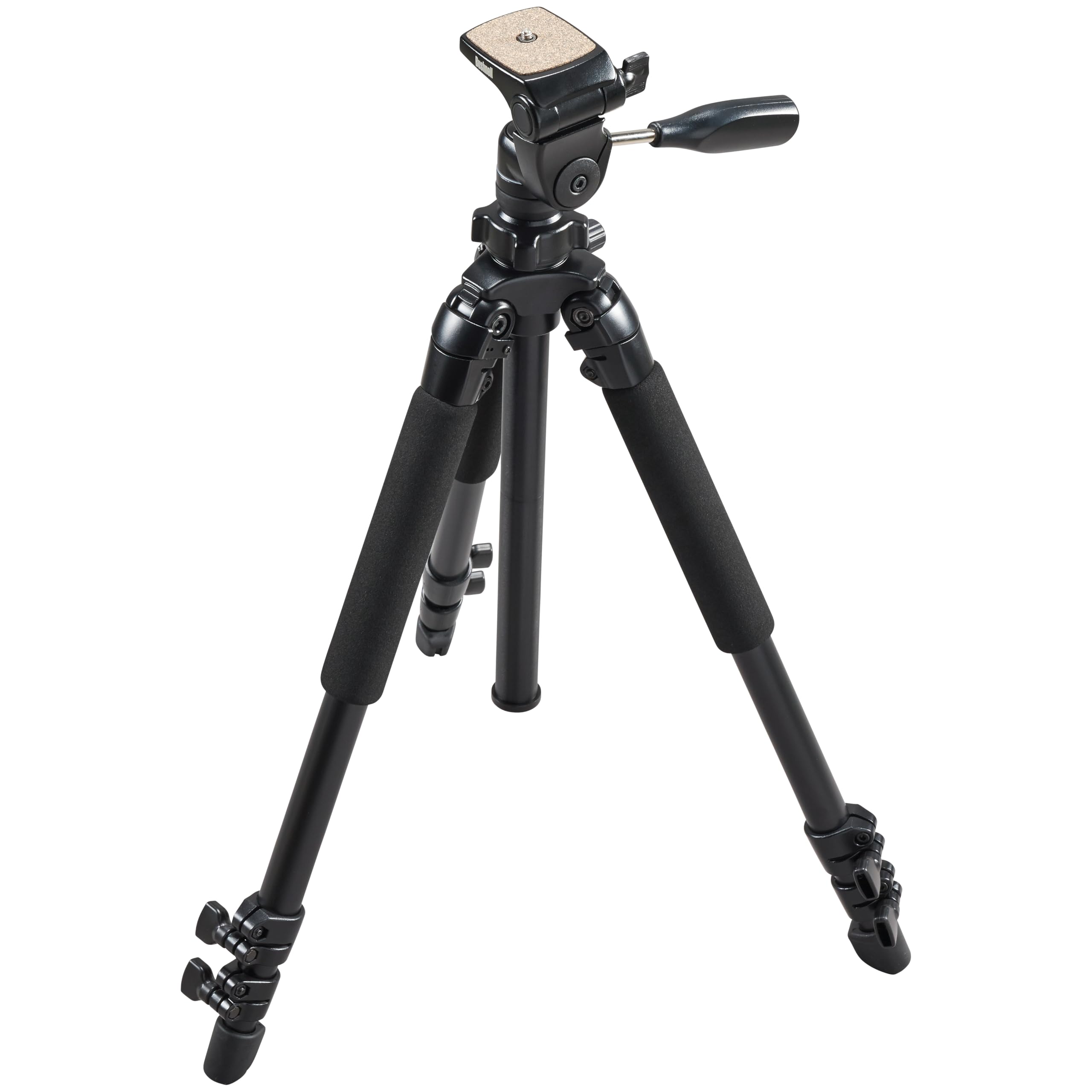
Bushnell's Advanced 3-Way picks a planted base over a compact carry. The 3-way pan/tilt head with quick-release plate and 11-lb rating supports heavy spotting scopes and large binoculars, and the three-section aluminum legs feel more substantial than typical mid-range field tripods. This is the heavier, shorter alternative to the top pick's taller footprint, and it leans into that tradeoff: what it lacks in travel convenience it makes up for in rigidity.

The pan/tilt head sweeps smoothly when tracking a target, and the locks stay put after each adjustment. Heavy spotting scopes and camera gear sit steady on the platform, and repeated outdoor setup has not loosened the leg joints. The quick-release plate also makes swapping between a spotting scope and binoculars simpler than heads that require a screwdriver. The 11-lb rating is conservative; heavier camera and scope combinations don't introduce wobble.

This is for range and hunting users who don't need to backpack far, plus photographers who want a rugged scope/camera platform. It is heavy and long when folded, so not an all-day backpacking tripod; set up near a vehicle, blind, or shooting bench.

Pros

  • Planted support for 5โ€“8 lb spotting scopes with no flex when you touch the focus ring.
  • 3-way pan/tilt head moves smoothly and locks securely once a target is framed.
  • Holds heavy spotting scopes and camera gear beyond the 11-lb rating without sway.
  • Aluminum legs and head keep their rigidity through repeated outdoor setup and breakdown.

Cons

  • Pitch control cannot aim below dead level, so the tilt arc is more limited than a fluid head's.
  • At 3.86 lb and 26 in folded, this is a stable-but-bulky tripod, not a trail model.
Our verdict

For a heavy spotting scope that stays in one place, the Bushnell delivers steady support at a mid-range price.

Check Latest Price
4

Best Budget Pan-Tilt

Celestron Ultima Pan Tilt

85 /100
Studio Score Strong Evidence

Key details

Head Type
Pan-tilt head
Max Height
67 in
Mounting Kit
QR plate
Load Capacity
11 lb
Check Price on Amazon

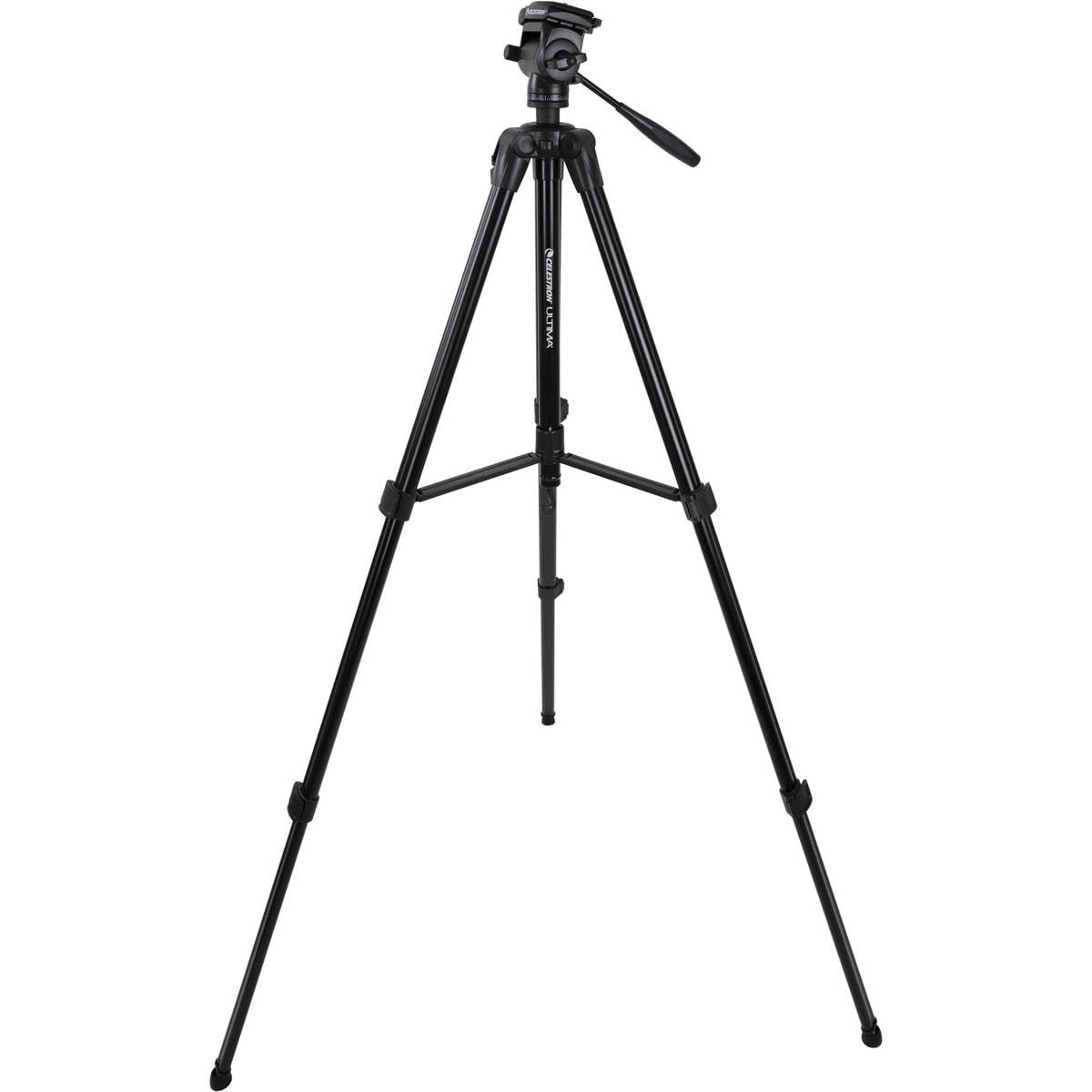
Celestron's Ultima Pan Tilt gives you an actual pan-tilt head under a mid-size spotting scope, not a ball-head camera stand with an adapter. The 11-lb load rating and 67-inch maximum height cover typical field use, and the quick-release plate makes mounting a scope or large binocular easy. The 5.4-lb weight puts it close to the lighter trail-oriented tripod in this line, but the Ultima leans toward value over packability.

Casual birders and range shooters are the right audience here. Plastic head components and imprecise fine aiming keep it in casual-use territory, so it suits horizon scanning and quick target acquisition better than precision astronomy.

The head holds Celestron Skymaster binoculars and similar large optics without feeling marginal, and the 28-inch minimum height is low enough for bench or prone viewing angles. The included protective case adds travel convenience at a budget-friendly price, and the three-section legs lock down securely on firm ground.

Owners of mid-size spotting scopes get enough height for standing views, while the pan-tilt head follows moving targets more naturally than a ball head. The quick-release plate helps you switch between scope and binoculars without rethreading a mount.

Pros

  • Sturdy build holds up without feeling flimsy at this price.
  • Takes large binoculars and mid-size spotting scopes in stride.
  • True pan-tilt head and included case add field convenience.

Cons

  • Head mechanism uses plastic components rather than all-metal construction.
  • Fine aiming can be fiddly, so astronomy-style micro-adjustment is not realistic.
Our verdict

This is the entry-level Celestron for glassing sessions where head type matters more than packed size.

Check Latest Price
5

Best Two-Tripod Hunting Kit

LCNCY 2-Pack Tripod Kit

80 /100
Studio Score Strong Evidence

Key details

Head Type
Fluid head, 360-degree rotation
Max Height
62 in
Mounting Kit
QR plates, V-yoke
Load Capacity
11 lb
Check Price on Amazon

This kit pairs a 62-inch fluid-head tripod with a 10-inch mini tripod, V-yoke, binocular adapter, and two QR plates, so one purchase covers standing glassing and bench or prone rests. The full-size leg set is light enough to carry into the field, and the mini tripod earns its place at a shooting bench or low hide.

The bundle holds up better than its price suggests. It is stable on uneven ground, and the 360-degree fluid head tracks a target without jerky movement. It also handles non-optical work such as holding a laser level in place, which shows the clamps keep position under light loads.

This kit is for backpackers and budget buyers who want both a standing tripod and a low rest without buying two separate systems. Hunters and target shooters will get the most from the mini tripod on a bench or in a prone position. The spec sheet lists a 62-inch max height rather than the 68-inch title, and the head lock can have play with a heavy scope, so the fit depends on planning around those boundaries.

Pros

  • Two-tripod setup covers standing glassing plus bench or prone shooting positions in a single purchase.
  • Kit includes a V-yoke, binocular adapter, two QR plates, and a storage bag at a budget price.
  • The 2.2-lb full-size leg set packs easily for field use while staying stable on uneven ground.

Cons

  • Legs may not spread wide enough for comfortable glassing from a low seat.
  • Load capacity tops out at 11 lb, so heavier spotting scopes need a different stand.
Our verdict

For a hunter who wants standing and low-position support in one lightweight kit, this pairing delivers โ€” with the understanding that the spec-sheet 62-inch max, not the title, is the real ceiling.

Check Latest Price
6

Hunters, Birders

Vortex Mountain Pass

91 /100
Studio Score High Confidence

Key details

Head Type
2-way pan head
Max Height
โ€”
Mounting Kit
Arca-Swiss plate
Load Capacity
22 lb
Check Price on Amazon

Vortex's Mountain Pass kit pairs a 22-lb-rated two-way pan-and-tilt head with Arca-Swiss quick release in a machined-aluminum body that packs shorter than the full-size Vortex in this roundup. Independent flip-lever legs lock with little fuss, and the load capacity gives mid-size spotting scopes solid support. Because Vortex does not list a maximum height, anyone who uses a spotting scope from a standing position should confirm eyepiece clearance before purchase. That missing specification is the main reason it isn't ranked higher here, despite the compact carry and capable head.

Pros

  • 22-lb load rating gives mid-size spotting scopes solid support from a compact body.
  • Arca-Swiss quick release speeds optic swapping without proprietary plates.
  • Shorter packed length makes it more backpack-friendly than the full-size Vortex in this set.

Cons

  • Two-way pan head is built for deliberate glassing, not fluid video-style sweeps.
  • The full-size Vortex in this lineup is the better fit when maximum standing reach matters more than packed length.
Our verdict

For hunters who want a 22-lb-rated Vortex head in a short-carry package and can accept the height uncertainty, this kit fits the field bag better than the taller full-size models.

Check Latest Price
7

Hunters, Tall Users

LCNCY 72-Inch Fluid Head

86 /100
Studio Score Strong Evidence

Key details

Head Type
Fluid head
Max Height
72.4 in
Mounting Kit
QR plates, V-yoke
Load Capacity
22 lb
Check Price on Amazon

The LCNCY is a 72.4-inch fluid-head tripod with a 22-lb load rating and a hunting V-yoke, which separates it from low-priced ball-head stands marketed for spotting scopes. The removable fluid head and load capacity are the right starting point for pan/tilt field glassing, and the V-yoke saves hunters from carrying an extra rifle rest. This is a spec-first buy rather than a field-validated one: pan-head damping and leg-clamp stiffness should be checked by hand before the stand is relied on with expensive glass. Buyers who need more than their own hands-on assessment before purchase will be better served by another option; those comfortable with that boundary get a tall budget stand with real load margin.

Pros

  • Tall 72.4-inch max height lets tall hunters glass standing without stooping.
  • Removable fluid head rated for 22 lb handles full-size spotting scopes and binoculars.
  • Included hunting V-yoke turns the tripod into a rifle rest without a separate accessory.

Cons

  • 4.5-lb body suits stationary glassing more than long pack-in hunts.
  • Pan-head damping and leg-clamp tightness can vary between units; a hands-on check is the only way to know.
Our verdict

For a tall hunter who wants a budget fluid-head stand with a V-yoke and is ready to check pan-head feel before mounting large optics, the LCNCY delivers the needed height and load rating.

Check Latest Price
8

Casual Birders, Travelers

Lusweimi 72-Inch Binocular Tripod

86 /100
Studio Score Strong Evidence

Key details

Head Type
Ball head
Max Height
69 in
Mounting Kit
QR plates, adapters
Load Capacity
โ€”
Check Price on Amazon

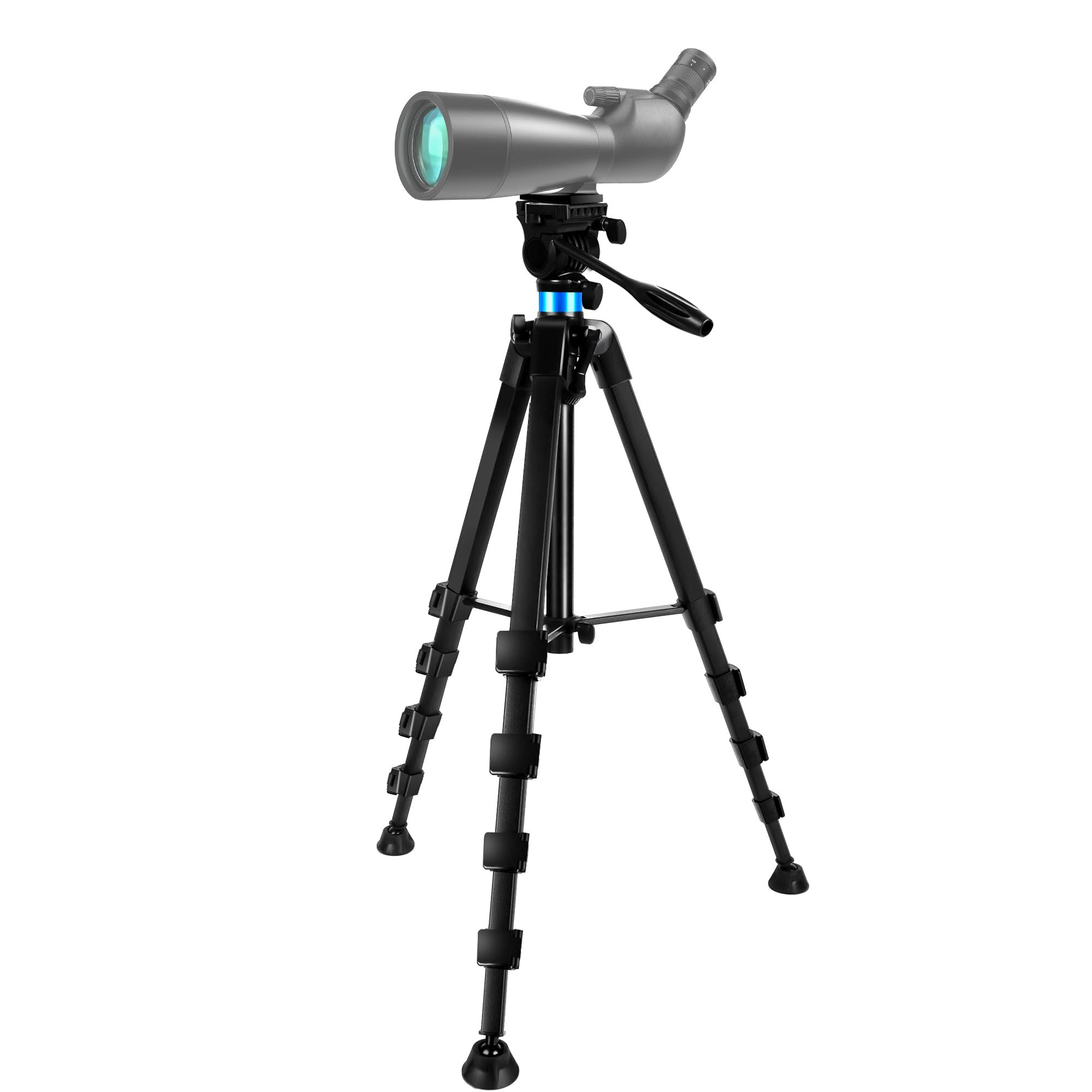
Tall aluminum build with a binocular adapter, phone holder, and two QR plates makes this an affordable multi-device stand for casual use. It extends to standing height, and the quick-release plates make swapping binoculars, cameras, and phones fast. The included carry bag adds travel convenience. The ball head and lightweight frame suit small optics in calm conditions only: this is not the smooth pan/tilt platform a spotting scope needs, so it lands below dedicated scope tripods in this guide.

Pros

  • Tall aluminum build with binocular adapter, phone holder, and two QR plates offers a lot for the price.
  • Quick-release plates make swapping binoculars, cameras, and phones a fast process.
  • Extends to standing height, so tall users can glass without bending over.

Cons

  • No load capacity is listed, so owners of heavier optics have to guess whether the stand is up to the job.
  • Exposed to wind at full height, a 20x80 binocular or large scope can make the frame sway.
Our verdict

This is the right corner of the market for a budget-minded casual user who wants one tall stand for lightweight binoculars and a phone.

Check Latest Price
9

Casual Budget Users

Arsoer 69-Inch Spotting Tripod

82 /100
Studio Score Strong Evidence

Key details

Head Type
Ball head
Max Height
69 in
Mounting Kit
QR plates, phone holder
Load Capacity
โ€”
Check Price on Amazon

The Arsoer extends to a full 69 inches and includes a binocular adapter, phone holder, two QR plates, and a carry bag in one package. Setup is easy, the leg locks move smoothly, and the build quality punches above its price.

The ball head handles static viewing but won't track moving subjects the way a pan/tilt or fluid head would. At full extension, a 20x60x80 scope can be unsteady โ€” with compact binoculars or a phone, the stand holds its own.

Pros

  • Well-made aluminum frame with a sturdy feel for a budget product.
  • Compatibility spans spotting scopes, cameras, phones, and laser levels with included adapters.
  • Easy, smooth setup with leg locks that respond well and a quick-release plate design.

Cons

  • Ball head works for static viewing but lacks the fluid pan/tilt action of a spotting-scope head.
  • At full height with a heavier 20x60x80 scope, the legs can feel unsteady.
Our verdict

Best for casual wildlife viewers with compact binoculars and a phone, where the ball head and lightweight frame won't limit the experience.

Check Latest Price

How to Choose

Head Type

Fluid and pan-tilt heads separate horizontal and vertical movement into independent controls. That allows you to track a moving bird or scan a hillside without the view dropping or jerking sideways.

A ball head does the opposite: one loosened knob lets the scope slump in every direction at once. That works for composing a photograph, but it makes sustained spotting slow and unsteady at high magnification. It also makes fine adjustments harder because loosening the clamp to pan shifts the whole aim.

Max Height and Stability

Maximum height matters less than how the tripod behaves at that height. Legs with more sections or thinner tubes flex in wind when fully extended, especially when a large objective lens catches air. The lower leg sections are the weak link, not the nameplate.

Check the working height you actually need, whether you are standing, kneeling, or seated. A tripod with a taller spec but weaker lower sections will feel less planted than a shorter one with thicker legs and a wider stance.

Load Capacity

Load rating is a ceiling, not a suggestion. A scope that uses most of an 8.8-lb limit leaves little margin for the head to hold position, while a 22-lb-rated head can support a 5โ€“8 lb scope with clear headroom. The capacity number matters more than height for stopping creep.

Hunters with large-aperture optics benefit from that margin because wind and quick panning add leverage the static weight number does not show. Pick a tripod that clears your heaviest optic by several pounds.

Leg Sections and Locks

Four-section legs fold shorter for transport, which is why mobile birders often choose them. The trade-off is more joints, and each joint is another place for flex or wear over time.

Three-section legs are thicker, simpler, and generally more rigid, but they fold longer. Flip locks deploy quickly; twist locks are less likely to snag on brush when the tripod rides on a pack. Lock material matters too because plastic levers wear out under heavy field use.

Mounting and Quick Release

Arca-Swiss compatibility matters because it matches the dovetail clamp common on modern spotting-scope heads and binocular adapters. That means you can mount compatible optics directly without swapping plates. It is a real convenience when you switch between a scope, binocular, or camera.

Standard quick-release plates work fine as long as the plate stays locked to the scope foot. A loose plate shows up as image shift every time you pan, so check the clamp fit before relying on it in the field.

Frequently Asked Questions