8 Best Light Meter of 2026: Lux vs. Exposure Metering, Decoded

The right light meter for your camera, plants, or office depends on what you need to measure. Here's how to choose.

Searching for a light meter pulls up two very different tools under the same name: inexpensive lux meters for measuring indoor brightness and photography-focused exposure meters that read incident light, reflected light, and flash. That distinction matters more than any spec sheet.

A lux meter tells you how bright a room is, which helps position houseplants and audit offices. A photographic exposure meter tells you what f-stop and shutter speed to use, and it can meter studio flash. If you buy the wrong one, you will not get the reading you actually need.

The practical difference is not about quality. It is about matching the meter's measurement type to your primary use case. This guide sorts the category by what each meter can actually tell you, so you can spend the right amount for the job.

1

Best Overall

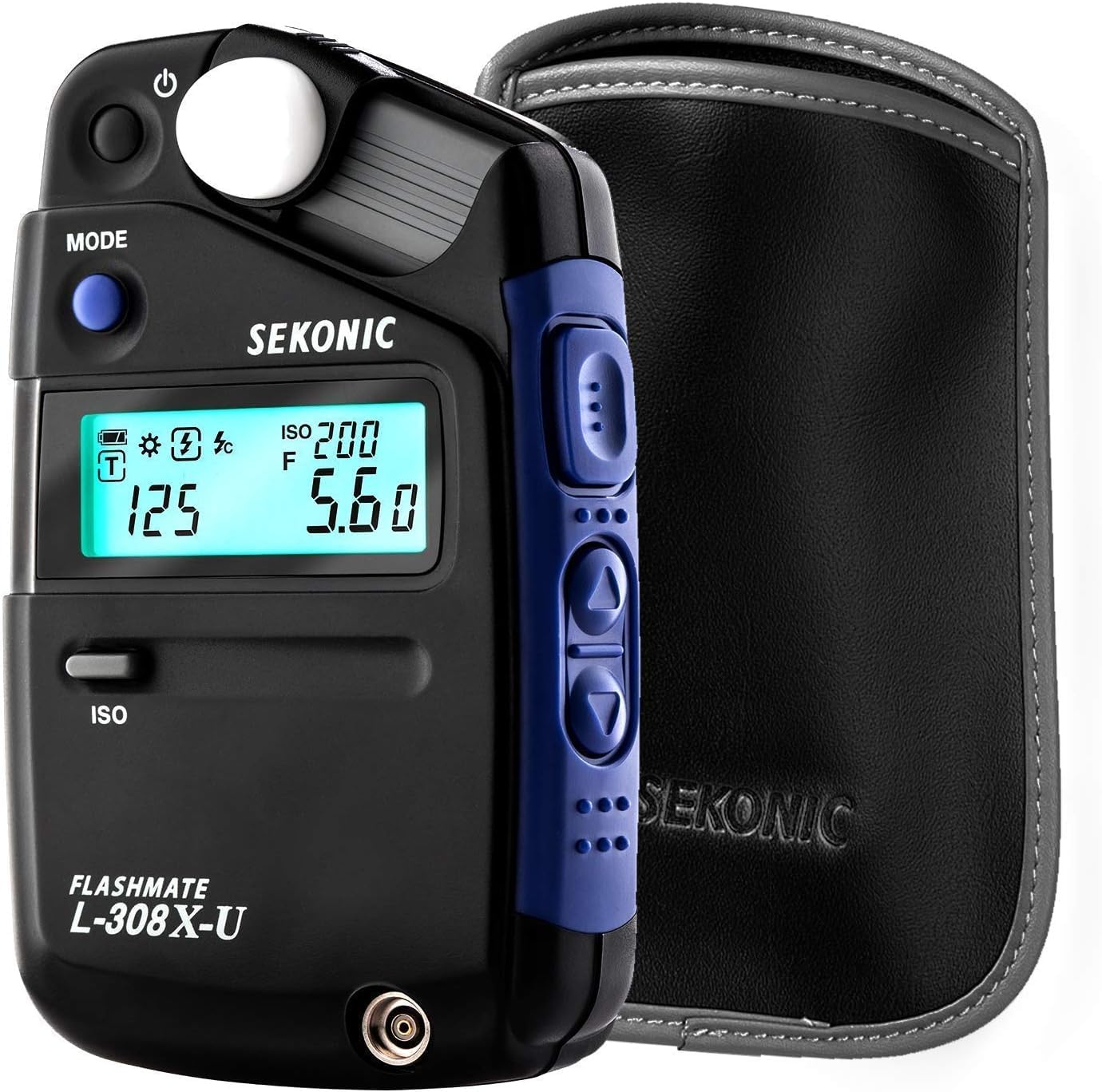
Sekonic L-308X-U Flashmate

92 /100
Studio Score High Confidence

Key details

Build
Plastic body
Range
-5 to 22.9 EV
Sensor
Fixed
Display
Auto-backlit LCD
Check Price on Amazon

The L-308X-U answers the question a photographer actually asks: which aperture and shutter speed should I use? The white dome reads incident light falling on the subject, the rear sensor reads reflected light from a scene, and flash mode meters a strobe pop without a sync cable. That combination of incident, reflected, and flash metering is hard to find in another handheld meter at this size, especially one that also covers EV and cine frame-rate readings. It can show lux and foot-candles too, but the photographic readouts are the main draw.

Working with it is largely a two-button process: set ISO, press the measure key, and the LCD returns an EV or f-stop. The auto-backlit screen stays legible in dim studios, and the Cine and HD Cine modes cover video at different frame rates without burying the photo functions in menus. The mode button cycles through ambient, flash, and shutter-angle settings quickly enough that you rarely need the manual.

The response speed keeps it inside the shooting flow. Move the dome into the light, fire the flash, and the reading settles quickly enough to recheck a key light between setups. The controls reward a light touch: one button measures, one button changes mode, and the readout updates in a beat. In a full studio day, that immediacy matters more than any spec sheet detail.

This is a photographer's meter, not a general lighting gadget. Film shooters who need incident readings, digital shooters balancing strobes, and location photographers who want a compact meter will find it fits directly into their workflow. Plant growers looking for PAR/PPFD and anyone who only needs a quick lux check for houseplants should pick a dedicated lux instrument instead. The plastic body can feel less premium than the price implies, but that shell is also what keeps the meter light in a pocket.

The premium price is a real hurdle for casual buyers, but for dedicated amateurs and pros, the meter removes test-shot cycles and makes the cost easier to absorb. Budget lux meters cost far less, but they report brightness only; the Sekonic reports the exposure settings themselves. That single shift is what separates a light meter that belongs in a camera bag from one that belongs on a shelf.

Pros

  • Meters ambient and flash quickly, reducing guesswork between readings and final exposure with a single press of the measure key.
  • Two-button operation and clear LCD make it approachable for first-time meter owners even without reading the manual.
  • Incident and reflected readings translate into accurate f-stop and shutter settings in both ambient and flash modes.
  • Compact body fits in a pocket or small camera bag for everyday carry on location.

Cons

  • No 1-degree spot metering or flash-duration analysis; those capabilities live in the larger touchscreen model.
  • No weather sealing, so wet or dusty outdoor work requires a padded bag or cover.
Our verdict

For photographers who need incident and flash metering in a carry-everywhere body, this is the direct answer in its category. Budget lux meters can't replace it; they don't speak f-stop.

Check Latest Price
2

Best Budget Lux Meter

Dr.meter 1330B-V Lux Meter

90 /100
Studio Score High Confidence

Key details

Build
Sturdy, case
Range
0-200,000 Lux
Sensor
Fixed
Display
LCD
Check Price on Amazon

The Dr.meter is the budget lux meter with the widest following in this lineup, and it turns ambient light into a clear Lux or FC readout in seconds. Unlike the photographic exposure meter that takes the top slot, this one sticks to illuminance: 0–200,000 lux, switchable units, and a PEAK capture mode for pulse readings. It is the go-to instrument when you need to know how bright a room, office, or plant shelf is, not what camera settings to dial in.

The sensor updates twice per second, and the bundled carrying case keeps the body and the removable sensor cap together. Compared with the slimmer budget alternative in this set, the Dr.meter feels chunkier but also more substantial in hand. The controls respond predictably, and the carrying case makes it easy to move from a plant shelf to an office desk.

This meter suits houseplant owners, growers using traditional (non-LED) bulbs, and anyone establishing studio or office illumination baselines. The included booklet is thin, so budget a few minutes to figure out battery installation and range switching. It is not a PAR meter; LED grow-light setups may show readings that look reasonable but do not reflect the photon output plants actually use. Photographers shooting with flash or needing EV readouts should step up to a dedicated exposure meter instead.

Pros

  • Simple to use right out of the box; switch between Lux and FC without digging into menus.
  • Consistent ambient readings for houseplant, office, and studio light checks at a budget price.
  • Reasonably accurate for general use, with steady repeatable results across two readings per second.
  • Sturdy body and a carrying case make it a practical tool for moving between rooms or jobs.

Cons

  • The sparse manual can make battery installation and range selection confusing on the first try.
  • Under LED grow lights, readings can mislead because the sensor measures illuminance, not PAR output.
Our verdict

This is the budget-friendly way to answer 'how bright is this room?' for houseplant shelves, office desks, and studio setups.

Check Latest Price
3

Best Value Compact Lux Meter

UNI-T UT383 Lux Meter

89 /100
Studio Score Strong Evidence

Key details

Build
Compact, solid
Range
0-199,900 Lux
Sensor
Fixed
Display
Backlit 4-digit LCD
Check Price on Amazon

UNI-T's UT383 brings the feel of a pricier meter into the budget tier. The body is solid, the buttons move with purpose, and repeatable readings make it easy to compare one room to another. It occupies the budget lux-meter lane with no extra modes to wade through.

The four-button layout keeps the controls minimal: Max/Min, data hold, and the measurement mode are all reachable without a manual. The large backlit 4-digit display is legible in dim corners, and the 0.5-second sample rate gives a quick reading without excessive jumping. This is a meter that rewards moving it around a room to find bright or dark spots.

Auto power-off prevents battery drain when the meter is left on, and the compact size fits in a drawer or a grow-room toolbox. The unit reads up to 199,900 Lux and 18,500 foot-candles, which covers indoor lights, windowsill sun, and most home office setups.

The fit here is plant parents, hobby growers, and anyone doing home or office lighting checks on a budget. Its scope is limited to lux/foot-candle readings, not photographic exposure values; photographers who need incident or flash metering should look at a dedicated exposure meter. For room-by-room brightness and plant-shelf comparisons, this meter gets out of the way.

Pros

  • Room and plant measurements produce consistent results, with solid performance across typical indoor conditions from grow shelves to desks.
  • Build quality is better than budget peers, so the meter feels like it costs more than it does.
  • Four-button controls are simple to use without a manual, and the backlit display needs no menu digging.
  • Low-cost accuracy is better than expected, with repeatable measurements holding across the full range at this price point.

Cons

  • Below roughly 100 lux, the +8-digit offset makes relative error more noticeable in very dark rooms.
  • For calibrated PAR/PPFD data on grow lights, a quantum sensor is required, since lux readings do not measure usable plant light.
Our verdict

The UT383 is the budget lux meter to pick when the task is room-by-room brightness or plant-shelf checks.

Check Latest Price
5

Best for Plant Parents

TopTes TS-710 Lux Meter

86 /100
Studio Score Strong Evidence

Key details

Build
Rotating probe
Range
0.1-200,000 Lux
Sensor
180° rotating probe
Display
Backlit 2.25-inch LCD
Check Price on Amazon

The TopTes TS-710 pairs a 180-degree rotating probe with a backlit display, so you can angle the sensor around leaves and fixtures instead of repositioning the whole meter. That makes it a more approachable budget lux meter than the standard fixed-head option for plant-focused buyers.

For indoor plant checks, readings hold from 1000 lux down to 0.1 lux, and the temperature and humidity readouts add useful context for grow corners. The controls are simple, the display stays legible under shelves, and the readout settles quickly enough for comparing two spots in the same room.

The rotating probe earns its place when you check hanging plants or lower shelves: you aim the sensor at the leaves while the meter body stays readable. The max/min and data-hold functions let you compare several spots without scribbling notes, and the swivel head prevents your hand from blocking the light before the reading settles.

This is for houseplant parents, hobby greenhouse owners, and home/office LED checks; its readings are best used as indoor comparisons rather than lab or camera references.

💡 For repeatable comparisons, measure from the same angle and distance each time; the rotating probe helps you keep the sensor clear of your hand.

Pros

  • Reads indoor plant and grow-light levels from 1000 lux down to 0.1 lux, which covers most houseplant setups.
  • Simple controls and a rotating probe keep sensor positioning easy without casting a shadow over the reading.
  • Swivel head aims the sensor at the light rather than twisting the whole meter into awkward spaces.
  • Budget-friendly package adds temperature, humidity, max/min, and data hold for casual light checks.

Cons

  • Photographers get lux/foot-candles only, with no EV, incident/reflected, or flash exposure output.
  • Moonlight can read as zero and direct sun may over-read; this is an indoor-scale meter, not a wide-range instrument.
Our verdict

For houseplant and office-light checks, the TS-710's rotating probe and backlit screen solve more positioning headaches than a budget lux meter at similar money. Keep it indoors as a comparison tool.

Check Latest Price
6

Commercial/Facilities Choice

Extech LT40 LED Light Meter

88 /100
Studio Score Strong Evidence

Key details

Build
Test-brand build
Range
Sensor
Self-calibrating cap
Display
Backlit LCD
Check Price on Amazon

Extech's LT40 pairs a self-calibrating sensor cap with white-LED-tuned readings, so it delivers consistent lux and foot-candle numbers for commercial light audits and roadway checks.

The 4000-count backlit LCD and data hold make on-site readings easy to capture, and the included 2x AAA batteries mean it is ready out of the box. Relative mode helps compare fixtures or areas during a survey, and the backlight keeps numbers readable under a dark roadway overpass. Data hold also lets you work from a ladder without juggling notes. A simple two-button layout keeps the learning curve short.

This meter belongs with facilities managers, lighting contractors, and roadway crews that need repeatable white-LED illuminance data. Accuracy falls off below roughly half a foot-candle, so moonlight-level readings are outside its intended range. It handles typical office, retail, and street-level illuminance ranges comfortably.

The mid-range price lands above entry-level lux meters, but the self-calibrating sensor cap and build make it a sensible investment for routine surveys. Casual users who only need a rough room-brightness check can save money with a cheaper meter, while crews that measure consistently will appreciate the LT40's repeatable results. It is priced for professionals who need data they can act on.

💡 Keep the sensor cap in place when not measuring to protect the diffuser and keep readings consistent between surveys.

Pros

  • Consistent measurements for commercial and roadway light surveys
  • Good value for a branded test instrument
  • Simple controls and self-calibrating sensor cap get readings quickly

Cons

  • No EV, incident, or flash metering
  • No PAR data
Our verdict

For facilities and roadway light audits, this is the mid-range lux meter to have on hand.

Check Latest Price
7

General-Purpose Budget

URCERI SMT912 Lux Meter

89 /100
Studio Score Strong Evidence

Key details

Build
Range
0-200,000 Lux
Sensor
Fixed
Display
Color LCD
Check Price on Amazon

URCERI's SMT912 is a budget-friendly lux meter for houseplant placement and general room-brightness checks. The color LCD is readable at typical indoor angles, and the 0-200,000 lux range covers dim corners through south-facing windows. It reports lux and temperature, not f-stops or EV values, and it does not output PAR/PPFD data. The tradeoff for the price is that absolute readings can differ from higher-end instruments, and the display washes out in direct sun, so outdoor work needs shade. That keeps it a half-step behind the leading budget lux meter for buyers who want tighter numbers or outdoor legibility, while still offering a clear readout and an ambient-temperature bonus at a lower cost.

Pros

  • Solidly built for the price, with a color LCD and a 0-200,000 lux range.
  • Strong value for the money: Max/Min, data hold, and temperature readout add practical usefulness.
  • Simple-to-use controls suit non-technical users checking plants and indoor brightness.

Cons

  • The color LCD is hard to read in bright sunlight; outdoor use needs shading or an angled view.
  • Absolute readings can differ from higher-end instruments, and the temperature readout is a rough guide, not a lab measurement.
Our verdict

For budget-conscious houseplant owners who need a quick read on room brightness and plant placement, this fits as long as 'close enough' is acceptable.

Check Latest Price
8

Gardeners, Bright Sun

BTMETER BT-881D

86 /100
Studio Score Strong Evidence

Key details

Build
Carrying case
Range
0.01-400,000 Lux
Sensor
270° rotating sensor
Display
Backlit LCD
Check Price on Amazon

The BT-881D covers 0.01 to 400,000 Lux with a 270-degree rotating sensor, so greenhouse shade and direct-sun spot checks fit in one hand-held meter. The included pouch and screwdriver add practical value. It is a lux meter, not a photographic exposure meter: it won't calculate f-stops or read flash.

The accuracy gap to calibrated meters is why it sits lower in this set, and the interface is more utilitarian than the friendlier competitor. An occasional unit can power on without producing a reading, so a quick check against a known light source is worth doing. For gardeners who need broad-range lux data without lab-grade absolute accuracy, this remains a budget-friendly pick.

Pros

  • Works across indoor, outdoor, and greenhouse light checks without recalibration.
  • Handles low-light and direct-sun readings with a 0.01–400,000 Lux range.
  • Included carrying case and screwdriver add practical value.

Cons

  • An occasional unit can power on without producing a reading until checked against a known source.
  • Side-by-side readings can differ sharply from a calibrated professional meter.
Our verdict

For greenhouse and garden users who want broad-range lux checks with a rotating sensor, this budget meter and its accessory package fill the need.

Check Latest Price
9

Casual Hobbyists

Soonkoda S8608 Lux Meter

85 /100
Studio Score Strong Evidence

Key details

Build
Range
0-200,000 Lux
Sensor
Fixed
Display
Backlit LCD
Check Price on Amazon

This is the least expensive way to get a digital lux reading, and it can handle basic grow-light checks and room-brightness comparisons well enough. What you trade away is consistency: absolute readings can vary between units, and a particular unit may arrive erratic or read zero. Long-term durability is also a coin toss at this price, so it suits casual checks where a wrong reading costs little. Plant owners and hobbyists can use it as a relative spot-check tool, but photographers needing exposure values should pass — this meter reads illuminance, not photographic exposure. That unit-to-unit inconsistency is why it sits below steadier budget picks rather than higher in the lineup.

Pros

  • At an ultra-budget price, it covers basic grow-light and room-brightness checks without much financial risk.
  • Sufficient for hobbyists who need a quick relative light check rather than a calibrated instrument.

Cons

  • After a few months of light use, a unit may stop reading
  • Absolute readings can be off, and a unit may arrive erratic or read zero even with the sensor covered.
Our verdict

As a cheap spot-check tool for plant owners and casual hobbyists, it works if you treat readings as relative guidance rather than absolute measurements.

Check Latest Price

How to Choose

Metering Type

Lux meters measure illuminance: how much visible light falls on a surface. They are useful for plants, offices, and general comparisons, but they do not tell you what f-stop or shutter speed to use. Photographic exposure meters measure light in EV, f-stops, or exposure values, and they are built to handle scene brightness and flash.

If you are shopping for a camera accessory, a lux meter will not replace a flash meter. A dedicated incident/reflected meter like the Sekonic L-308 gives you a usable aperture and shutter speed directly, and it also reads flash. For houseplants or lighting audits, the lux meter is the right tool.

The hidden trade-off appears when a listing says 'light meter' without specifying what it measures. Buyers expecting photographic data end up with a lux number, while plant buyers expecting PAR data end up with a lux number. Check the units before you buy.

Range and Accuracy

Most budget lux meters cover 0 to 200,000 lux, which is enough for indoor lighting and direct sunlight. The bottom end matters more than most buyers realize: many budget meters cannot read below 1 lux, so moonlight or deep shade shows zero. If you need low-light readings, look for a meter that explicitly lists a 0.1 lux minimum.

Accuracy specs like ±3% or ±4% describe how close the meter is to a reference standard. Two budget meters can both claim ±4% and disagree with each other by more than that in real use, because the sensor's spectral response and calibration drift matter. For absolute compliance work, a test-brand meter like Extech is the safer bet; for comparing one room to another, a budget meter is fine.

The physical consequence of a wider range is not just a number. A sensor that must handle 200,000 lux and 0.1 lux makes compromises in linearity, and budget meters usually favor the bright end. If you need both extremes, you will likely need a pricier instrument.

Sensor Design

Fixed-sensor meters are simple: point the sensor at the light source and read the number. Rotating probes, like the 180-degree head on the TopTes or the 270-degree head on the BTMETER, let you angle the sensor without moving your body, which helps avoid casting a shadow over the measurement.

The trade-off is mechanical complexity. A rotating head has a joint that can wear, and the wired split-sensor design on the URCERI MT-92H gives flexibility for odd angles but makes one-handed operation awkward. For plant users who measure under leaves and shelves, the rotating probe is worth it; for general room checks, fixed is fine.

Display Readability

LCD displays on budget meters are often impossible to read in direct sunlight. A backlight helps in dim rooms but does nothing under bright sun. If you plan to measure outdoor light, look for a meter with a large, high-contrast display or use the shade of your body to cover the screen while reading.

The hidden detail is the refresh rate. Some meters update every 0.5 seconds, which feels responsive; others lag noticeably. For spot-checking houseplants this barely matters, but for measuring flickering or pulsed light, a slower meter gives confusing results.

Build Quality

Budget lux meters are mostly plastic shells with basic PCBs, but there are meaningful differences in fit and finish. The UNI-T UT383 and Dr.meter 1330B feel solid for their price, while ultra-budget options like the Soonkoda and Mcbazel have more reported QC issues including dead units out of the box.

Battery systems also differ. Dr.meter uses a 9V battery, many others take 3x AAA, and the Sekonic digital meters use a CR123A coin cell. AAA batteries are easier to find, but the Sekonic's low power draw means you will rarely change it. For professional use, a plastic body is not a dealbreaker, but it means you should not expect weather sealing or drop protection.

Frequently Asked Questions