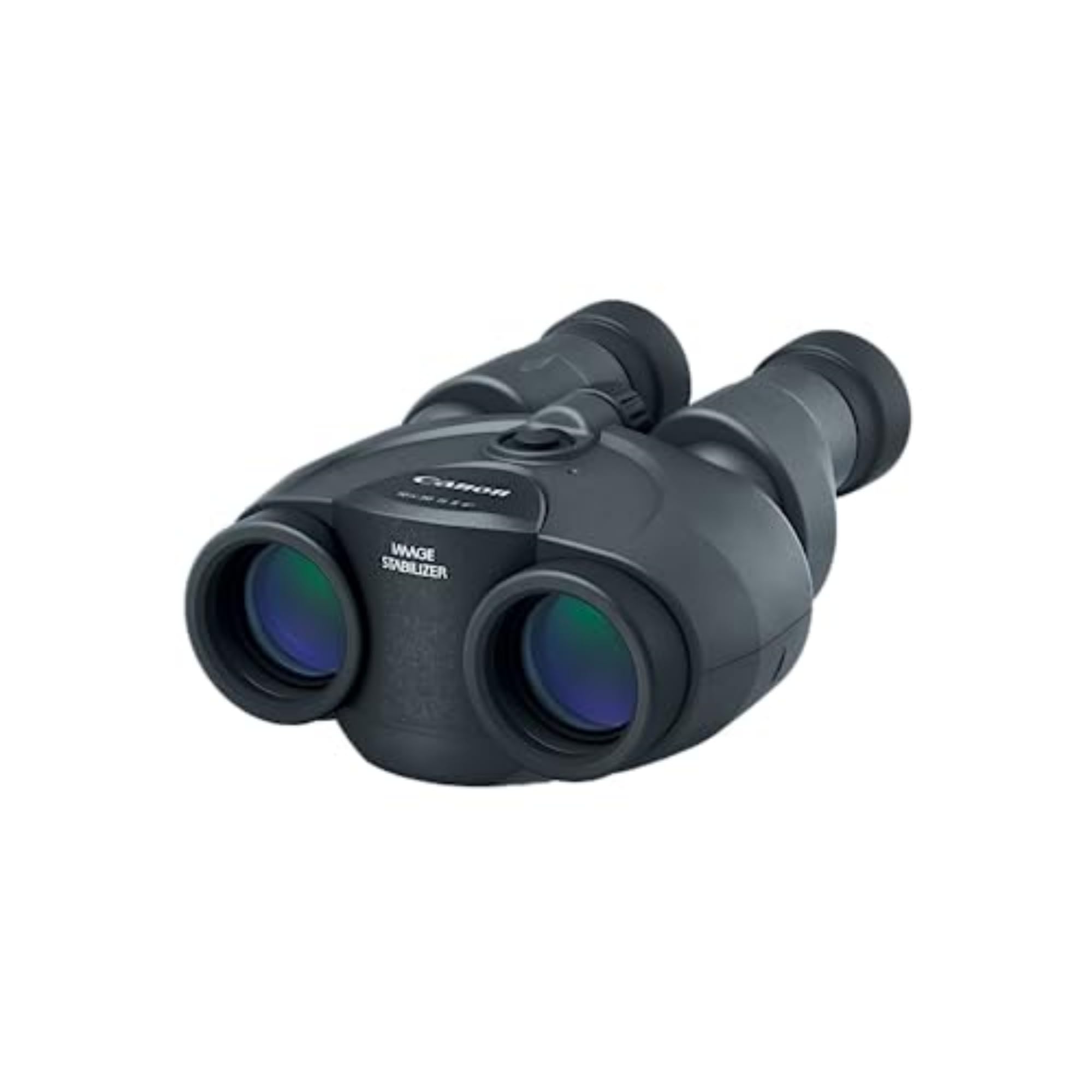
Best Overall

Canon 12x36 IS III
Key details
- Weight & Size
- 1.8 lb
- Water Resistance
- Water resistant
- Field & Eye Relief
- 14.5mm eye relief
- Stabilization Control
- Hold-button IS
The 12x36 IS III pairs 12x reach, water resistance, and a 1.8 lb body, covering birding, travel, and casual astronomy in one package. Its vari-angle prism stabilization steadies the view quickly, turning 12x into a workable handheld magnification instead of a wobbly compromise. The system is hold-to-activate, so the controls remain simple: one button press steadies the scene, and releasing returns the view to normal. This is the balanced option in the Canon IS lineup, not the lightest or the cheapest, but the one that covers the broadest range of outdoor activity.
Hand shake is obvious at 12x without stabilization. Engaging the IS cancels the worst of that movement, so distant subjects hold still enough to pick out field marks or trace the boundary of a moon crater. The 36mm objective keeps images crisp and bright in normal daylight and overcast skies. In dense shade or after sunset, a 42-50mm binocular pulls more light, so serious low-light users should look at the bigger objective models in the lineup. Water resistance covers light rain and streamside splashes, and at 1.8 lb this is a binocular you can keep at your eye for extended stretches.
This is the all-round IS pick for birders and nature watchers who want more reach than 10x without a tripod, hikers who pack by weight, and entry-level astronomers who want a wider slice of the night sky. The hold-to-activate IS button rewards short- to medium-length looks; anyone who expects to scan continuously for an hour should confirm the ergonomics before buying.
Moving up from the compact 10x30 is easier to justify than the move to the 15x or 18x siblings: you add two magnification steps without taking on a 2.5 lb-plus frame. The 42mm flagship in this lineup is heavier and pricier, putting it in a different use class. The 12x36 IS III sits between those poles, giving a single binocular that handles everyday outings without demanding flagship money or a tripod.
The Porro II housing stays compact by 12x standards, and the 14.5mm eye relief gives eyeglass wearers room to work without pulling the eyepieces away. For scanning a marsh edge or picking out a trail marker ahead, the reach is genuinely useful. Fit and finish feel clean, the focus ring turns smoothly, and the body handles regular trail use without feeling flimsy.
💡 For long watches, release the IS button between sightings rather than keeping it pressed continuously.
Pros
- Image stabilization keeps 12x steady enough for field identification of distant birds.
- Daylight images come through crisp and detailed, with useful brightness on overcast days.
- At 1.8 lb, the body stays comfortable during extended handheld viewing and stargazing.
- Compared with the compact 10x30, the added reach and water resistance make the cost increase easy to live with.
- Build quality and optical alignment feel solid during regular outdoor use.
Cons
- Rubber armoring can become sticky over time in warm, humid conditions.
- Holding the IS button down throughout a viewing session can fatigue the finger.
For one pair to cover daytime birding, hikes, and casual moon checks, the 12x36 IS III is where the tradeoffs line up.