8 Best HDMI Cable for Camera in 2026: Match Your Camera Port First

The right HDMI cable for camera monitors and recording rigs depends on the port shape, bandwidth, and coil behavior—not just the 4K label.

The first thing to know about HDMI cables for cameras is that the port shape matters more than the HDMI version on the box. Many listings describe broad camera compatibility while the cable physically fits only one connector type. Match the port first and most of the frustration disappears.

Port confusion also creates the false idea that a more expensive 8K cable will make a 4K camera look better. It will not. The practical trade-off is between reach and convenience: a short cable keeps a rig tidy, while a longer cable gives you freedom to place the monitor away from the camera. Choose the length that fits the shooting position, not the biggest number.

After the port, form factor decides whether the cable works on a real rig. Straight cables are simple and cheap; coiled cables control slack; angled connectors keep strain off the camera port. Pick the combination that matches how the camera will be held or mounted.

1

Best Overall

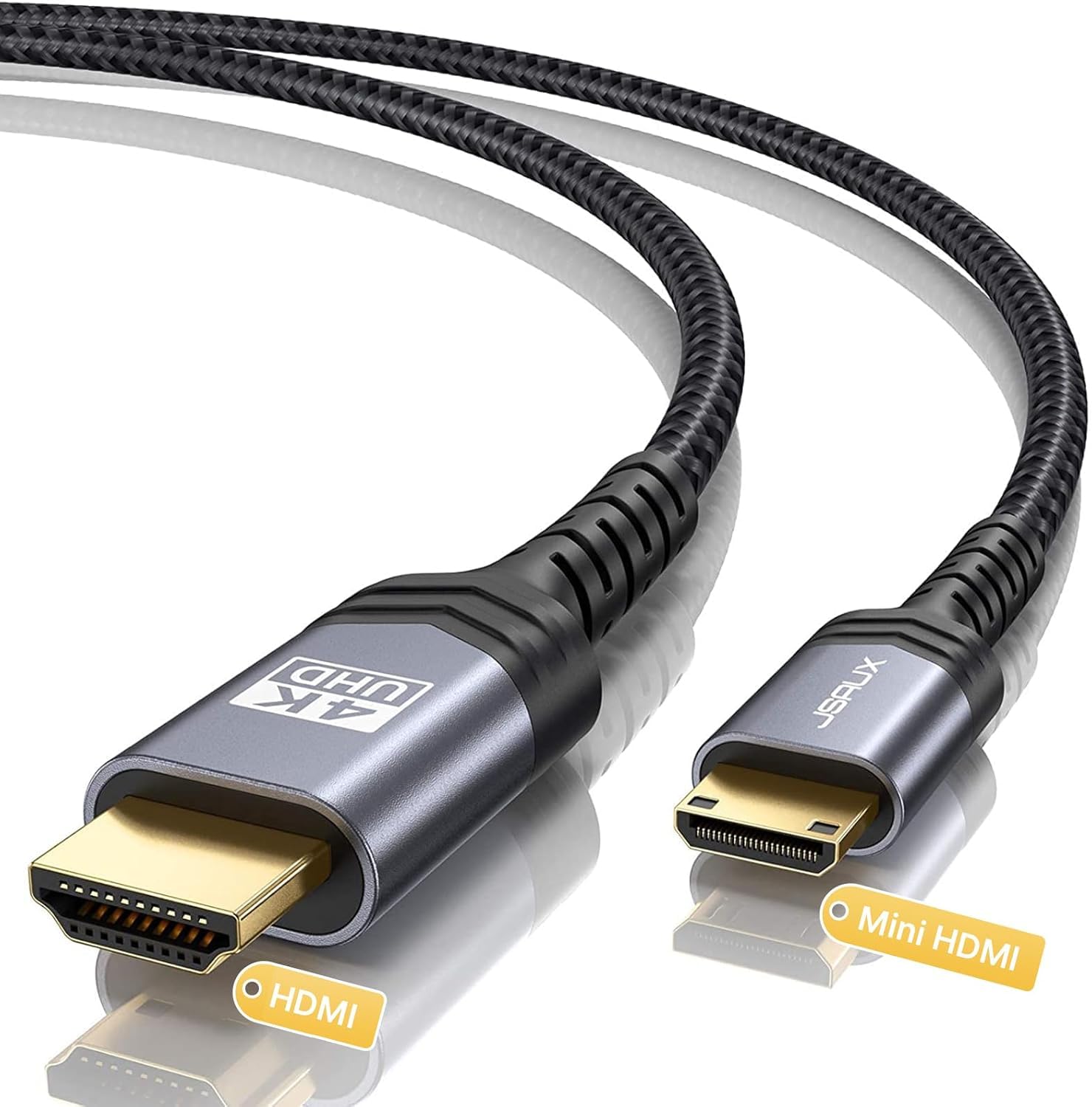
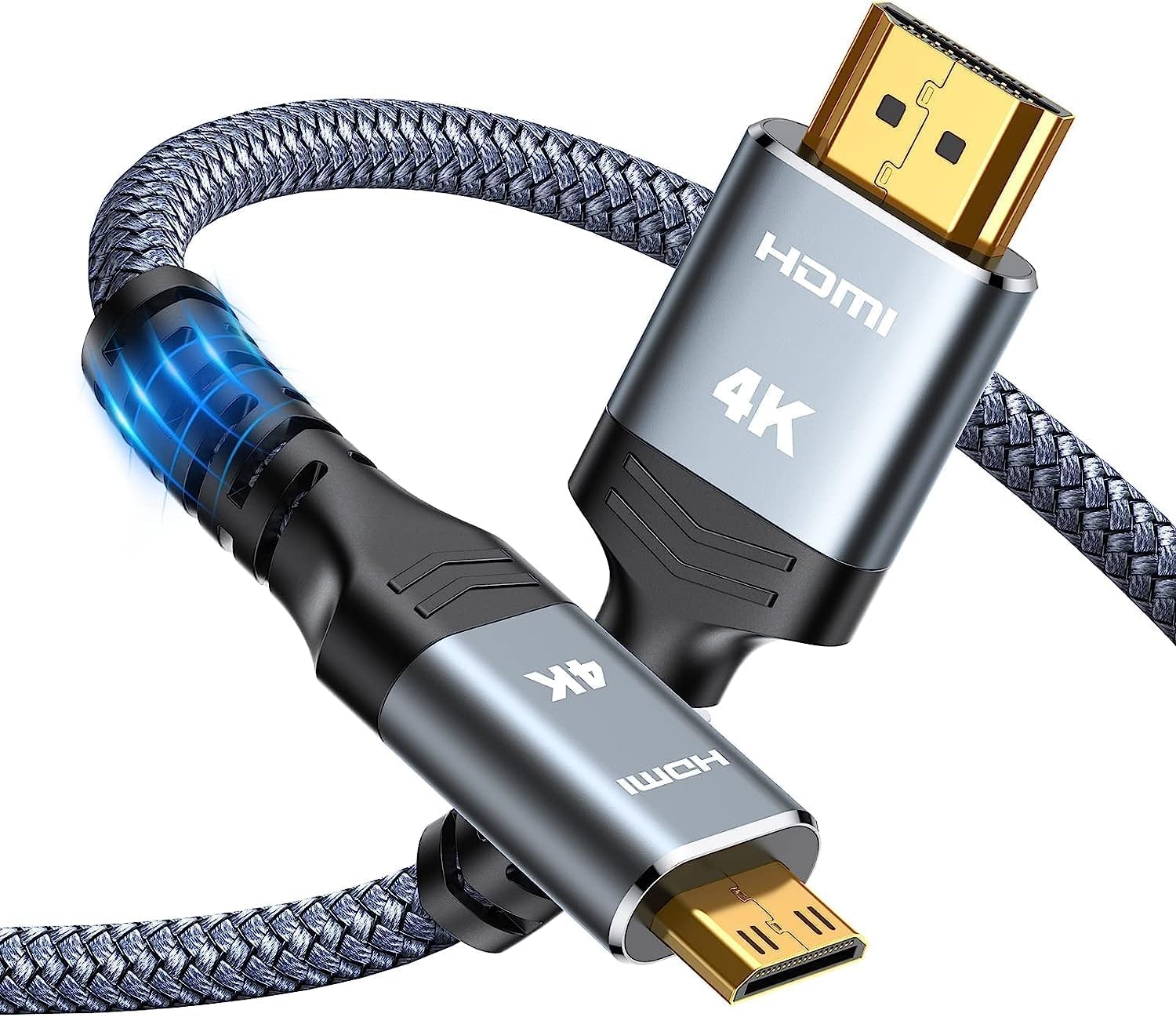
JSAUX Mini HDMI 6FT

95 /100
Studio Score High Confidence

Key details

Length
6 ft
Bandwidth
18Gbps, 4K60
Form Factor
Straight, braided
Build Quality
Braided, aluminum shell
Check Price on Amazon

The JSAUX 6-foot mini-to-HDMI cable carries 4K60 signals through a braided jacket and aluminum-shell mini connector that seats firmly in camera ports. The HDMI 2.0 / 18Gbps setup covers 1080p and 4K60 output from mirrorless and DSLR bodies, and bidirectional construction means either end can drive a display or camera monitor. A straight 6-foot routing keeps things simple on a desk or camera table, without the extra slack of a coiled cable or the stiff handling that some longer cables bring.

On camera-to-TV, camera-to-monitor, and camera-as-webcam connections, the image stays crisp, with no visible banding or color shift in normal lighting. Long capture sessions do not introduce flicker or dropout once the connection locks, which matters for anything beyond a quick photo review. For a field monitor with a full-size HDMI port, the cable connects the camera directly without an adapter. The braided cable is flexible enough for a small rig without slack loops, and the aluminum connector feels more solid than the molded plastic tips found on entry-level cables. The 6-foot length reaches behind a monitor or around a tripod leg without pulling on the camera port.

At a budget-friendly price, the build quality is the real value. The braided shell resists abrasion without adding stiffness, and the aluminum ends are compact enough for tight spaces around a monitor input. This is a cable that can sit in a camera bag for months and still connect without a fuss. For camera-as-webcam use, the 6-foot length puts a mirrorless body close to a laptop or capture card without forcing an awkward bend. The price-to-build ratio is strong enough that keeping a spare in the bag is painless, and it does not feel like a disposable accessory.

Mini-HDMI DSLR and mirrorless owners who want a straight 6-foot cable for TV, monitor, or webcam use are the right audience. The 18Gbps bandwidth ceiling sets a clear limit: 4K60 and 1080p are fully supported, while 8K or 4K120 camera feeds are outside its capability. Within that boundary, the connector fit and jacket are exactly what a camera connection needs. For longer runs across a room, the 10-foot mini-HDMI option in this set extends reach, but this JSAUX is the better fit when the display is close to the camera.

Pros

  • Braided build with aluminum connectors that hold firm in the camera's mini-HDMI port.
  • Keeps a steady connection for camera-to-TV, monitor, and webcam work.
  • Budget-friendly price with build quality that beats the entry-level norm.
  • Crisp 4K60 image quality on TVs and monitors.

Cons

  • Micro-HDMI cameras need a different cable; this connector is mini-HDMI only.
  • On certain camera bodies, the first connection may not produce a display until the mini end is reseated.
Our verdict

The 6-foot mini-HDMI cable for camera-to-TV and webcam work at 4K60, with connector build that avoids the usual flimsy-end problem.
Check Latest Price
2

Best for Long-Reach Setups

Highwings Mini HDMI 10FT

94 /100
Studio Score High Confidence

Key details

Length
10 ft
Bandwidth
18Gbps, 4K60
Form Factor
Straight, braided
Build Quality
Nylon braided
Check Price on Amazon

The Highwings brings the cable length that camera-to-switcher setups usually lack: 10 feet of braided mini-HDMI with 4K60 support at a budget price. Shorter 6-foot options force the recorder next to the camera; this one lets the switcher sit where the run demands, without a coupler or extension.

The 18Gbps link carries 4K60 without visible noise or color shift, and the braided jacket gives the cable enough body for floor runs without tangling every time it is packed. The connector is bidirectional, so the same cable can feed a field monitor from a mini-HDMI camera or connect a mini-HDMI monitor to a full-size source.

For a live-event run, the 10ft length removes the need for a coupler or extension, and the braid lies flat enough to tape down across a floor. The cable keeps the signal clean through the full distance, which matters when a switcher is feeding a broadcast monitor.

This is for shooters who choose reach over bendability and work from a tripod rather than a gimbal cage. Stiffness and occasional loose mini ends are the trade-offs for the 10ft reach, so plan for straight-ish routing and strain relief near the port. Micro-HDMI cameras need a different connector entirely.

💡 Use a small velcro strap near the mini end so the connector carries only the plug's weight, not the cable run's.

Pros

  • 10ft reach lets cameras sit away from the switcher without an extension cable.
  • Braided shell resists bag wear and floor scuffs while staying light on the rig.
  • 4K60 picture remains clean over the full 18Gbps link, covering live monitoring needs.

Cons

  • On tight-bend gimbal frames, the braid resists sharp routing; straight camera-to-switcher runs won't notice.
  • A shallow mini-HDMI socket can let the connector shift under cable weight.
Our verdict

Fixed camera-to-switcher runs get the necessary distance without a second cable, and the price leaves room for a spare.

Check Latest Price
3

Best Micro HDMI for Modern Cameras

Silkland 8K Micro HDMI

89 /100
Studio Score Strong Evidence

Key details

Length
6.6 ft
Bandwidth
48Gbps, 8K60
Form Factor
Straight, braided
Build Quality
Braided, ferrite beads
Check Price on Amazon

Silkland's cable is the micro-port option that brings full 48Gbps HDMI 2.1 bandwidth to a braided 6.6-foot run. That is enough headroom for 8K60 or 4K120 monitoring, which separates it from the 18Gbps micro cables that top out at 4K60. The connection is bidirectional, so the same cable can feed a monitor or send camera output to a recorder without having to track which end is which.

The braided E-Braid jacket is pliable enough for cage routing, and the ferrite beads filter interference from nearby monitor power. At 6.6 feet, the cable keeps a rig tidy while still reaching from a camera body to a recorder on the same cage. Build quality sits a clear step above generic micro cables, which is what you want when a monitor arm moves the cable during a shoot.

This cable is best for modern mirrorless cameras and GoPro-style bodies with micro HDMI ports, plus compact monitor rigs that want 8K/4K120 headroom without paying a premium. The tradeoff is the micro-HDMI connector shell itself: it is small, so shooters who prefer a larger plug will find it fussy, and mini-HDMI cameras need a different cable.

💡 Loop a little slack near the camera body so the micro plug does not carry cable weight during a long take.

Pros

  • Strong value for a 48Gbps micro cable, pairing HDMI 2.1 bandwidth with a budget-friendly price.
  • Handles 4K and 8K resolutions cleanly, covering 8K60 and 4K120 camera-monitor work.
  • Braided E-Braid jacket and ferrite beads put build quality above generic micro HDMI cables.

Cons

  • On some camera bodies, the micro plug can seat loosely enough to drop signal until reseated.
Our verdict

For micro-HDMI camera owners who want 8K/4K120 headroom without paying a premium, the Silkland delivers 48Gbps bandwidth in a braided, cage-friendly cable.

Check Latest Price
4

Best for Gimbal/Rig Use

SmallRig Ultra-Thin HDMI

92 /100
Studio Score High Confidence

Key details

Length
1.8 ft
Bandwidth
18Gbps, 4K60
Form Factor
Ultra-thin straight
Build Quality
3.6mm cable
Check Price on Amazon

The SmallRig Ultra-Thin HDMI A-to-A is the slimmest full-size cable in this group, with a 3.6mm jacket and compact A-to-A ends that keep gimbal and cage rigs free of dangling bulk. It carries HDMI 2.0 at 4K60, enough for standard camera monitors and wireless transmitters.

The 4K60 signal holds through normal gimbal movement, and the connector housings seat cleanly in full-size monitor ports. The slim connector head clears tight monitor housings without forcing the port angle, and the cable assembly feels solid when rerigging between setups.

The mid-range price is a bit above generic HDMI leads, but the thin profile and clean assembly make it a purpose-built part of a gimbal bag rather than a general-purpose spare. It is easy to route and forget about once the rig is assembled.

This is a 1.8ft full-size A/A cable intended for gimbal and cage setups with a full-size HDMI monitor; mini or micro camera ports need an adapter. The reach keeps the monitor close to the camera, which suits a compact travel rig.

Pros

  • 3.6mm jacket keeps bulk off compact gimbal and cage builds.
  • Connector housings and cable assembly stay solid through rerigging.
  • HDMI 2.0 handles 4K60 without dropouts during normal monitoring.

Cons

  • Cable stiffness can vary between units, so the ultra-thin feel may not show up in tight bends.
  • Long cable runs are outside the cable's working range; monitors on a separate stand need a longer link.
Our verdict

For a gimbal monitor setup that values minimal bulk, this is the compact link to keep in the bag.

Check Latest Price
5

Best Coiled Angled Full-Size Cable

HangTon Coiled HDMI 2.1 A/A

91 /100
Studio Score High Confidence

Key details

Length
Coiled 30-60cm
Bandwidth
48Gbps, 8K60
Form Factor
Coiled, angled
Build Quality
Braided coil
Check Price on Amazon

The HangTon is a coiled full-size HDMI 2.1 cable with left-angle to right-angle connectors, built for cinema camera monitor rigs where cable slack needs to stay out of the way. Both ends sit low against the ports, which is the difference between a clean gimbal setup and a cable that keeps catching on the cage.

The 48Gbps link clears 8K60 and 4K120, so the cable will not limit a high-bandwidth monitor or recorder. The braided coil keeps the middle section compact, and the angled ends reduce strain on the HDMI sockets during movement.

The coil's working length is 30-60cm, so the intended path runs from a full-size camera port to a nearby monitor. That controlled reach is what makes it useful on gimbals; it is not a substitute for a longer straight cable when the monitor sits across a desk.

This is a full-size A/A cable, so it pairs with cinema cameras, external recorders, and pro monitors that use full-size HDMI. Mini or micro camera outputs require an adapter, which adds bulk and partially cancels the low-profile benefit. If your rig already uses full-size connections, the HangTon's form is the reason to choose it; compact mirrorless shooters should start with a cable that matches their camera port directly.

Pros

  • Angled ends keep the cable flat against camera and monitor ports, reducing snag points on a rig.
  • Coiled 30-60cm body holds the middle section close, so slack stays off the gimbal axis.
  • 48Gbps HDMI 2.1 bandwidth supports 8K60 and 4K120 monitoring.

Cons

  • Premium-priced compared with straight full-size cables; the extra cost goes to the coil and angled ends, not sharper video.
  • Fixed left-angle to right-angle ends can conflict when both ports need the same exit direction.
Our verdict

For a full-size HDMI cinema rig that needs controlled slack and 8K bandwidth, this coiled angled cable handles the job without adding rig clutter.

Check Latest Price
6

Budget Micro HDMI Pick

Oldboytech Micro HDMI 6FT

95 /100
Studio Score High Confidence

Key details

Length
6 ft
Bandwidth
18Gbps, 4K60
Form Factor
Straight, braided
Build Quality
Nylon braided, gold-plated
Check Price on Amazon

The 6-foot Oldboytech is a braided micro-to-HDMI cable with gold-plated connectors and 18Gbps throughput, which covers 4K60 camera output for live streams and monitoring. It shares the same camera-to-monitor distance as the top pick but fits micro-HDMI ports instead of mini, and its budget price is well below the 8K-rated micro option in this set.

Bidirectional ends make routing the cable around a camera cage or monitor arm simple, and the nylon braid stays flexible enough for compact rigs without rubbery stiffness. Signal delivery at 4K60 is stable with current GoPro and mirrorless bodies, so the cable does what this workflow asks without extra adapters. For a single-camera setup, the 6-foot run handles desk-distance work without leaving a pile of excess cable to manage.

This cable is for budget live streamers, camera-as-webcam users, and Raspberry Pi or compact-camera owners with a micro-HDMI port. The 18Gbps/4K60 limit means no 8K/4K120 for future camera bodies, so treat it as a current-generation connection rather than a future-proofing purchase. Mini-HDMI cameras need the mini-HDMI cable in this set instead.

💡 Keep this 6-foot cable for desk-distance streaming; a 10-foot micro-HDMI cable is easier when the camera is farther from the recorder.

Pros

  • Bidirectional 4K60 connection from a GoPro or mirrorless body to a monitor, laptop, or capture card without extra adapters.
  • Nylon braid stays flexible enough for small camera rigs while resisting tangles in a bag.
  • Budget price makes it an easy spare for live-streaming kits and camera-as-webcam setups.

Cons

  • The 18Gbps HDMI 2.0 ceiling tops out at 4K60, so 8K and 4K120 camera output is outside this cable's range.
Our verdict

For budget live-stream and camera-as-webcam builds using a micro-HDMI GoPro or mirrorless body, this 6-foot braided cable gets the 4K60 signal where it needs to go without the premium price.

Check Latest Price
7

Compact 8K Rigs

Duttek 8K Coiled HDMI

91 /100
Studio Score High Confidence

Key details

Length
Coiled 1-4ft
Bandwidth
48Gbps, 8K60
Form Factor
Coiled, slim
Build Quality
4.0mm coil
Check Price on Amazon

This coiled HDMI 2.1 cable packs 8K60 and 4K240 bandwidth into a 4.0mm diameter coil that travels easily. The 48Gbps throughput and slim jacket suit full-size HDMI monitor rigs where bulk is the main enemy. It earns an also-consider spot because the advertised reach is worth verifying before mounting, and the full-size A/A connector defines the compatible hardware.

Pros

  • Slim 4.0mm coil keeps travel and monitor rigs compact.
  • 8K60 and 4K240 support covers high-bandwidth monitoring needs.
  • Build quality handles the flex of coil use.

Cons

  • Maximum coil stretch can land well under the marketed 4ft.
  • Full-size A/A only, so mini or micro HDMI cameras need an adapter.
Our verdict

A compact 8K coil for full-size HDMI monitor rigs that value low bulk.

Check Latest Price
8

Budget Basic Use

Amazon Basics Mini HDMI

93 /100
Studio Score High Confidence

Key details

Length
5.9 ft
Bandwidth
10.2Gbps, 4K30
Form Factor
Straight, unidirectional
Build Quality
PVC jacket
Check Price on Amazon

This Amazon Basics cable delivers sharp 1080p/4K30 video from a mini-HDMI camera to a TV or monitor, and the 1.8m length is practical for desk or living-room runs. The trade-offs are the 10.2Gbps bandwidth ceiling and the unidirectional connectors: the source end must go to the camera and the display end to the screen, so each hookup requires checking the labels. For budget 1080p/4K30 monitoring it is a serviceable fallback, but 4K60 camera feeds exceed the spec, and the orientation requirement makes it less flexible than top-tier mini-HDMI cables.

Pros

  • Delivers clean 1080p and 4K30 picture quality when connecting a mini-HDMI camera to an HDTV or monitor.
  • Compact 1.8m length suits close-range camera-to-TV setups and travel camera bags.

Cons

  • Capped at 4K30/10.2Gbps, so 4K60 camera monitoring is not supported.
  • Unidirectional cable requires the source and display ends to be oriented correctly on every hookup.
Our verdict

This cable fits basic 1080p/4K30 camera-to-TV use where you are willing to verify orientation before plugging in. For 4K60 monitoring or complex rigs, choose a higher-bandwidth mini-HDMI cable.

Check Latest Price

How to Choose

Connector Type

Mini HDMI is common on older DSLRs and many tablets; micro HDMI appears on mirrorless cameras, GoPros, and action cams; full-size A/A connects cinema cameras to monitors. A cable with the wrong connector will not seat securely, which is why 'doesn't fit' issues usually trace back to port confusion.

Adapters exist, but they add another mechanical joint to a portable rig. Every adapter is a potential stress point when the cable is pulled or the gimbal moves, so buying the direct connector for your camera reduces dropouts.

Bandwidth and HDMI Version

HDMI 2.0/18Gbps handles 4K60, which covers the output of virtually all current mirrorless and DSLR cameras. HDMI 2.1/48Gbps adds 8K60 and 4K120, useful only if your camera actually outputs those rates or you plan to move the cable to a new camera later.

The catch is that bandwidth does not improve an existing 4K30/4K60 feed. Paying for 48Gbps matters for future-proofing, not for making a current camera look sharper on a monitor.

Cable Form Factor

Straight cables are the easiest to route and the cheapest, but they push the connector shell straight out of the camera port. On a gimbal, that lever arm can stress the port during panning.

Coiled cables keep slack controlled and angled connectors sit closer to the camera body, which is why they dominate rig use. The trade-off is that coils can be stiff and can pull when stretched to their limit.

Length and Real-World Reach

Advertised coiled length is often the fully stretched measurement. A '1-4 ft' coil may sit at 1 foot at rest, and stretching it to 4 feet increases tension on both connectors.

Straight cables are closer to their listed length, but long 10-foot runs add weight and are harder to secure. Measure the actual path from camera to monitor, including bends around the cage, before choosing.

Build Quality

Braided jackets and metal shells protect against abrasion and improve connector feel, but they do not guarantee a solid internal solder joint. The most common real-world issue is a loose micro or mini connector after repeated bends at the neck.

Ferrite beads, aluminum shells, and thicker gauge wire reduce interference and physical strain. For cameras on a tripod, a simple braided cable is enough; for gimbals, prioritize a cable with flexible strain relief and low-profile connectors.

Frequently Asked Questions