9 Best Doorbell Camera of 2026: No-Fee Models That Last

The best doorbell camera for buyers who want sharp video without a monthly subscription — and honest guidance on battery life and chime setup.

A doorbell camera's marketing page makes two promises: sharp video and no surprise fees. The real test starts after the first week — when the free trial expires, the battery has been triggered by every passing car, and the chime that used to ring needs a separate accessory.

The useful doorbell is the one that matches your wiring, your door traffic, and your willingness to pay per month. Buyers who want zero recurring cost need local microSD or built-in storage; buyers with an existing mechanical chime need to confirm the doorbell actually uses it. That trade-off matters more than the difference between 1080p and 2K.

This guide sorts doorbells by the choices that cause buyer regret: storage access, battery behavior, and chime compatibility. The result is a set of picks that balance image quality against the cost of owning the device past day 30.

1

Best Overall

Tapo D210 Doorbell

89 /100
Studio Score Strong Evidence

Key details

Power
Rechargeable battery
Subscription
None required
Field Of View
160° head-to-toe
Local Storage
microSD up to 512GB
Check Price on Amazon

The Tapo D210 puts the no-subscription essentials in one package: 2K head-to-toe video, free person detection, local microSD recording, and an included chime. The 160-degree diagonal view covers a visitor from face to feet, and the 2K sensor provides enough detail to read a delivery label or recognize a familiar face at close range. Image quality holds color and low-light detail better than typical 1080p doorbells. Core functions do not require a monthly plan: alerts, live view, and clip capture all work once a microSD card is installed.

The wide lens also keeps packages in frame when the visitor is at the door, which is where narrower doorbells can miss the ground. The field of view includes the ground directly in front of the door, so a dropped package is visible without aiming the camera downward. The result is a front-door view that catches the full visitor and the package at their feet. Night image quality stays readable without a floodlight, and color handling avoids the washed-out look of cheaper sensors. In backlit conditions, the sensor handles exposure shifts well enough that faces are less likely to turn into silhouettes.

This is a strong fit for buyers who want 2K video and local recording without a monthly fee, and who are comfortable with a battery-powered install. Package watchers get clip history on a microSD card, and Alexa or Google homes can fold the doorbell into an existing voice setup. The D210 is less suited to buyers who want a wired-only device with no battery charging; for them, a hardwired model makes more sense.

The D210 is a battery-first doorbell, and that design choice shapes installation: keep it close enough to the router for a steady 2.4GHz link, and use activity zones so the camera triggers only on the walkway. The included chime plugs into a standard outlet, so the doorbell works in homes without existing wiring. That removes an install barrier for renters and older houses, and the camera can be set to record only on motion to avoid useless clips.

The optional Tapo Care plan adds cloud extras, but skipping it removes no core function. Local storage on a microSD card up to 512GB keeps clips on-device, and person detection stays free. Buyers who want a doorbell that works without a financial commitment after the box is opened get that here. This is why the D210 stands apart from subscription-first rivals in this roundup.

💡 Set activity zones to the porch entry and charge the battery before install; this reduces unnecessary triggers and extends time between charges.

Pros

  • 2K head-to-toe video with good color and night detail; the wide lens reduces package-height blind spots.
  • No subscription required for person detection or local microSD recording; an included chime rounds out the kit.
  • Setup and app enrollment are quick for a first-time doorbell installer.
  • Build quality feels more solid than typical battery doorbell plastic.
  • Routine operation stays predictable once connected, and the camera responds promptly to button presses.

Cons

  • Person detection can miss events or send false alerts in complex scenes; motion clips are the steadier fallback.
  • Wi-Fi dropouts and delayed live-view connections can appear when the doorbell sits far from the router.
  • Battery life varies with traffic; a busy entrance or heavy live-view use can trim charge intervals to a week or two.
Our verdict

The D210 combines the no-subscription features that matter for doorbell buyers: sharp video, free person alerts, local clips, and a chime in the box.
Check Latest Price
2

Best-Selling Choice

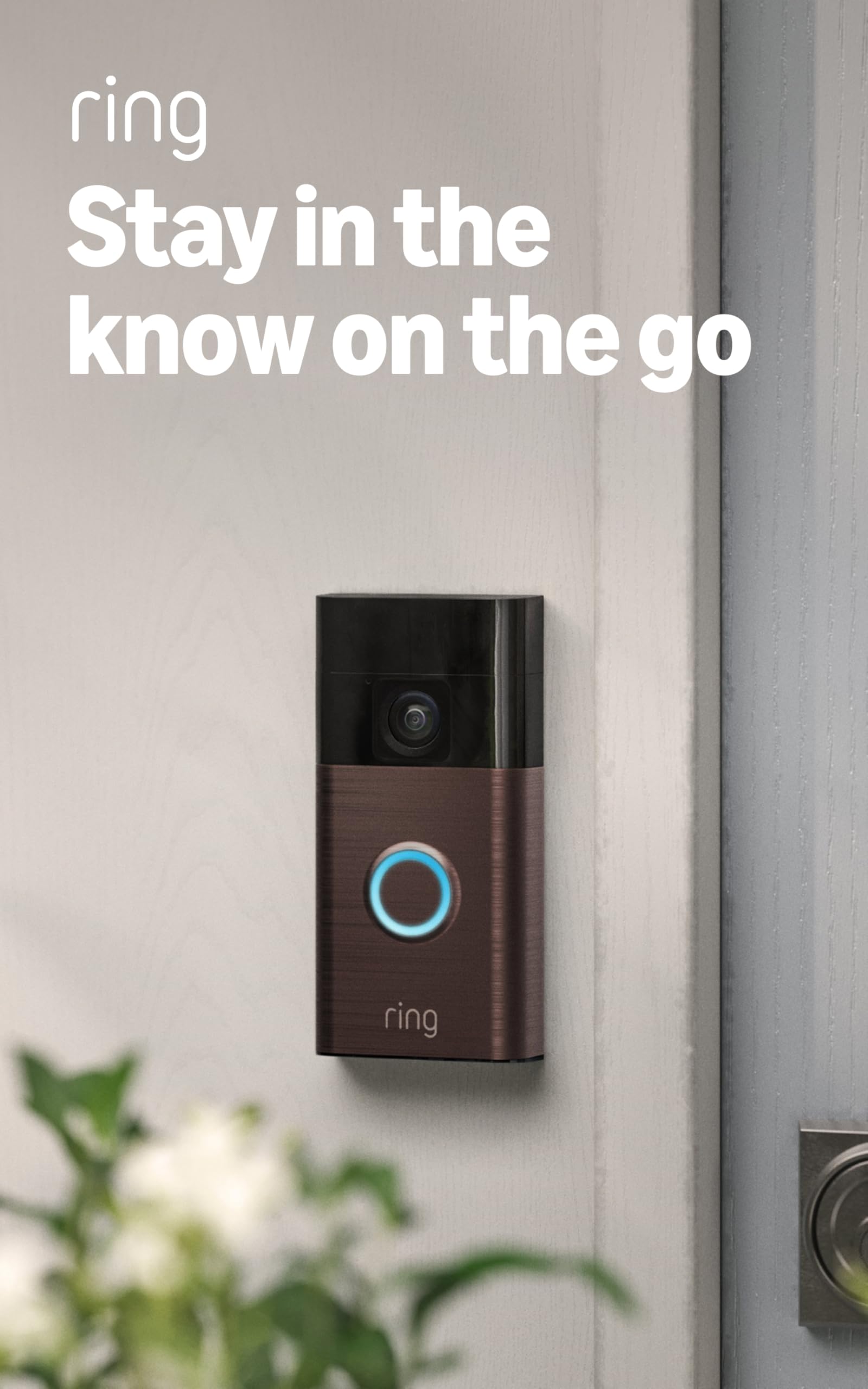
Ring Battery Doorbell

91 /100
Studio Score High Confidence

Key details

Power
Rechargeable battery
Subscription
Ring Protect required
Field Of View
Head-to-toe
Local Storage
None (cloud only)
Check Price on Amazon

Head-to-toe 1080p video and a mature app experience make the Ring Battery Doorbell a predictable first purchase for Alexa households. The vertical field of view keeps faces and packages in frame, and the Ring app ties live view, two-way talk, and motion alerts into one familiar control center. Setup follows the brand's guided flow, and Alexa announcements can speak front-door activity through Echo devices.

This fits first-time buyers who want a battery install without rewiring and who already live in the Alexa/Ring ecosystem. Ring Protect is required for recordings, and battery-powered operation with motion alerts is usage-dependent, so a moderate-traffic entrance suits it better than one with constant activity. For those who treat the doorbell as a convenience layer rather than a continuous security recorder, that boundary is acceptable.

The 1080p sensor trails 2K no-subscription doorbells on paper, but the app depth, accessory compatibility, and Alexa announcements cover that gap for households that value integration over headline specs. Buyers who want sharper stills or free local clips should weigh those preferences before choosing this over cheaper alternatives. Ring's larger accessory ecosystem also supports later expansion with additional cameras or chimes.

Pros

  • Head-to-toe 1080p frames faces and packages from doorway to chest level.
  • Ring's app and Alexa routines create an easy daily control loop for first-time owners.
  • Battery-powered install avoids rewiring, which suits rentals and retrofit doorways.

Cons

  • Live view can stall when WiFi connections drop in congested environments.
  • Motion alerts can miss a package drop at the edge of the frame or trigger on passing cars.
  • With heavy traffic at a busy entrance, battery life may require charging every few days rather than months.
Our verdict

For Alexa-first buyers who prefer app polish over 2K and subscription-free storage, the Ring Battery Doorbell remains the default; pixel-count-focused shoppers should look at local-storage rivals.

Check Latest Price
3

Best for Package Monitoring

eufy Doorbell E340

84 /100
Studio Score Strong Evidence

Key details

Power
Battery or wired
Subscription
None required
Field Of View
160° + package cam
Local Storage
8GB built-in
Check Price on Amazon

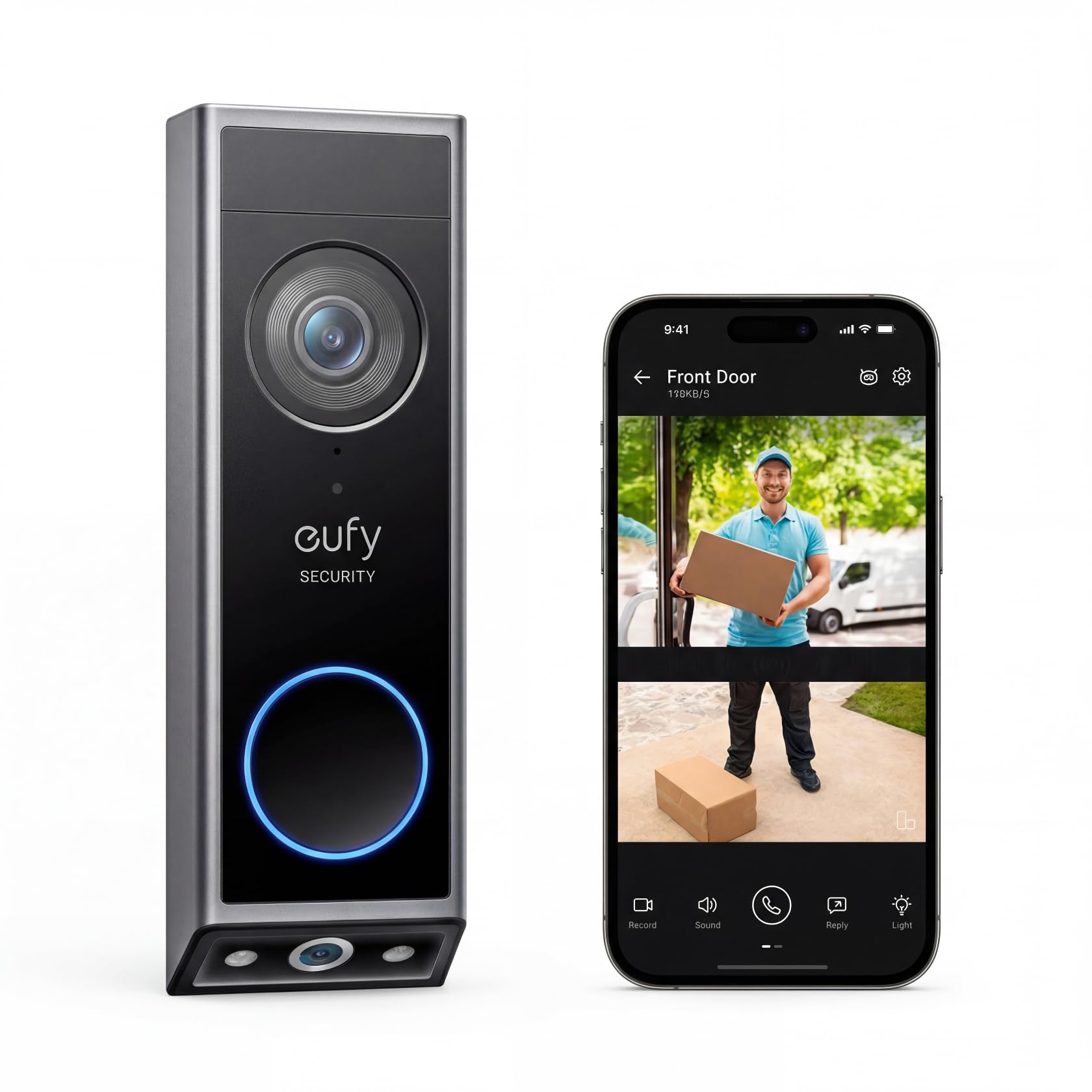
The eufy E340 is the package-focused doorbell in this lineup, pairing a 160° 2K front camera with a dedicated downward sensor that frames deliveries at the doorstep. Eight gigabytes of built-in storage keeps clips on the device, so there is no subscription or cloud account to manage. This dual-camera arrangement gives a single doorbell something single-lens models lack: a direct look at the ground.

Buyers who can wire the doorbell to a 16-24V transformer get full value from the design. Battery-only operation shortens the routine to two-to-three weeks between charges, making hardwiring the steadier setup for continuous coverage. This fits package-obsessed households that care more about knowing what was left at the door than about capturing the whole yard.

Two 2K sensors deliver clear footage of a visitor's face and the parcel on the ground at the same time. The 160° main lens covers normal porch activity, while the downward lens catches the blind spot under the overhang that single-camera doorbells miss.

The wider ultra-wide models in this lineup capture more of the yard, but the E340 answers a different question: what exactly was set down in front of the door. For delivery-heavy homes, that focus is the reason to choose this runner-up over a one-lens alternative.

Pros

  • Dedicated downward camera shows exactly what was left on the doorstep.
  • 8GB of built-in storage records clips locally with no subscription.
  • Main 2K lens covers visitors while the second lens watches packages.
  • Wired setup works with standard doorbell transformers.

Cons

  • At a doorway far from the router, live streaming can stall until the WiFi signal is strengthened.
  • Motion alerts can arrive late or not at all; check the recorded clips when something matters.
Our verdict

For a wired front door, the E340 is the package-tracking specialist in this group. Two cameras and on-device clip storage cover the delivery zone without a recurring fee.

Check Latest Price
4

Best Budget No-Subscription

BOIFUN 180 Doorbell

86 /100
Studio Score Strong Evidence

Key details

Power
Rechargeable battery
Subscription
None required
Field Of View
180° ultra-wide
Local Storage
microSD up to 128GB
Check Price on Amazon

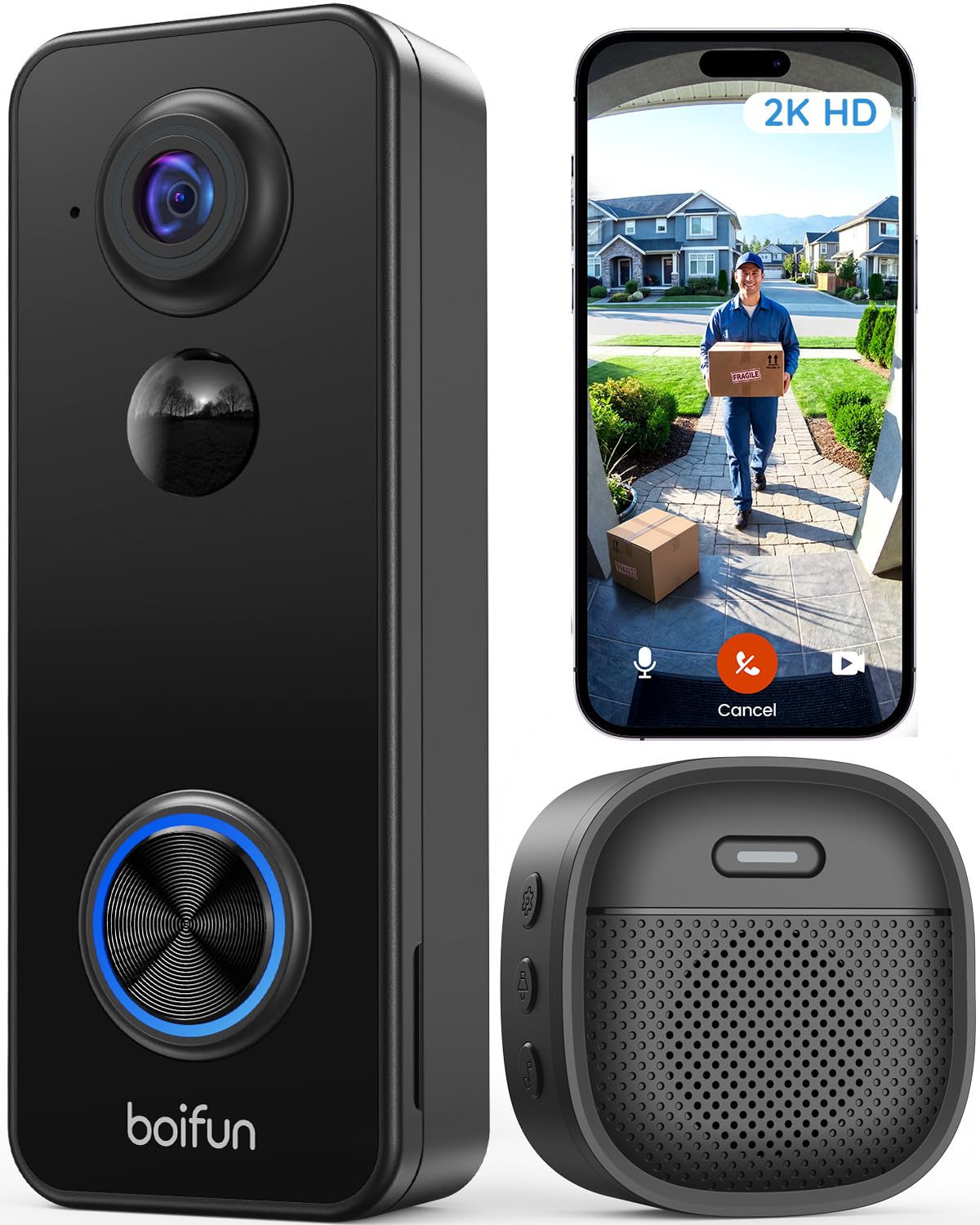
The BOIFUN 180 doorbell delivers the widest view in this budget lineup: 180° coverage, 2K resolution, and free local microSD recording. It undercuts the package-watching alternative in this roundup on price while covering more horizontal ground, although it stops short of adding a dedicated downward camera.

Mounting takes minutes with screws or adhesive, which suits apartment doors as much as house entries. The app organizes live view, motion alerts, and clip playback without pushing a paid plan, and night footage is bright enough to identify visitors on a typical covered porch.

The best home for this doorbell is a rental or budget-conscious household that wants a full porch view and zero monthly fees. Local microSD storage up to 128GB keeps core recording independent of the cloud, and the 180° frame catches approaches from the street and side walls. The boundaries are the edge curve from the ultra-wide lens and a battery that suits lower-traffic porches best.

Day and night clips hold enough detail to read faces and package details within the wide frame. Two-way audio carries clear short conversations, and the core doorbell functions respond quickly from the app.

💡 Mount the doorbell so the main approach sits near the center of the frame; the ultra-wide view still captures the sides.

Pros

  • 180° lens covers the porch approach edge to edge, catching visitors and packages most standard doorbells miss.
  • 2K day and night footage stays sharp enough to identify faces and packages.
  • Installation is quick with screws or adhesive, so renters avoid permanent mounting changes.
  • No monthly fee required for core recording when a microSD card is inserted.

Cons

  • At the edges of the 180° frame, straight lines appear bowed by the wide-angle lens.
  • On a high-traffic porch, battery life can shorten because every motion event wakes the camera.
Our verdict

A no-subscription 180° doorbell that gives budget buyers the widest porch coverage and a simple local-storage setup.

Check Latest Price
5

Best Budget Wired

Blink Wired 2K+

79 /100
Studio Score Established

Key details

Power
Hardwired
Subscription
Blink Plan required
Field Of View
Head-to-toe
Local Storage
None (cloud only)
Check Price on Amazon

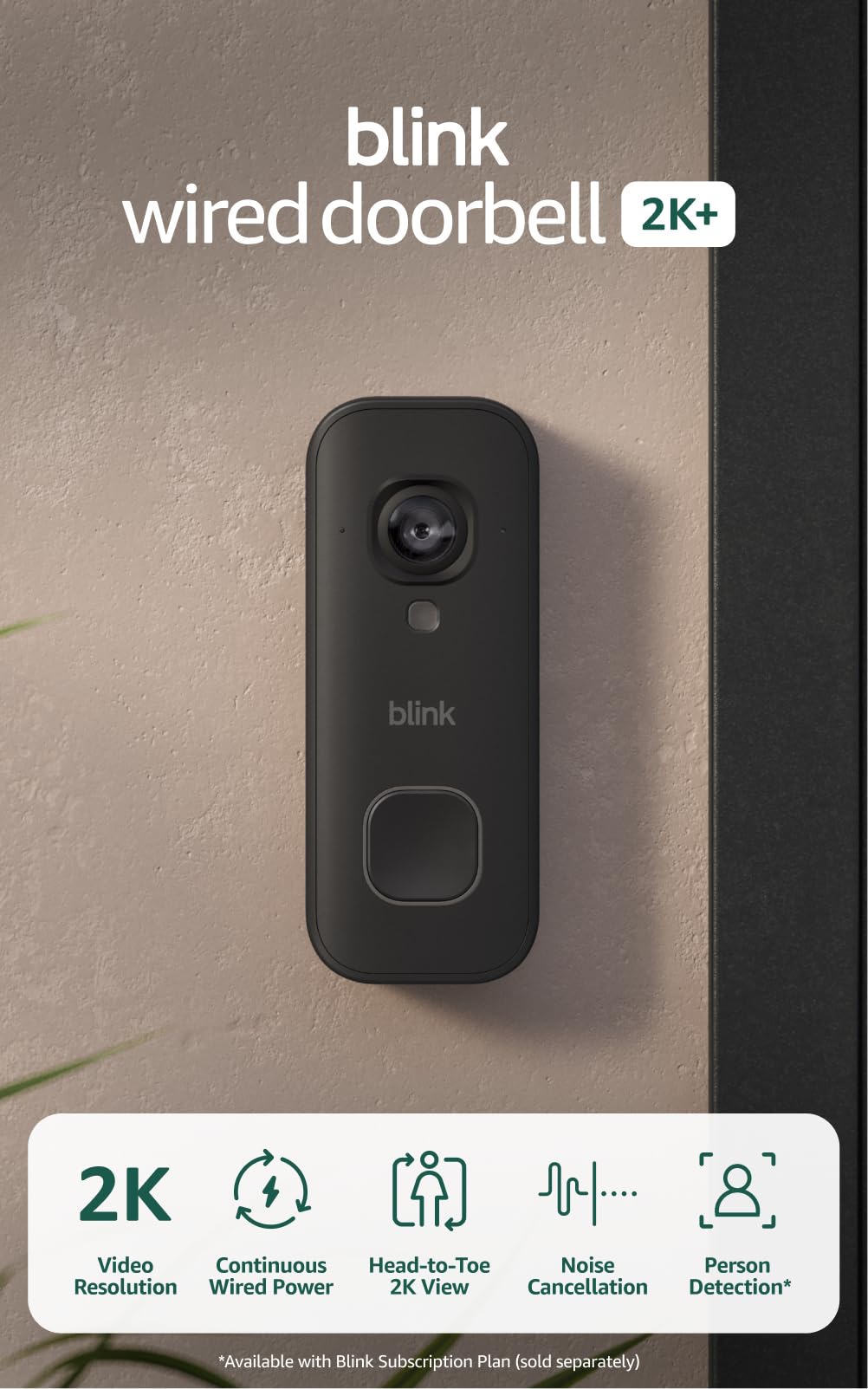
Hardwired 2K head-to-toe video at a budget price makes the Blink Wired Doorbell 2K+ a direct answer for homes that want a sharper front-door feed without a battery charging routine. Unlike Blink's AA-powered doorbell, this model runs off the existing doorbell wiring, so there is no battery to swap or recharge.

The 2K image is a visible step up from the 1080p on older Blink battery doorbells, and the head-to-toe frame keeps a delivery box at ground level in view while still capturing the visitor's face. Power comes from the low-voltage wires, so the doorbell stays mounted and live without a charging cycle. IP65 weather resistance handles rain and dust without an extra housing. The wider field of view compared with older Blink models gives the porch a more complete sightline.

The best fit is a hardwired home already using Alexa or Blink devices, where a Blink Chime serves as the alert point and a Blink Subscription Plan is already budgeted for. Owners of older battery Blink doorbells get the most direct benefit: the wired install removes the charging routine and the 2K sensor sharpens the image.

Pros

  • Sharp 2K image with enough detail for face and package identification.
  • Simple wiring install runs off existing low-voltage doorbell wires.
  • No battery replacement or charging; power comes from the doorbell wiring.
  • Budget-friendly hardwired 2K option for a front-door upgrade.

Cons

  • In homes with a mechanical chime, the doorbell disables it; ring alerts depend on a Blink Chime or Alexa speaker.
  • Person detection and recorded clips are tied to a Blink Subscription Plan, so the cost recurs.
Our verdict

For a hardwired home already invested in Blink or Alexa, this is the budget way to get 2K doorbell coverage without battery charging.

Check Latest Price
6

Best Premium 4K

Ring Wired 4K Pro

86 /100
Studio Score Strong Evidence

Key details

Power
Hardwired
Subscription
Ring Protect required
Field Of View
Wide-angle
Local Storage
None (cloud only)
Check Price on Amazon

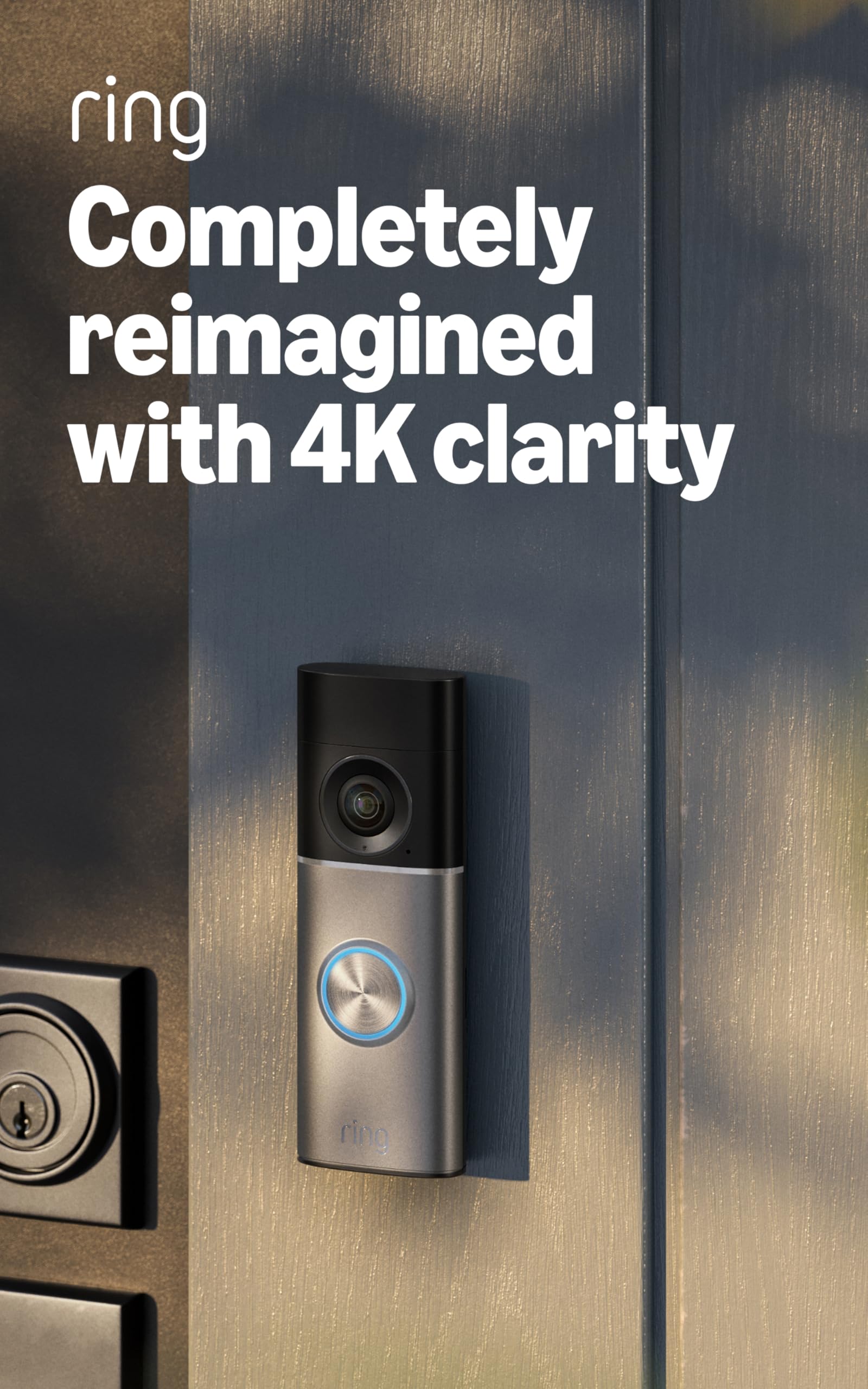
The wired Ring doorbell with the sharpest image in this lineup brings 4K resolution, 10x enhanced zoom, and low-light color capture to the front entrance. It is the model to choose when face-level detail at a distance matters more than battery convenience. The hardwired power source means no charging routine, but it also fixes the install to an existing doorbell circuit.

The wide-angle lens covers a full porch approach, and the 10x zoom remains usable when you crop in. The metal-shell build feels denser than Ring's battery doorbell, and the image is a clear step up from older 1080p Ring models. Low-light color capture keeps the scene readable after sunset, though the picture naturally softens in deep shadow. For a doorway with a long sightline, the zoom lets you read a delivery label without losing the surrounding context.

Buyers best matched to this doorbell already have wired doorbell power and no mechanical chime they want to preserve. Existing chimes will not ring without a separate Ring Chime, and recordings and smart notifications sit behind a Ring Protect subscription. That makes it a fit for Ring loyalists who want the most detail from a wired install.

Pros

  • 4K resolution makes faces, packages, and delivery labels legible at distances where 1080p blurs.
  • The metal-shell body feels substantial, and the wired connection removes the charging routine from the equation.
  • A visible jump in clarity over older Ring doorbells, especially when reading faces from a distance.
  • Wide-angle coverage spans the full approach, and the 10x zoom stays readable when you crop in.

Cons

  • Premium price lands above other wired models in this lineup.
  • Motion detection range can fall short of the wide-angle view on a long driveway.
Our verdict

It delivers the clearest look at visitors in this lineup, and the zoom holds up where 1080p doorbells soften.

Check Latest Price
7

Local Storage

Wyze Battery Doorbell

83 /100
Studio Score Strong Evidence

Key details

Power
Battery or hardwired
Subscription
None required
Field Of View
150° x 150°
Local Storage
microSD up to 256GB
Check Price on Amazon

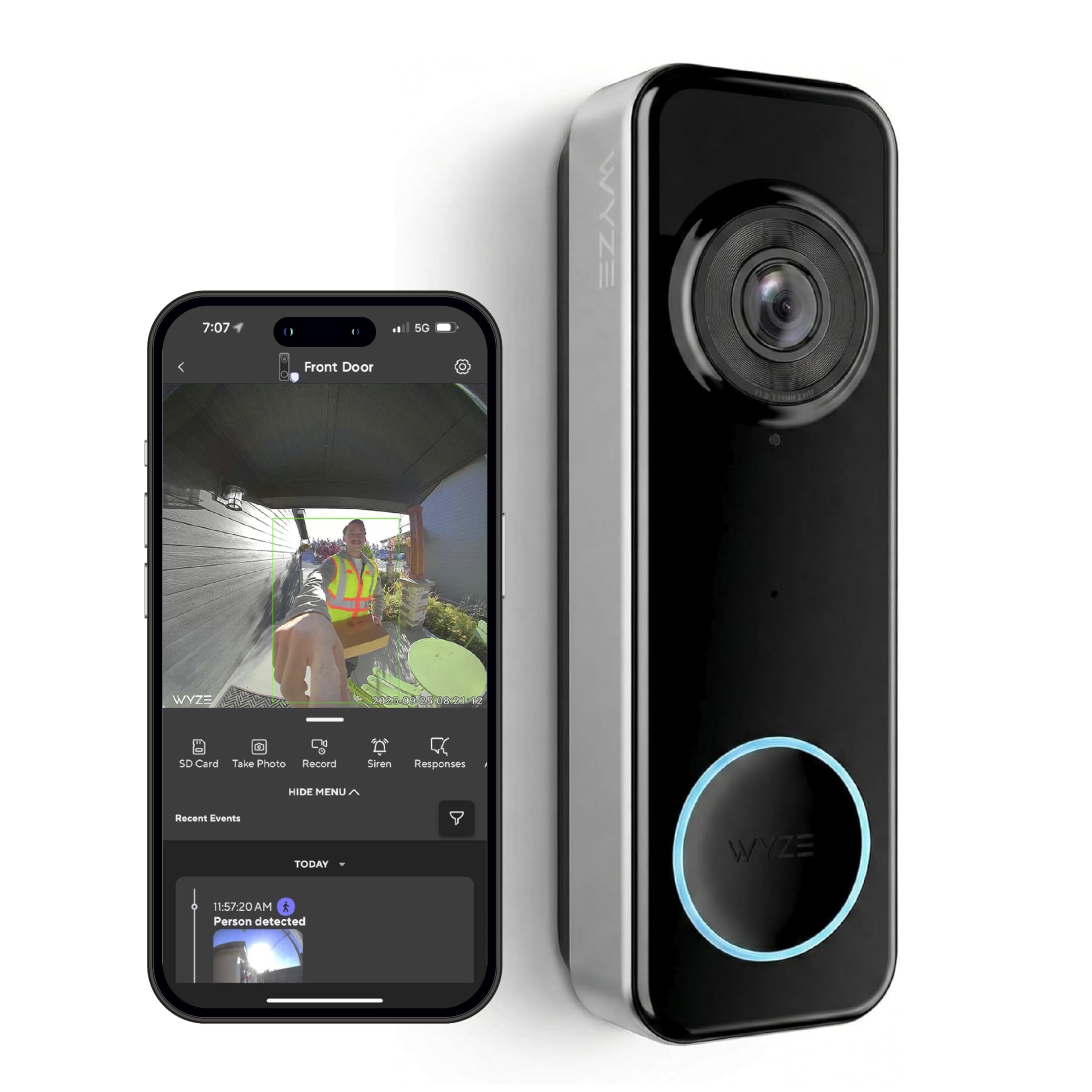
Wyze's 1536x1536 sensor produces a sharp 1:1 head-to-toe view, and color night vision keeps faces readable without the washed-out look of lower-resolution sensors. Bluetooth setup is fast, while local microSD recording removes the subscription pressure found in other doorbells. The single-frame coverage sets it apart from dual-camera package-watchers in this lineup, and Wyze users will feel at home inside the familiar app. No chime is included, so connecting an existing doorbell chime may require separate Wyze hardware. That keeps it a specialty pick for privacy-focused buyers rather than the category's feature leader.

Pros

  • 1536x1536 1:1 framing captures head-to-toe visitors without a second camera.
  • Local microSD recording keeps clips accessible with no subscription required.
  • Bluetooth-based setup gets the doorbell paired quickly.

Cons

  • Battery life can fall to a few weeks in homes with heavy visitor traffic.
  • Wi-Fi conditions near the door can interrupt live views.
Our verdict

This works best for Wyze households that store clips on a microSD card and want head-to-toe framing without a monthly bill.

Check Latest Price
8

Flexible Installation

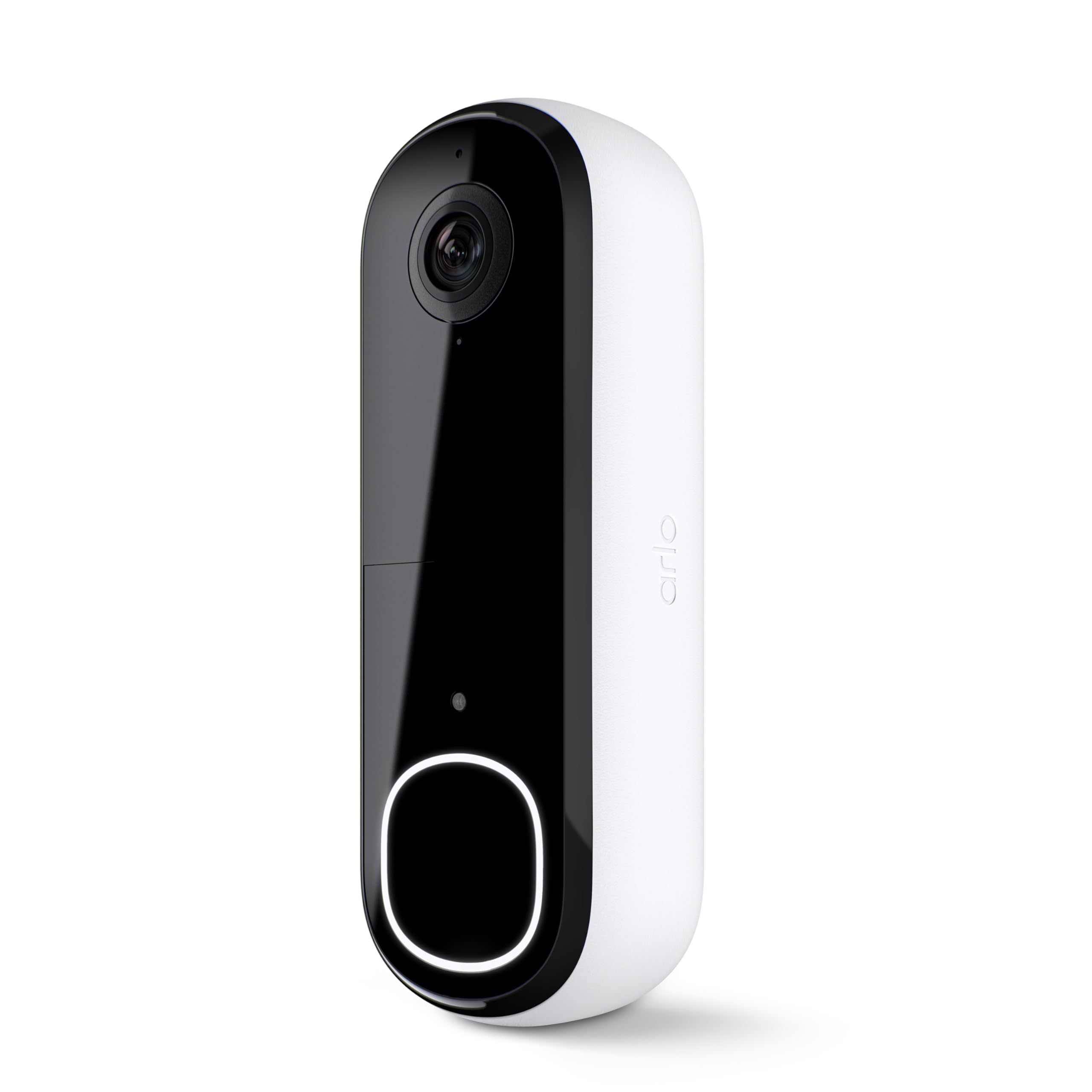
Arlo Doorbell 2K

83 /100
Studio Score Strong Evidence

Key details

Power
Battery or wired
Subscription
Arlo Secure required
Field Of View
180° head-to-toe
Local Storage
None (cloud only)
Check Price on Amazon

The Arlo Video Doorbell 2K produces sharp 1440p video across a 180° head-to-toe view, and the option to run on a rechargeable battery or wired trickle charge makes mounting genuinely flexible. Low-light footage stays clear enough to identify visitors, and smart alerts do a reasonable job of separating people from passing traffic. The tradeoff is structural: video history and advanced detection sit behind an Arlo Secure subscription, and there is no local microSD fallback. That makes it a good fit for households already paying for Arlo's cloud, while buyers who want recording without recurring fees should look at the local-storage alternatives in this lineup.

Pros

  • Sharp 2K detail across a 180° head-to-toe view
  • Runs on battery or wired trickle charge, easing installation
  • Low-light footage stays clear for visitor identification

Cons

  • When used wire-free, battery life can be short enough that hardwiring is the steadier option.
  • On some routers, the doorbell may need a couple of attempts before Wi-Fi pairing sticks.
Our verdict

This doorbell is a good match for Arlo households that value wide 2K coverage and installation flexibility.

Check Latest Price
9

Long Battery Life

Blink Video Doorbell

84 /100
Studio Score Strong Evidence

Key details

Power
2 AA lithium batteries
Subscription
Blink Plan required
Field Of View
Head-to-toe
Local Storage
None (cloud only)
Check Price on Amazon

Wire-free installation is the headline: two AA lithium batteries can carry this doorbell for up to two full years, and the vertical HD lens captures visitors from head to toe. Alexa households can check live video through Echo devices, while the Blink phone app handles live view and motion alerts. The tradeoff is a Blink subscription for cloud clips and HD-only detail. Buyers who want 2K/4K should look at the hardwired Blink model or the top pick in this guide.

Pros

  • Two AA lithium cells can stretch battery changes to two years on a low-traffic entrance.
  • Head-to-toe HD framing means a single camera covers the full visitor.

Cons

  • AA lithium replacements are a recurring cost after the initial pair is depleted.
  • For households that want offline playback, there is no local storage option.
Our verdict

The fit is a low-traffic entrance in an Alexa-first home, where battery endurance is the deciding factor.

Check Latest Price

How to Choose

Video Resolution

Resolution determines how much detail you can extract from a still frame after the fact. 1080p handles faces at close range, while 2K picks out package labels and license plates from the other side of a porch. 4K only earns its keep when you regularly zoom into small sections of the frame.

The hidden cost of higher resolution is data. Larger video files put more strain on your WiFi upload, and live viewing at maximum quality drains battery faster. For most doorbell positions, 2K is the practical ceiling.

Subscription Requirements

Subscription requirements are the real price of a doorbell camera, not the sticker price. Cloud-only models need a monthly payment for recorded clips and person detection; without a plan, live view and basic motion alerts are often all that remains.

Local microSD or built-in storage removes the fee, but the footage lives inside the camera, so a stolen doorbell can take the evidence with it. For most homes, avoiding a recurring cost outweighs that edge case.

Field of View

Field of view decides whether you see a visitor's face, the package at their feet, and the car in the driveway in one frame. Head-to-toe vertical coverage prevents the blind spot directly beneath the lens where packages can sit invisible to a narrow camera.

Ultra-wide 180° lenses cover the whole porch but curve vertical lines at the edges, producing fisheye distortion. Choose the widest angle that still renders faces without distracting edge warp.

Power and Battery Life

Battery life claims come from low-traffic test conditions, not a busy front door. Every motion event wakes the camera, records, and uploads; a doorbell that triggers dozens of times a day can drain its battery several times faster than the box promises. Cold weather makes it worse because lithium cells lose capacity at low temperatures.

Wired power removes battery anxiety but depends on your existing doorbell wiring and transformer. Some wired models also disable the mechanical chime, which turns a simple install into an extra hardware purchase. If your wiring already works and the chime caveat is acceptable, a hardwired camera is the more dependable long-term setup.

Local Storage

Local storage keeps video on a microSD card or built-in flash, so there is no monthly fee and clips stay under your control. Higher-capacity cards store more event-triggered footage before the camera overwrites the oldest clips.

The trade-off is physical: the footage lives inside the doorbell. If someone steals the camera, the recordings can go with it, which is why cloud storage still appeals to buyers who want off-site evidence at a recurring price.

Frequently Asked Questions