9 Best Camera Hard Cases of 2026: Match Your Gear's Real Protection Needs

Find a rigid latched case that actually fits your camera or drone kit, with honest trade-offs on foam, latches, and waterproofing.

Searching for a camera hard case turns up everything from rigid IP67 latched boxes to semi-soft EVA zipper organizers. The real distinction is not price or brand: it is whether the case is built to absorb impact and seal out water, or simply shaped like a hard shell for light daily carry.

Once you separate true protective hard cases from EVA organizers, the next trade-off is layout. Pick-and-pluck foam gives a custom cradle but is a one-time commitment, while padded dividers let you rearrange freely. The right choice depends on whether your kit stays the same or changes trip to trip.

Exterior dimensions also mislead: foam thickness and lid clearance eat several inches of usable interior space. Measure the inside before you order, and check how the latches actually engage if you plan to fly with the case.

1

Best Overall

MEIJIA IP67 Hard Case

94 /100
Studio Score High Confidence

Key details

Layout
Pick-and-pluck foam
Weight
6.4 lb
Closure
Dual latches
External Size
16 x 13 x 6.9 in
Check Price on Amazon

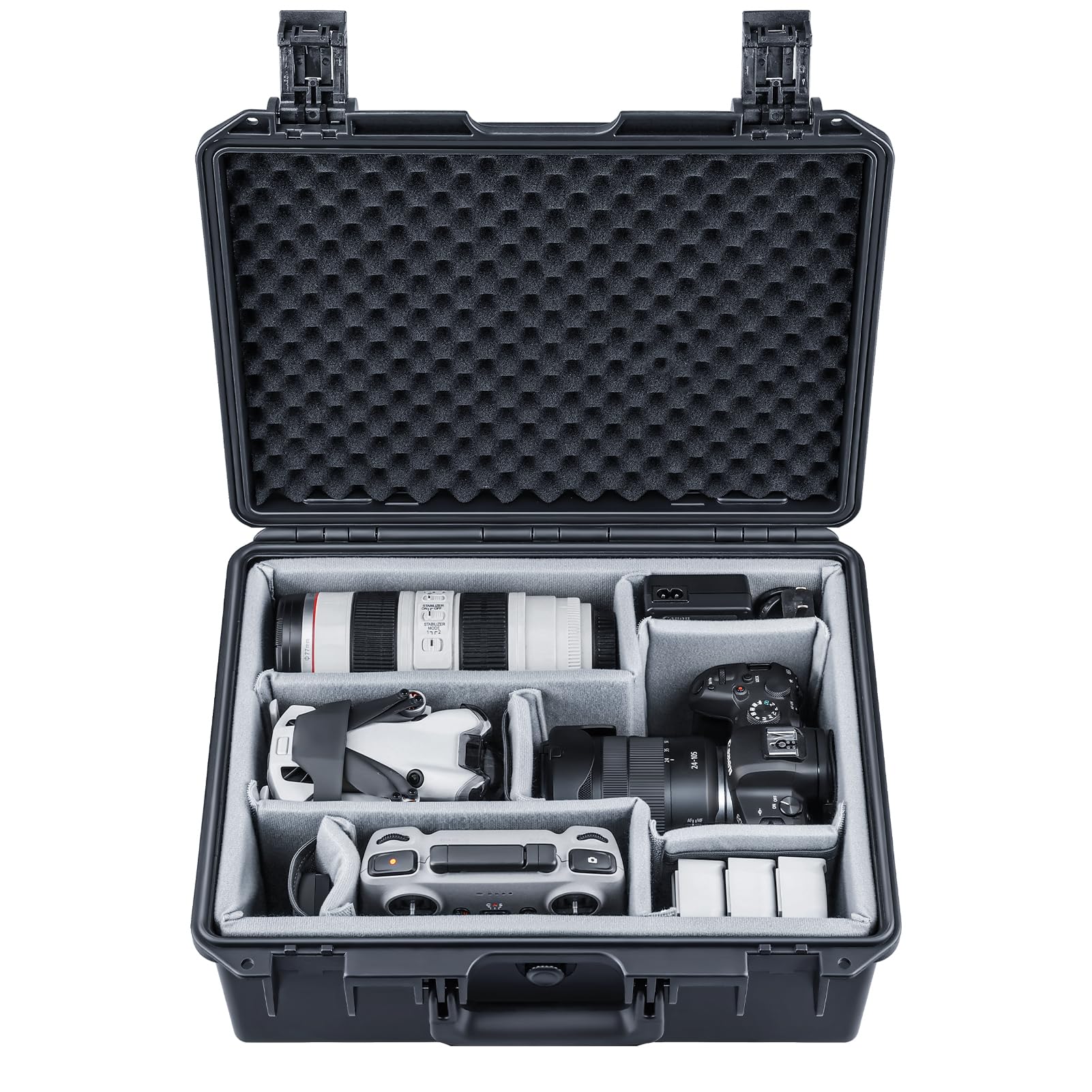
Verified IP67 sealing and a rigid, dual-latch shell make this one of the strongest budget hard cases for mid-sized camera gear. The shell takes normal travel stacking without flexing, and the pressure valve keeps the seal from vacuum-locking after a flight. Pick-and-pluck foam holds a mirrorless body with an attached prime or a compact drone kit with room for batteries and cables. Advertised interior space measures 14.62 x 10.18 x 6 inches, enough for a body with a short zoom attached.

The case stays a carry-handle shell rather than a rolling case, which is the main boundary for airport-heavy shooters. Latches click shut and stay closed through routine handling, though the hinge and latch hardware is the least overbuilt part of the build. For shooters who move gear between a trunk and a location, that tradeoff fades; a wheeled case is the better fit for travel routines that involve long terminal walks.

This suits shooters with mid-sized DSLR or mirrorless kits, drones, and audio gear who want IP67 protection without the premium-brand spend. Foam fills the interior more than external dimensions suggest, so measure the deepest item before choosing this over a taller case. The pick-and-pluck layers let you shape cavities for a gripped body or a small gimbal, but the foam is dense enough that cutting carefully matters. A camera body, two lenses, and a small drone fit without needing an aftermarket divider kit. This is not a daily-hammer case; buyers who need wheels or expect heavier hardware should look at the wheeled options in this category.

Spending more buys a more recognized name, a rolling base, or heavier latches. Staying at this price keeps the focus on protection: a stiff shell, an IP67 seal, and enough customizable foam to protect gear that would cost several times more to replace. For a one-bag location shoot or a drone outing, the case delivers the protection that counts in a hard case category where exterior dimensions and seal integrity are easy to get wrong. The tradeoff is not coverage; it is refinement in the parts you touch least once the case is packed.

Pros

  • Build quality punches above the price tier, with a clean shell and secure sealing.
  • Rigid case shell handles normal travel stacking and impacts without flexing.
  • Costs a fraction of premium rivals while delivering the same IP67 water protection.
  • Interior layout fits mid-sized mirrorless, DSLR, drone, or audio kits with foam customization.
  • Latches and pressure valve keep the seal secure during travel and altitude changes.

Cons

  • Hinges and latches are functional but feel lighter than the shell, noticeable during repeated cargo handling.
  • Thick pick-and-pluck foam eats into usable depth, so larger bodies or lens hoods may need a low-profile layout.
Our verdict

The MEIJIA hard case gives mid-sized camera, drone, and audio kits verified IP67 protection without the premium-brand markup; you sacrifice hardware refinement, not protection.

Check Latest Price
2

Best Rolling Travel Case

Pelican Vault V525

94 /100
Studio Score High Confidence

Key details

Layout
Pick-and-pluck foam
Weight
12.1 lb
Closure
Dual latches
External Size
22.3 x 14.5 x 9 in
Check Price on Amazon

The V525 is the wheeled all-rounder in this hard-case lineup: a 12.1-pound rolling shell with a carry-on-friendly footprint and room for multiple camera bodies and attached lenses.

Set beside a premium rolling case with refined latches and built-in lid organization, the V525 keeps the Pelican build at a mid-range price. It is a working photographer's airport roller rather than a showcase piece.

The right buyer is a traveling photographer who needs a rigid shell, wheels, and enough interior volume for event or location work. Stairs and rough terrain are where the small wheels turn into a lift-and-carry moment, and the interior padding is functional rather than plush.

๐Ÿ’ก On stairs, use the top carry handle instead of dragging the small wheels.

Pros

  • Pelican-grade shell construction holds up across repeated airport and location moves.
  • Interior accepts multiple camera bodies and spare lenses without forcing a minimalist kit.
  • Telescoping handle and wheels get a kit through terminals and parking lots with less strain than a shoulder bag.
  • Mid-range price undercuts premium rolling cases without giving up the Pelican shell.

Cons

  • Interior padding feels less substantial than the shell, so the presentation is utilitarian rather than luxurious.
  • Small wheels work well on smooth floors but need lifting on stairs and rough terrain.
Our verdict

The V525 is the rolling hard case for a working kit that has to clear airport terminals and stay protected on location.

Check Latest Price
3

Best Pro Carry-On

NANUK 935 Pro Photo

90 /100
Studio Score High Confidence

Key details

Layout
Dividers, lid organizer
Weight
11.6 lb
Closure
PowerClaw latches
External Size
22 x 14 x 9 in
Check Price on Amazon

Rolling on polyurethane wheels and secured by PowerClaw latches, this NANUK case brings a professional travel feel to a crushproof NK-7 resin shell. The lid organizer and padded divider layout keep a multi-body mirrorless kit arranged, while the retractable handle steers cleanly through airports and parking garages. The case tracks straight under load and the latches open and close with a firm, decisive action.

The IP67-sealed shell handles rain, dust, and the kind of jostling that comes with checked baggage or a loaded vehicle. The dividers hold bodies and lenses in place, and the small-item pockets keep batteries and filters accessible without unloading the main compartment. Interior volume is laid out around separated components, so the case rewards photographers who pack a body, a spare body, and a set of primes rather than one oversized telephoto.

Professional photographers who fly regularly and carry a substantial mirrorless kit are the core audience; the internal dimensions suit setups where lenses are packed separately. Budget hobbyists and shooters relying on large flagship DSLRs with long attached telephoto lenses should look elsewhere โ€” those oversized body-lens combos may not fit with dividers in place. Working pros who value organized access over maximum interior volume will find the tradeoff acceptable, and the premium build matches the routines of repeat travel.

๐Ÿ’ก Heavier bodies and lenses should go in the lower compartment so the case rolls straighter under load.

Pros

  • Smooth-rolling polyurethane wheels and a comfortable retractable handle make airport transits easy.
  • PowerClaw latches and a locking mechanism hold the shell shut under travel stress.
  • Crushproof NK-7 resin shell with IP67 sealing protects gear from drops and weather.
  • Padded divider layout and lid organizer keep multi-body mirrorless kits accessible and protected.

Cons

  • A new unit can arrive with scuffs or minor exterior blemishes
  • At 11.6 lb empty, the case uses a meaningful share of carry-on weight limits before gear is loaded.
Our verdict

For working pros who fly with mirrorless kits, this is a wheeled hard case that feels as good rolling through an airport as it does protecting gear on arrival.

Check Latest Price
4

Best Large-Capacity Value

Monoprice Weatherproof

92 /100
Studio Score High Confidence

Key details

Layout
Pick-and-pluck foam
Weight
โ€”
Closure
Dual latches
External Size
22 x 14 x 8 in
Check Price on Amazon

Monoprice's 22-inch hard case offers a bigger footprint than the value-focused top pick, which makes it the better fit for spotting scopes, audio equipment, and multi-camera kits. The rigid shell and IP67 gasket deliver serious protection at a mid-range price, and the pick-and-pluck foam can be arranged around awkward shapes without a separate divider system.

Carrying a large kit in this case is reassuring: the shell is stiff, and the foam holds gear in place during transit. The usable interior, however, is smaller than the outside footprint suggests (20.1 x 10.9 x 6.8 inches inside versus 22 x 14 x 8 outside), so oversized gear needs to be measured against the interior figure before you commit.

This is the right case for shooters and audio engineers who need maximum footprint without paying Pelican-level prices. It also suits buyers who plan around a usable interior that is smaller than the exterior suggests and who test the seal before trusting the IP67 rating in wet conditions. Those expecting guaranteed waterproofing or exact advertised dimensions should look at a premium-priced case instead.

๐Ÿ’ก Store the case unlatched between trips so the gasket isn't compressed under constant latch pressure.

Pros

  • Large usable area for spotting scopes, audio gear, and multi-camera kits.
  • Rigid shell with IP67 gasket offers strong impact and moisture protection.
  • Customizable pick-and-pluck foam adapts to odd-shaped items.
  • Solid build quality for a large case at this price.

Cons

  • Pick-and-pluck foam can tear unpredictably as sections are removed.
  • Usable interior can run smaller than the exterior dimensions suggest.
  • Latch tension and seal alignment can vary between units, so the gasket may not seat fully.
Our verdict

Measure the interior, confirm the seal, and the Monoprice becomes a roomy, cost-effective hard case for heavy gear.

Check Latest Price
5

Best Divider-Based Modular Case

Lykus PVC1 Hard Case

90 /100
Studio Score High Confidence

Key details

Layout
6 padded dividers
Weight
โ€”
Closure
Dual latches
External Size
16.3 x 13.4 x 6.9 in
Check Price on Amazon

The Lykus PVC1 uses six removable padded dividers with mesh pockets instead of pick-and-pluck foam, which makes it easier to fit two DJI drones or a mirrorless body with attached lenses. The IP67 polypropylene shell provides dust and water protection, while the 13-liter interior leaves room to rearrange sections without cutting or replacing foam. For shooters who move between drone and camera kits, this divider layout is the main advantage over a fixed-foam case.

This case fits mirrorless shooters and DJI Mavic/Mini pilots who adapt their layouts between shoots. It is not a large telephoto case, and buyers who prefer traditional pick-and-pluck cutouts will find the divider system less direct. The lid does not stay up on its own, so loading is easier with the case flat on a table, and the latches can feel sticky before they seat; neither affects protection once the case is closed.

Mesh pockets on the dividers keep batteries, memory cards, and cables within reach, which reduces the need for separate accessory pouches. Compared with a budget IP67 case with carved foam, the Lykus trades a one-time cutout for an interior you can reconfigure at a mid-range price. That makes it the runner-up for anyone who needs modular organization rather than a custom foam bed.

Pros

  • Hard polypropylene shell with gasketed lid offers impact and water protection for camera gear.
  • IP67 seal keeps dust and moisture out during outdoor shoots and travel.
  • Six removable dividers let the same case carry two drones or a mirrorless kit.
  • Mesh-pocket dividers hold batteries, memory cards, and cables in easy reach.

Cons

  • Latches can require a firm press before they seat cleanly when closing.
  • The lid can sag while the case is open, so loading gear is easier on a flat table.
Our verdict

For photographers and drone pilots who reconfigure gear between outings, this divider-based hard case offers IP67 protection without the bulk of a rolling case.

Check Latest Price
6

DJI Drone Kits

Jack Boss Hard Case

92 /100
Studio Score High Confidence

Key details

Layout
Pick-and-pluck foam
Weight
โ€”
Closure
Dual latches
External Size
16 x 12.8 x 6.8 in
Check Price on Amazon

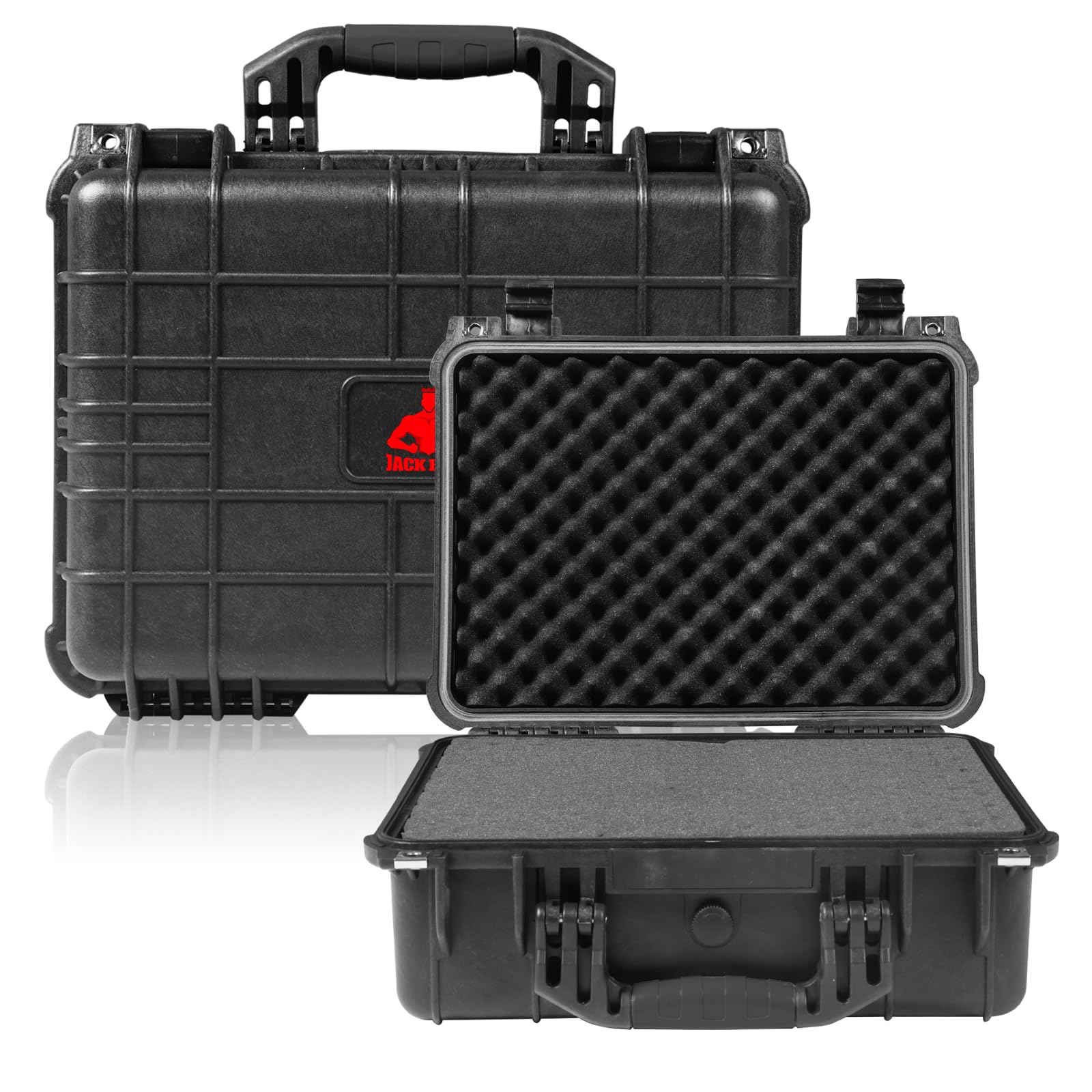
The Jack Boss is a budget-priced IP67 hard case with a rigid shell, secure latches, and a pre-cut foam interior sized for DJI Mini/Mavic kits and mid-sized mirrorless or DSLR setups. Water resistance holds up in wet weather, and the pick-and-pluck foam lets you shape a custom fit without extra tools. It stops short of the value pick in hardware feel: the latches close securely but lack the crisp positive snap of premium cases, and the foam can dislodge if you cut the segments too tightly. That makes it a sensible buy for shooters who want solid IP67 protection on a budget and accept a minor hardware compromise.

Pros

  • Strong build quality for the price
  • Good size and fit for DJI Mini/Mavic kits and mid-sized mirrorless or DSLR setups.
  • Secure latches and a working IP67 seal keep gear dry in rain and splash conditions.

Cons

  • Foam can dislodge if you cut the segments too tightly, so trimming takes patience.
  • Latches close securely but lack the crisp positive snap of premium cases.
Our verdict

The Jack Boss fits value-focused shooters who need IP67 hard-case protection but don't require a rolling design.

Check Latest Price
7

Long Telephoto Lenses

Pelican Vault Long

94 /100
Studio Score High Confidence

Key details

Layout
3-layer foam
Weight
21.2 lb
Closure
Dual latches
External Size
48 x 20 x 7 in
Check Price on Amazon

Pelican's long Vault case is purpose-built for oversized gear: long telephoto lenses, rifles, bows, and production components fit with room to spare, and the latches and weather-resistant shell handle outdoor conditions without drama. The known tradeoff is interior foam โ€” the three-layer setup is serviceable, but the lid foam can drop out when opened, so owners may need to re-seat or secure it. That keeps this out of the main recommendations for general camera-kit buyers, who are better served by a modular or wheeled case. For shooters with elongated equipment, the protection and footprint are still worth that tradeoff.

Pros

  • Pelican shell and latches hold up on rough terrain and in weather exposure, matching the brand's case reputation.
  • Long interior swallows telephoto lenses, rifles, bows, and elongated production gear without adapting the layout.
  • Sealed shell and robust latches keep rain and spray away from sensitive equipment during outdoor shoots.

Cons

  • Top lid can flex slightly and may swing down while loading; a retaining strap helps during setup.
  • Long-case footprint suits elongated gear only; general camera kits will find it too large and awkward.
Our verdict

Best for shooters who move telephoto lenses, rifles, bows, or production gear between locations and accept the interior tradeoff for Pelican-grade weather protection.

Check Latest Price
8

Budget Wheeled Travel

VEVOR Rolling Case

89 /100
Studio Score Strong Evidence

Key details

Layout
Pre-cut foam
Weight
โ€”
Closure
Dual latches
External Size
21.7 x 13.4 x 9.5 in
Check Price on Amazon

The VEVOR Rolling Case pairs a wheeled base, telescopic handle, and IP67-rated shell at a budget price that undercuts standard non-rolling protective cases. It earns a look for drone and photo kits that need a large storage footprint, and the pre-cut foam lets you carve out layouts for bodies, lenses, and accessories. The tradeoff is the budget cost showing in the shell walls: the plastic feels less impact-rigid than the wheeled Pelican Vault alternative, and foam quality can vary between units. This is a friendly-conditions roller for airport terminals, parking lots, and studio transport.

Pros

  • Rolling base and telescopic handle make it easy to move a large protective case through transit.
  • Pre-cut foam and a large interior allow custom layouts for drone and photo gear.
  • Build quality holds up at a budget price, making it a sensible value in rolling hard cases.

Cons

  • Checked-cargo handling is outside this case's intended use; it suits carry-on and vehicle transport.
  • Latches can close with a less assured fit than premium cases, which can make the IP67 seal feel less certain.
Our verdict

For drone and photo kits that travel as carry-on or in vehicles, the VEVOR Rolling Case provides wheeled IP67 storage at a budget price.

Check Latest Price
9

First-Time Hard Case

Amazon Basics Hard Case

90 /100
Studio Score High Confidence

Key details

Layout
Pre-cut foam
Weight
โ€”
Closure
Dual latches
External Size
12 x 10.6 x 5.5 in
Check Price on Amazon

The Amazon Basics Hard Camera Case is a budget-priced entry point that delivers consistent quality, solid protection, and practical storage for a small camera or lens kit. The ABS shell, pre-cut foam, and airtight seal support medium-duty carry-on use without demanding a premium budget. Strong quality and value are clear, but latch-closure issues make it less ideal for checked airline travel; external straps or locks are a sensible addition if you plan to check the case. For buyers who keep the case in a car, studio, or carry-on, this is a cost-effective shell that doesn't overpromise.

Pros

  • Build quality reads above its price point, which matters when a case travels through airports or vehicles.
  • Cost-effective entry point for buyers who want a rigid shell without committing to premium case pricing.
  • Pre-cut foam and 792 cubic inches provide generous room for a small camera body and lenses.

Cons

  • Dense pick-and-pluck foam can be difficult to cut into clean shapes without some patience.
  • Latches can be stiff to close and may pop open in checked airline travel; use straps or locks.
Our verdict

For first-time hard case buyers with a small camera kit who mainly use carry-on, studio, or vehicle transport, this is a sensible budget fit.

Check Latest Price

How to Choose

True hard case vs EVA organizer

EVA cases with zipper closures are semi-rigid sleeves: they protect against bumps and dust but do not seal out water or survive crushing impact. A rigid latched case uses a molded shell, a gasket, and compression latches to create a genuinely protective barrier.

If you stuff a camera into a larger backpack, an EVA organizer is often enough. If the case is the only thing between your gear and the tarmac, a rigid IP67-rated shell is the safer choice.

Waterproof rating

IP67 means the case is dust-tight and can sit submerged in one meter of water for 30 minutes. That rating only holds when the gasket is clean, the latches are fully engaged, and the pressure valve remains closed.

Cases described only as 'weatherproof' or 'water-resistant' typically handle rain and splashes, not submersion. If your work takes you near rivers, boats, or open weather, filter for a stated IP67 rating rather than trusting marketing language.

Interior layout

Pick-and-pluck foam lets you carve a cradle that exactly fits your camera body and lenses. The trade-off: once you pluck the cubes, the layout is fixed, and removing the wrong section leaves a permanent gap.

Padded dividers use Velcro-attached partitions that reconfigure in seconds. That flexibility suits shooters who swap between camera kits and drone kits, but dividers leave more movement possible than a tightly cut foam cradle.

Latch and hinge reliability

A hard case is only as protective as its weakest closure point. Premium dual-throw latches cam over with a crisp snap and stay locked, while budget latches often require a hard push and can spring open under pressure changes or rough handling.

Before checking a case onto a flight, confirm each latch is fully seated, use padlock-able hasps if available, and consider a strap around the case for extra insurance.

Portability

Wheels and a retractable handle turn a heavy camera case into airport luggage, but small wheels struggle on stairs, gravel, and uneven sidewalks. A non-rolling case is lighter and usually cheaper, but you carry its weight on your shoulder or in your hand.

Carry-on compatibility depends on both external dimensions and airline policies. A case that fits overhead on one carrier may not fit another, so verify the dimension limits for the airlines you fly most.

Frequently Asked Questions